

What if the most daunting part of your journey wasn't the science or the law, but simply knowing where to take the first step? For many, the path to parenthood for gay couples feels like a maze of high costs and complex legalities that can overshadow the excitement of starting a family. You likely already know that the financial investment is significant and finding providers who are genuinely inclusive can feel like an uphill battle. It's natural to feel protective of your future family's security while worrying about the shifting landscape of parental rights.
This guide offers a steady hand to help you move forward with confidence and clarity. We've designed this roadmap to simplify the medical and emotional transitions you'll face in 2026. You will gain a clear understanding of the differences between gestational surrogacy and adoption, learn how to connect with a vetted community of donors and carriers, and discover the specific steps needed to secure your legal status as a parent. By breaking down these phases into manageable milestones, we'll help you transform a complex process into a hopeful reality.
Key Takeaways
- Compare the primary pathways of gestational surrogacy, adoption, and foster-to-adopt to find the right fit for your family's unique needs.
- Navigate the biological journey with confidence by learning how to select vetted egg donors and fertility clinics that prioritize inclusive care.
- Protect your future family by identifying the critical legal documents, such as pre-birth orders and surrogacy contracts, required to secure your parental rights.
- Master the financial and medical roadmap for the path to parenthood for gay couples, including budgeting for IVF and finding supportive hospital environments.
- Discover how Storge PLUS bridges the gap between dreaming and doing by providing a vetted network of professional referrals and community connections.
Understanding Your Options: The Modern Landscape of Gay Family Building
The path to parenthood for gay couples is a journey that blends medical innovation with deep personal intention. It isn't just a series of appointments; it's a multi-stage process that requires careful medical, legal, and social preparation. This year marks a significant shift in how families are formed. We've moved toward community-led family building. Intended parents now take a more active, informed role rather than relying on the detached, traditional agency models of the past. This evolution empowers you to build your family on your own terms while ensuring every step is backed by verified support.
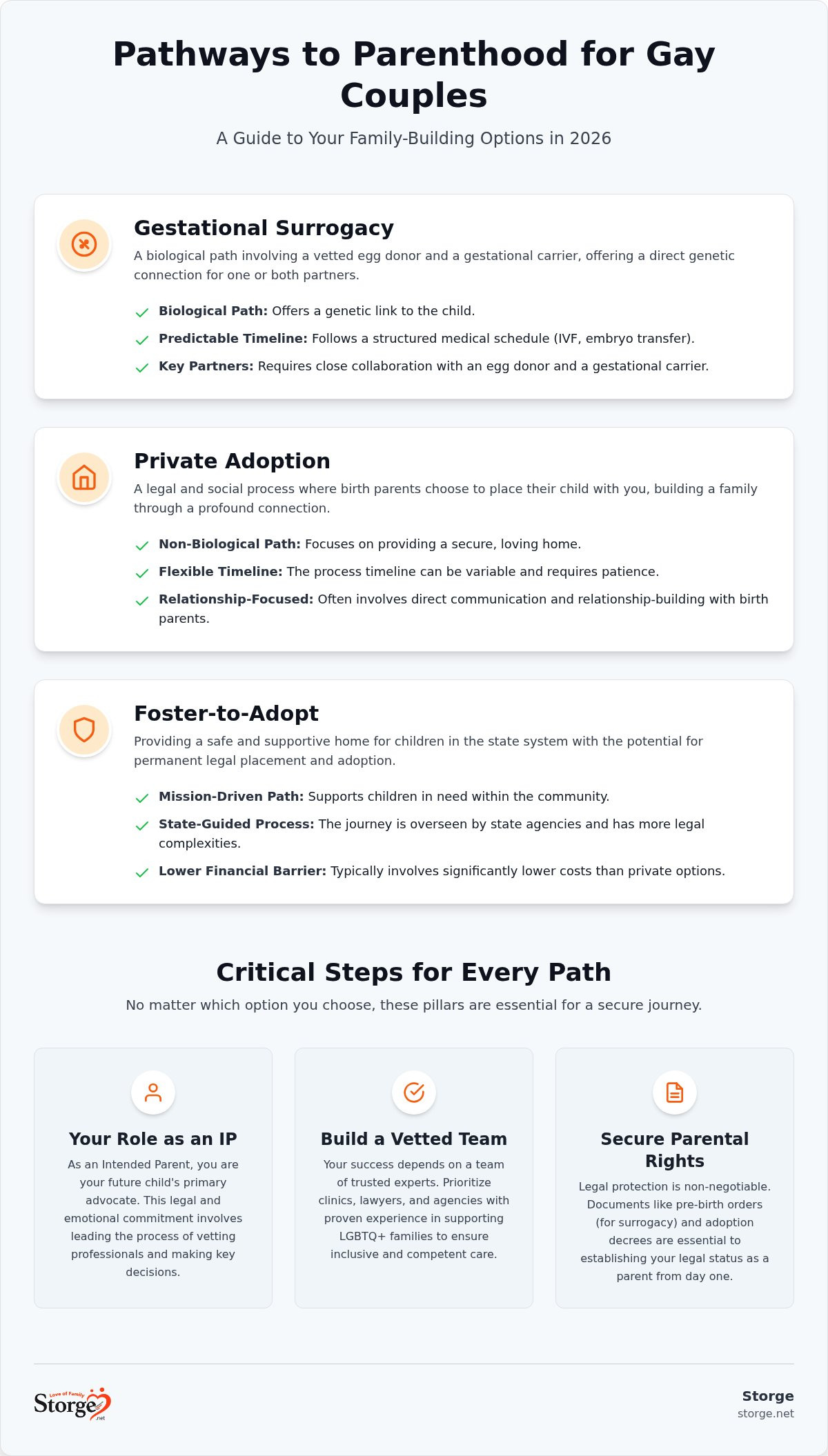
You generally have three primary avenues to consider:
- Gestational Surrogacy: A biological path involving an egg donor and a gestational carrier.
- Private Adoption: A legal process where birth parents choose to place a child with you.
- Foster-to-Adopt: Providing a home for children in the state system with the potential for permanent legal placement.
In 2026, advancements in screening technology and clearer legal precedents have made these options more secure. However, the need for specialized guidance remains vital to ensure you're connecting with providers who truly understand the needs of LGBTQ+ families.
Biological vs. Non-Biological Paths
Choosing between a biological and non-biological path is a deeply personal decision that shapes your family's timeline and experience. Gestational surrogacy remains the primary biological route. It offers a direct genetic connection that many gay fathers find meaningful. Adoption and foster-to-adopt provide beautiful alternatives focused on providing a stable home for children in need. Each path carries different emotional weights. Surrogacy often involves a more predictable medical timeline. Adoption requires a high degree of flexibility and social preparation. Your choice often comes down to which values you prioritize. Whether it's the continuity of genetics or the mission of providing a home through the legal system, the path to parenthood for gay couples starts with this fundamental question of legacy and connection.
The Role of the Intended Parent (IP)
Entering this process means stepping into the role of an intended parent in surrogacy or adoption. This designation is more than just a title; it's a legal and psychological commitment. As an IP, you hold the primary responsibility for navigating the vetting of donors, carriers, and clinics. You're the advocate for your future child. This role requires you to prepare for a unique psychological transition. You aren't just waiting for a baby. You're building a network of professionals and supporters who will help bring that child into a secure, loving environment. Understanding your rights early on, especially regarding pre-birth orders and parental recognition, ensures your transition to fatherhood is protected and celebrated.
The Biological Journey: Navigating Surrogacy and Egg Donation
Selecting your fertility clinic is the first concrete step on the path to parenthood for gay couples. You'll want a team that understands the specific nuances of donor cycles and third-party reproduction. This medical partnership defines your IVF protocols and oversees the creation of your embryos. It's a technical phase, but it requires a human touch. Your clinic should feel like a partner, not just a service provider, as they guide you through the complexities of genetic screening and laboratory procedures.
Selecting an Egg Donor
Finding a match within the LGBTQ donor community involves more than just reviewing a profile. You're deciding between known donors, who might be friends or family, and anonymous donors from a bank. Known donors offer a clear narrative for your child, while anonymous donors often provide extensive medical histories. Once you've chosen, the logistics of egg retrieval and embryo creation begin. Your clinic will guide you through the fertilization process, often using specialized techniques to ensure the highest chance of a healthy pregnancy.
Finding a Gestational Carrier Safely
Identifying a gestational carrier for gay couples is perhaps the most emotionally significant match you'll make. Community vetting is far superior to unverified social media searches. You need someone who isn't just medically cleared, but psychologically prepared for the unique bond of carrying for two dads. Look for carriers who value open communication and have a proven history of healthy pregnancies. Medical and psychological screenings are non-negotiable. They protect the carrier's health and your peace of mind throughout the journey.
After the match, you move to the embryo transfer. This is the quiet, hopeful moment where science meets life. Following a successful transfer, you'll track pregnancy milestones just like any other parents. From the first heartbeat to the twenty-week scan, these moments solidify your transition from intended parents to fathers. Finding a vetted team makes this entire sequence feel less like a clinical process and more like a supported family milestone. If you're ready to start vetting your team, exploring a Storge PLUS membership can simplify your search for inclusive providers.
Legal and Financial Planning: Protecting Your Future Family
Building a family involves more than just medical success. It requires a solid legal foundation to ensure your rights are never in question. The path to parenthood for gay couples involves several critical documents that establish a clear framework for everyone involved. Surrogacy contracts define expectations between you and your carrier, while pre-birth orders establish you as the legal parents before the child is even born. These aren't just formalities; they're the armor that protects your family's future.
Securing Parental Rights
In 2026, the legal landscape continues to evolve, making portability a top priority for modern parents. While many states recognize pre-birth orders, we still recommend second-parent adoption as a vital safeguard. This process provides a court judgment that must be recognized in every state and even internationally. It's about ensuring your parental status is permanent, regardless of where you live or travel. To navigate these intricacies, you'll need to find an LGBTQ family law attorney who specializes in assisted reproductive technology. They'll ensure your names are correctly placed on the birth certificate and that your legal standing is ironclad from day one.
Managing Family Building Costs
The financial aspect of this journey is often a major source of stress. Budgeting for IVF, donor fees, and carrier support requires a transparent roadmap to avoid surprises. Many intended parents use escrow accounts to manage payments safely. This ensures that funds are handled by a neutral third party, providing security for both you and your carrier. You might consider several strategies to manage these costs:
- Explore specialized grants designed specifically for LGBTQ family building.
- Look for fertility financing plans that offer manageable repayment terms.
- Investigate insurance policies tailored for gestational surrogacy to cover unexpected medical needs.
Planning for these expenses early allows you to focus on the joy of the process rather than the logistics of the bill. Financial transparency helps maintain a positive, trusting relationship with your carrier and your professional team.
Insurance is another pillar of your financial plan that shouldn't be overlooked. You'll need to verify that your carrier's health insurance covers a surrogacy pregnancy without exclusions. Additionally, preparing for the newborn's insurance coverage is essential. Most intended parents add their child to their own policy immediately after birth, but having a plan in place before the third trimester prevents unnecessary stress. Securing these legal and financial pillars is a vital part of the path to parenthood for gay couples, allowing you to move forward with peace of mind.
Building Your Team: Clinics, Hospitals, and Support Networks
Success on the path to parenthood for gay couples depends heavily on the quality of the team you assemble. You aren't just hiring service providers; you're choosing the people who will help bring your child into the world. This team includes fertility specialists, attorneys, and hospital staff who must all be aligned with your values. Finding professionals who treat your family with dignity isn't just a preference. It's a requirement for a safe and joyful experience. Your team should act as a steady guide, demystifying the complex phases of the journey while providing the emotional reassurance you need.
Choosing the Right Fertility Clinic
A fertility clinic is the medical heart of your journey. It's essential to look beyond general success rates and examine their specific history with same-sex male couples. You should feel comfortable asking these questions to ask an LGBTQ-friendly fertility clinic in 2026 during your initial consultations. A truly inclusive clinic will have established protocols for donor egg cycles and gestational surrogacy. They'll also demonstrate a clear understanding of the legal requirements for intended parents. If the staff seems hesitant or uses outdated language, it's a sign to look elsewhere. You deserve a partnership based on mutual respect and verified expertise.
Navigating the Hospital Experience
The hospital where your child is born plays a massive role in your first moments as a parent. Planning for an inclusive hospital birth involves proactive communication with the labor and delivery department. Many hospitals now have specific parent-identity protocols to ensure both fathers are recognized on birth records and given equal access to the newborn. We recommend scheduling a tour and meeting with the hospital's social worker several months before the due date. This preparation ensures that the "Golden Hour" after birth is focused on bonding with your baby rather than correcting administrative errors. When the medical staff is prepared, you can step into your role as a parent with total confidence.
Beyond medical professionals, your support network should include mental health experts and peer mentors. Third-party reproduction brings unique emotional transitions that are best managed with the help of a therapist experienced in LGBTQ family building. They can help you and your partner process the shift from intended parents to active caregivers. Additionally, connecting with a community of other gay dads provides a sense of belonging that no agency can replicate. Sharing stories and advice with those who have already walked this path offers invaluable perspective. If you're ready to start building your professional team, you can access our vetted fertility clinic referrals to find partners who truly understand your family's needs.
The Storge PLUS Advantage: A Vetted Path to Parenthood
The journey toward fatherhood is filled with significant milestones, from the first medical consultation to the moment you hold your child. However, the sheer volume of information can sometimes feel paralyzing. The path to parenthood for gay couples shouldn't be a solitary trek through unverified resources. Storge PLUS serves as the bridge between the dreaming phase and the doing phase, providing a structured environment where you can move forward with confidence. We've created a platform that prioritizes your safety and peace of mind, ensuring that every connection you make is rooted in mutual respect and verified expertise.
Why Community Vetting Matters
In a digital age, it's tempting to turn to unvetted online forums or social media groups to find donors and carriers. While these spaces offer connection, they often lack the security protocols necessary for such a high-stakes journey. The Storge PLUS network is different. We focus on community vetting to ensure that every member of our network shares your values and commitment to ethical family building. Membership fees aren't just a transaction; they're an investment in maintaining a high-quality, safe environment for everyone involved. By joining a network of peers who are on the same journey, you gain access to shared wisdom and a collective sense of belonging that traditional, detached agencies often lack. It's a way of starting a family as a gay man that feels personal, supported, and secure.
Your Next Steps with Storge
Transitioning from research to active family building is a major step. Storge PLUS simplifies this by offering a centralized directory for your most critical needs. You can utilize our platform to find specialized attorney representation referrals and hospital search resources, ensuring your legal and medical teams are as prepared as you are. Our goal is to lower the barriers to entry, making the complex logistics of third-party reproduction feel manageable and clear. Whether you're just beginning to explore your options or you're ready to dive into the surrogacy process for gay men, we provide the roadmap you need.
The path to parenthood for gay couples is a profound transformation. It requires a blend of professional reliability and deep empathy. By choosing a community-led model, you're not just hiring a service; you're joining a partnership. We're here to guide you through every legal hurdle and medical milestone with a steady hand. Your dream of becoming a parent is valid, and with the right team behind you, it's entirely achievable. Take that first step with a community that sees you, respects you, and is dedicated to your long-term success as a family.
Your Journey Starts With a Trusted Partner
The path to parenthood for gay couples is a profound transition that requires more than just clinical success. It demands a foundation built on legal security, financial transparency, and a community that truly understands your family's needs. By securing your parental rights through specialized legal counsel and vetting your medical team with care, you ensure that your child's arrival is protected and celebrated. You don't have to navigate these complex phases alone; having a steady guide makes the transition from intended parent to father much clearer.
Storge is here to bridge the gap between your personal dream and its practical reality. We provide the tools you need to find LGBTQ-inclusive clinic referrals and a supportive environment designed for modern family building. You can Join Storge PLUS and Access Our Vetted Community of Donors and Carriers Today to take that first confident step. Your future family is waiting, and we're honored to walk beside you every step of the way. Trust in the process, lean on your community, and look forward to the life you're building.
Frequently Asked Questions
How much does the path to parenthood typically cost for gay couples in 2026?
The total investment varies significantly based on whether you choose surrogacy, private adoption, or foster-to-adopt. Surrogacy involves expenses for IVF, egg donation, legal contracts, and carrier support. Adoption costs focus on agency fees and legal filings. We recommend creating a detailed budget early to account for these variables. Many couples explore specialized grants and fertility financing to manage the path to parenthood for gay couples more effectively without unexpected financial stress.
What is the difference between gestational and traditional surrogacy for gay men?
In gestational surrogacy, the carrier has no biological connection to the child; an embryo is created using a donor egg and sperm from an intended parent. Traditional surrogacy involves the carrier's own egg being fertilized. Most modern families choose the gestational path because it offers clearer legal protections for intended parents. This separation of genetics and pregnancy simplifies the process of establishing parental rights from the moment of birth through pre-birth orders.
Is second-parent adoption necessary if we are both on the birth certificate?
Yes, second-parent adoption is a vital legal safeguard even if both names appear on the birth certificate. While a birth certificate is an administrative record, an adoption decree is a court judgment that must be recognized by every state and international jurisdiction. It provides a permanent layer of security that protects your parental rights regardless of future legislative changes. This ensures your family remains legally intact if you move or travel across state lines.
How do we choose which partner will be the genetic father?
Choosing which partner will provide the sperm is a deeply personal decision often based on health history, age, or personal preference. Some couples choose to fertilize half of the retrieved eggs with one partner's sperm and half with the other's. This allows for embryos from both partners to be available for transfer during the IVF process. Discussing these options with a fertility specialist helps you align the medical process with your family's long-term goals.
How long does the surrogacy process usually take from start to finish?
The surrogacy journey typically takes between 18 and 24 months from the initial consultation to bringing your baby home. This timeframe includes finding a donor and carrier, completing medical screenings, and finalizing legal contracts. The pregnancy itself accounts for nine months of this period. While every journey is unique, having a vetted team of professionals helps keep the process moving at a steady pace. Clear communication with your carrier and clinic can also prevent unnecessary delays.
Can gay couples adopt internationally as easily as domestically?
International adoption is often more challenging for same-sex couples because many countries have restrictive laws regarding LGBTQ+ parents. Domestic adoption or foster-to-adopt are generally more accessible paths within the United States. These domestic options offer clearer legal frameworks and more opportunities for birth parents to choose you as the intended parents. Focusing on domestic programs often results in a more secure and timely path to parenthood for gay couples compared to international routes.
What should we look for in an LGBTQ-friendly fertility clinic?
When vetting a clinic, look for a proven track record with third-party reproduction and surrogacy cycles. Ask about their specific protocols for same-sex male couples and ensure their staff uses inclusive, affirming language. A high-quality clinic will have established relationships with egg banks and surrogacy professionals. They should be transparent about their success rates for donor cycles and offer a supportive environment that respects your role as intended parents throughout the medical process.
How does Storge PLUS help us find a surrogate mother safely?
Storge PLUS provides a secure environment where you can connect with a vetted community of donors and gestational carriers. We move beyond unverified social media searches by offering a platform rooted in mutual support and professional reliability. Members also gain access to our directory of inclusive professional referrals, including attorneys and fertility clinics. This community-focused model helps you build your team with confidence while avoiding the detached feel of traditional, high-pressure agencies.


