

What if the most daunting part of your path to parenthood isn't the average $140,000 investment, but the fear of a legal loophole you didn't see coming? You've likely spent late nights researching the surrogacy process for gay men, only to feel more anxious about the matching phase or the significant financial commitment ahead. It's a heavy burden to carry when you're simply trying to build a family in a landscape that often feels clinical and detached. We understand that this isn't just a transaction; it's the beginning of your family's story.
This guide serves as your steady companion, designed to simplify this journey by providing a clear, empathetic roadmap through every medical and legal milestone. We'll walk through the 2026 timeline of events, explain how to access vetted referrals for attorneys and clinics, and show you how to find a supportive community that prioritizes your peace of mind. By the end of this article, you'll have the clarity and confidence needed to move from a personal dream to the practical reality of holding your child for the first time.
Key Takeaways
- Establish a realistic 2026 budget and timeline to ensure your path to parenthood is built on a stable, predictable foundation.
- Simplify the surrogacy process for gay men by assembling a vetted team of LGBTQ-inclusive fertility clinics and legal experts.
- Navigate the biological and matching phases with confidence, from selecting an egg donor to creating a profile that resonates with the right gestational carrier.
- Protect your family's future by understanding the essential legal steps, including surrogacy agreements and securing parental rights through pre-birth orders.
- Access a trusted community and professional referrals to transform an overwhelming medical process into a hopeful, supported journey toward fatherhood.
Preparing for Your Journey: Foundations of Gay Surrogacy
The shift from a long-held dream to a concrete plan is one of the most profound transitions you'll experience. For the gay community, this often begins with understanding What is Surrogacy? in its modern, gestational form. In this arrangement, the gestational carrier has no genetic link to the child, which provides a clear legal and emotional framework for everyone involved. The surrogacy process for gay men is a collaborative effort between you (the Intended Parents), a generous egg donor, and a dedicated gestational carrier.
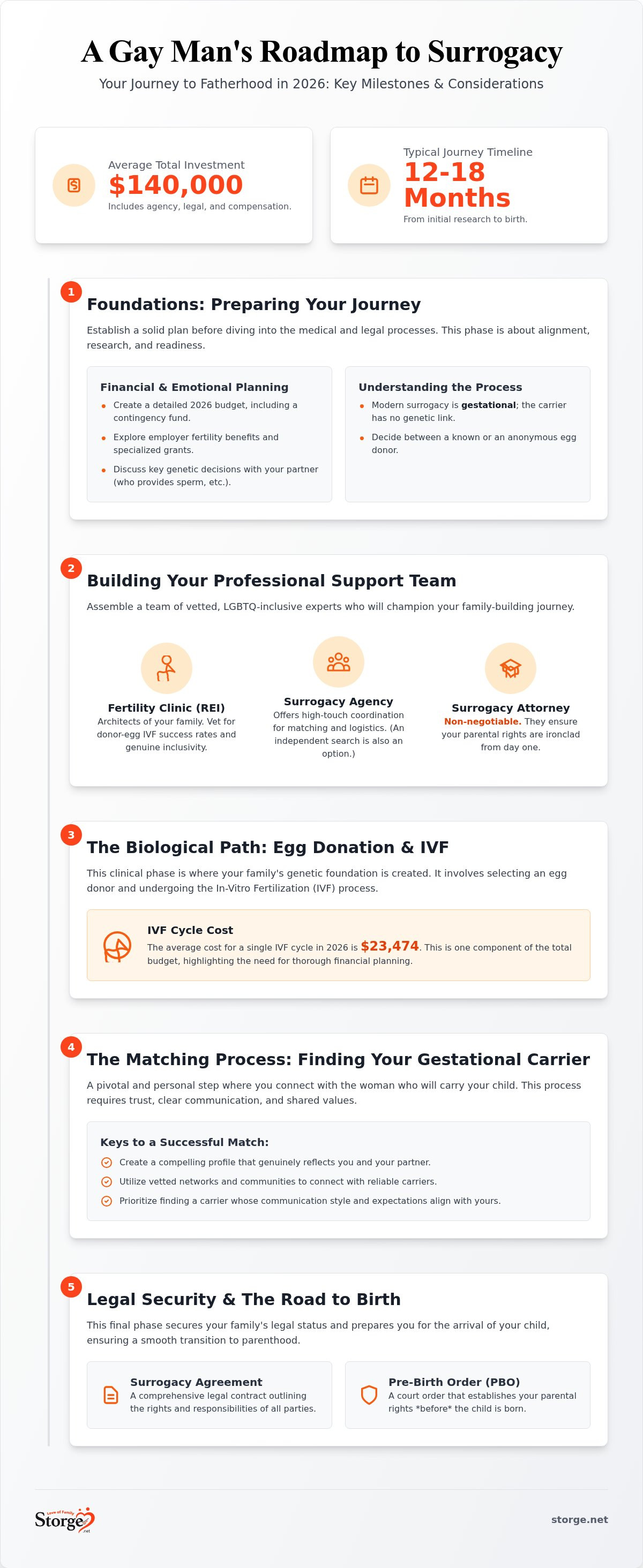
In 2026, most families find that the journey from initial research to birth takes approximately 12 to 18 months. This timeline accounts for the meticulous matching process and the clinical steps required for a successful pregnancy. Moving from the visionary stage to the execution stage requires a shift in mindset; you're no longer just dreaming about fatherhood, you're managing a complex, beautiful project that requires both heart and logistics.
Financial Planning and Budgeting
Building a family through surrogacy requires significant financial foresight. In 2026, the average cost of a single IVF cycle has reached $23,474, which is just one piece of the puzzle. You'll need to account for agency coordination, legal fees to secure parental rights, and carrier compensation. Many intended parents now explore employer-provided fertility benefits or specialized grants to offset these costs. It's also vital to maintain a contingency fund. Unexpected medical needs or the requirement for a second transfer can arise; having a financial buffer ensures you can stay focused on the joy of the process rather than the stress of the spreadsheets.
Emotional Readiness and Genetic Decisions
Before you meet your medical team, you and your partner must navigate deeply personal choices. Deciding which partner will provide the sperm, or whether to pursue a dual-genetic approach with embryos from both, is a significant milestone. You'll also need to discuss whether you prefer a known donor, such as a friend or relative, or an anonymous donor from a vetted registry. This is the time to lean into a starting a family as a gay man framework to ensure you're both aligned. These conversations aren't always easy, but they build the resilience you'll need as you move into the matching phase of the surrogacy process for gay men.
Building Your Professional Support Team
Success in the surrogacy process for gay men relies heavily on the quality of the professionals you choose to invite into your life. You aren't just looking for medical expertise; you're seeking partners who respect your path to fatherhood and celebrate your identity. A specialized, LGBTQ-inclusive team understands the nuances of third-party reproduction and the specific legal protections required for your family. Research into Family-building options for LGBTQ+ people highlights how essential it is to find providers who can debunk myths and dismantle barriers often faced by our community.
Your journey usually begins with a Reproductive Endocrinologist (REI) at a fertility clinic. They are the architects of your future family, responsible for the IVF process and embryo creation. Beyond the lab, you'll need to decide between hiring a full-service surrogacy agency or pursuing an independent search. While agencies offer high-touch coordination, they come with significant fees. Regardless of your choice, a surrogacy attorney for gay couples is a non-negotiable partner. They ensure your parental rights are ironclad from day one, providing the legal security every parent deserves.
Vetting Your Fertility Clinic
Not all clinics are created equal. When reviewing success rates, look specifically at data for donor-egg IVF cycles rather than general patient statistics. True inclusivity goes beyond a rainbow sticker on the front door. It involves staff training, inclusive intake forms, and a proven track record of working with gay dads. To get started, review these questions to ask LGBTQ friendly fertility clinic during your initial consultations. This level of vetting ensures your medical team is as invested in your success as you are.
Leveraging Vetted Communities
While social media groups can offer quick answers, they often lack the verification needed for such high-stakes decisions. Storge PLUS offers a safer, more reliable alternative by connecting you with a network of vetted donors and gestational carriers. Being part of a dedicated LGBTQ fertility community provides emotional support and peer-to-peer advice that you won't find in a brochure. It's about finding a space where you belong and feel safe. If you're ready to start building your network, you can explore our directory of inclusive professionals to find the right fit for your needs.
The Biological Path: Egg Donation and IVF
The biological creation of your embryos is where your dream starts to take a physical form. This phase of the surrogacy process for gay men involves a series of highly controlled clinical steps designed to give you the highest chance of success. While it's easy to focus solely on physical traits when choosing an egg donor, experienced parents often look for deeper compatibility. This includes a robust family health history, educational background, and a shared perspective on future contact. It's about finding a genetic partner who aligns with your family's values.
Before any fertilization happens, the sperm provider must undergo rigorous medical screening. In 2026, this includes FDA-mandated infectious disease testing and comprehensive genetic carrier screening. These tests ensure that the genetic material you're contributing is healthy and compatible with your chosen donor. Managing expectations is key during this period. Not every egg retrieved will become a healthy embryo; understanding the attrition funnel helps you stay grounded as you move through the lab results and wait for your final embryo count.
Finding and Vetting an Egg Donor
Choosing between a fresh and frozen egg bank is often a balance of cost and timing. Frozen donor eggs typically range from $8,000 to $15,000, while a fresh cycle can cost between $32,000 and $52,000. Fresh cycles may offer a higher egg yield, but frozen banks provide immediate availability and a more predictable schedule. Regardless of the source, legal security is paramount. Your attorney must ensure the donor signs a contract relinquishing all parental rights before the retrieval. You can find more guidance on this by exploring the LGBTQ donor community, which provides access to vetted professionals specializing in these specific legal and emotional nuances.
The IVF Cycle for Dads
The laboratory phase uses a technique called Intracytoplasmic Sperm Injection (ICSI). This is where a single sperm is carefully injected into each mature egg to maximize fertilization rates. After fertilization, the embryos grow in the lab for five to six days until they reach the blastocyst stage. At this point, genetic testing (PGT-A) is the standard practice for surrogacy. PGT-A screens for chromosomal abnormalities, which significantly reduces the risk of miscarriage and increases the likelihood of a healthy pregnancy. Once tested, the healthy embryos are frozen, waiting for the perfect moment to be transferred. This entire process, from fertilization to having transfer-ready embryos, generally takes about six to eight weeks.
The Matching Process: Finding Your Gestational Carrier
Finding the right partner is the most emotional milestone in the surrogacy process for gay men. This is the moment your preparation meets a living, breathing person who will help bring your child into the world. In modern family building, we use the term "Gestational Carrier" (GC) to describe this role. This evolution in language reflects the medical reality that she has no genetic link to the baby, distinguishing her from traditional surrogates of the past. It’s a partnership built on mutual respect, shared goals, and a deep, human connection.
The journey begins with creating your "Intended Parent" profile. Think of this as a heartfelt letter to your future carrier. It should be authentic, sharing your story, your values, and your vision for fatherhood. Once your profile is ready, you'll begin reviewing carrier profiles and their detailed medical records. This leads to the "Match Meeting," a crucial conversation where you'll discuss everything from communication styles to medical boundaries. After you find a match that feels right, the carrier will undergo a final medical clearance at your fertility clinic, followed by the execution of a formal legal contract.
What Makes a 'Perfect' Match?
A successful match goes far beyond medical health. It requires deep alignment on sensitive topics that will define your relationship over the next year. You must discuss your views on selective reduction and other medical interventions to ensure you're on the same page before a pregnancy begins. Communication frequency is another vital factor; some parents and carriers prefer daily check-ins, while others find weekly updates more comfortable. Finally, consider geographic logistics. While you don't need to live in the same state, being aware of travel requirements for the birth and the legal landscape of her home state is essential for a smooth experience.
Independent vs. Agency Matching
You have two primary paths for finding a carrier: using an agency's internal list or conducting an independent search through community platforms. Agencies offer the benefit of pre-screening for medical and psychological fitness, which can save time but often comes with higher costs. Independent matching allows for a more organic connection and lower fees, but it requires you to be more diligent in your vetting process. To protect yourself during an independent search, always ensure a professional third party reviews the carrier's medical records and insurance policy. If you're looking for a safer way to find a partner, you can access our vetted network of gestational carriers to start your search with confidence and peer support.
Legal Security and the Road to Birth
The legal phase is the final, ironclad step in the surrogacy process for gay men. It transforms a biological reality into a permanent, protected family structure. This starts with the Surrogacy Agreement, a comprehensive document that defines every party's rights, responsibilities, and the agreed-upon compensation for your carrier. It’s a roadmap for the pregnancy that ensures everyone is protected and understands their role. Beyond the contract, you'll focus on securing your parental rights. In surrogacy-friendly states, you can often obtain a Pre-Birth Order (PBO), which places your names directly on the birth certificate. However, even with a PBO, many legal experts recommend second-parent adoption for the non-genetic father to ensure his parental rights are recognized across all jurisdictions, including international borders.
Protecting Your Parental Rights
Working with an attorney who specializes in Assisted Reproductive Technology (ART) law is essential. General family law often doesn't cover the nuances of 2026 regulations, such as the Massachusetts Parentage Act or Hawaii’s Act 298, which became effective January 1, 2026. These laws provide clear statutory protections for gestational surrogacy, but navigating them requires professional precision. Your legal team will guide you through the logistics of birth certificates in friendly states, ensuring your names are correctly recorded from the start. For a deeper look at these legal preparations, our surrogacy for gay couples guide provides a detailed framework to follow.
The Hospital Experience and Beyond
As the birth approaches, your focus shifts to the practicalities of the hospital stay. Creating a collaborative birth plan is the best way to respect your gestational carrier’s autonomy while preparing for your new role as parents. This plan should address who will be in the delivery room, who will hold the baby first, and how the baby’s medical needs will be handled. It's also vital to coordinate insurance for the newborn and understand NICU protocols just in case. Finding a facility that offers a LGBTQ hospital birth inclusive experience ensures that your family is treated with the dignity and respect you deserve during those first precious hours. This final transition marks the end of the surrogacy process for gay men and the beautiful beginning of your life as a family.
Embrace Your Path to Fatherhood
The journey toward holding your child is a series of deliberate, heartfelt decisions. By establishing a realistic budget, assembling an LGBTQ-inclusive team, and prioritizing legal security, you've already laid the groundwork for a successful surrogacy process for gay men. You don't have to navigate these complex 2026 regulations or the matching phase alone. Every milestone, from the first embryo transfer to the final hospital birth plan, becomes more manageable when you're supported by those who truly understand your vision for a family.
At Storge, we provide the empathetic guidance and verified resources you need to move forward with confidence. You can join Storge PLUS to access our vetted community of donors and carriers today. Our platform offers a trusted network of inclusive professionals and community-led support for every stage of your journey. Your dream of becoming a parent is within reach, and we're here to help you bridge the gap between that vision and your new reality. You've got this, and we're honored to walk beside you.
Frequently Asked Questions
How much does the average surrogacy process cost for gay men in 2026?
Most gay couples spend between $120,000 and $160,000 for a complete journey in 2026. This total includes medical procedures, carrier compensation, and legal expenses. A single IVF cycle now averages $23,474. You'll also need to budget for egg donor compensation, which typically falls between $8,000 and $20,000. These figures often depend on the state where your carrier lives and your specific medical requirements.
How long does the entire surrogacy journey typically take from start to finish?
The typical surrogacy process for gay men takes between 12 and 18 months from your initial research to the birth. This window includes time for embryo creation, matching with a carrier, and the legal contract phase. Once a pregnancy is successfully confirmed, the standard nine month gestation period follows. Planning for this duration helps you manage the logistical milestones and emotional transitions without feeling a sense of high pressure urgency.
Can both fathers be genetically related to the children in a surrogacy journey?
A single child cannot have two genetic fathers, but you can pursue a dual genetic approach through separate embryo transfers. This involves fertilizing eggs with sperm from both partners to create two sets of embryos. Most fertility clinics recommend transferring one embryo at a time to prioritize the safety of the carrier. You can then decide which partner's embryo to transfer first as you build your family over one or more journeys.
What is the difference between a traditional surrogate and a gestational carrier?
A gestational carrier has no genetic link to the baby, while a traditional surrogate uses her own eggs. In 2026, gestational surrogacy is the preferred method because it provides much higher legal security for intended parents. By using a donor egg and IVF, you ensure the carrier's role is purely to provide a healthy environment for growth. This clinical distinction helps demystify the legal process and protects your parental rights from the start.
Do gay men need to undergo second-parent adoption if they are on the birth certificate?
Legal experts strongly recommend second-parent adoption for the non-genetic father, even if he's listed on the birth certificate. While a Pre-Birth Order establishes your rights in many states, adoption offers a permanent layer of security recognized in every jurisdiction. It ensures that both dads have equal legal standing during medical emergencies or international travel. This proactive step is a vital part of the surrogacy process for gay men to ensure long term peace of mind.
How do we find a gestational carrier without using a high-cost agency?
You can find a gestational carrier through independent searches on vetted community platforms to avoid high agency fees. This path allows for a more personal connection with your carrier. However, you must still hire an independent attorney and a fertility clinic to screen your match professionally. Using a directory of verified LGBTQ-inclusive professionals ensures you have the same level of safety and reliability as a traditional agency while maintaining more control.
Is surrogacy legal for gay men in all 50 US states?
Surrogacy is not governed by federal law; its legality varies significantly by state. States like California, Michigan, and Hawaii offer clear, protective pathways for gay fathers. However, some states like Arizona or Indiana still have laws that make surrogacy contracts unenforceable. It's essential to choose a carrier who lives in a surrogacy-friendly state. Your attorney will help you navigate these state-specific regulations to ensure your path to parenthood is legally secure.
What happens if the gestational carrier changes her mind about giving up the baby?
In gestational surrogacy, the carrier has no genetic tie to the child and signs a contract relinquishing parental rights before the embryo transfer. Surrogacy-friendly states use Pre-Birth Orders to legally establish you as the parents before the birth occurs. These protections make it extremely difficult for a carrier to successfully claim parental rights. Working with a specialized attorney ensures your agreement is enforceable and that your family’s legal foundation remains completely ironclad.


