
What if the most vital connection in your journey to parenthood didn't come from a high-priced agency algorithm, but from a community that actually shares your values? For many, the traditional path to surrogacy matching for queer families feels like a series of hurdles, from overwhelming agency fees to the quiet worry that a potential carrier might not truly affirm your family structure. It's a vulnerable position to be in, especially when you're trying to balance the excitement of a new chapter with the practical weight of legal and financial decisions.
We understand that you aren't just looking for a service; you're looking for a partnership built on mutual respect and shared dreams. This article will help you navigate the matching process with a sense of safety and belonging, ensuring you have the tools to vet carriers effectively while protecting your rights. You'll discover how to find a compatible gestational carrier who celebrates your path, understand the latest 2026 legal protections for non-biological parents, and see how a community-led approach can make the dream of family more accessible and empowering than ever before.
Key Takeaways
- Understand why surrogacy matching for queer families is the most critical phase of your journey, focusing on deep alignment of values and long-term family goals.
- Identify the unique challenges queer parents face in traditional fertility spaces and how to bridge the "discrimination gap" through intentional, inclusive vetting.
- Evaluate the differences between high-cost traditional agencies and community platforms to determine which model offers the right balance of safety and autonomy.
- Learn a step-by-step approach to defining your family-building non-negotiables before connecting with potential gestational carriers.
- Discover how accessing a vetted community of donors and carriers provides a more secure and supportive path to parenthood than unvetted independent searches.
What is Surrogacy Matching for Queer Families?
Surrogacy matching for queer families is the intentional process of connecting intended parents with a gestational carrier who affirms their identity, shares their vision for family building, and commits to a collaborative legal and emotional partnership. It's the foundation of your entire journey. While the clinical and legal steps are vital, the match determines the daily experience of your pregnancy. It's the difference between a clinical transaction and a shared human milestone.
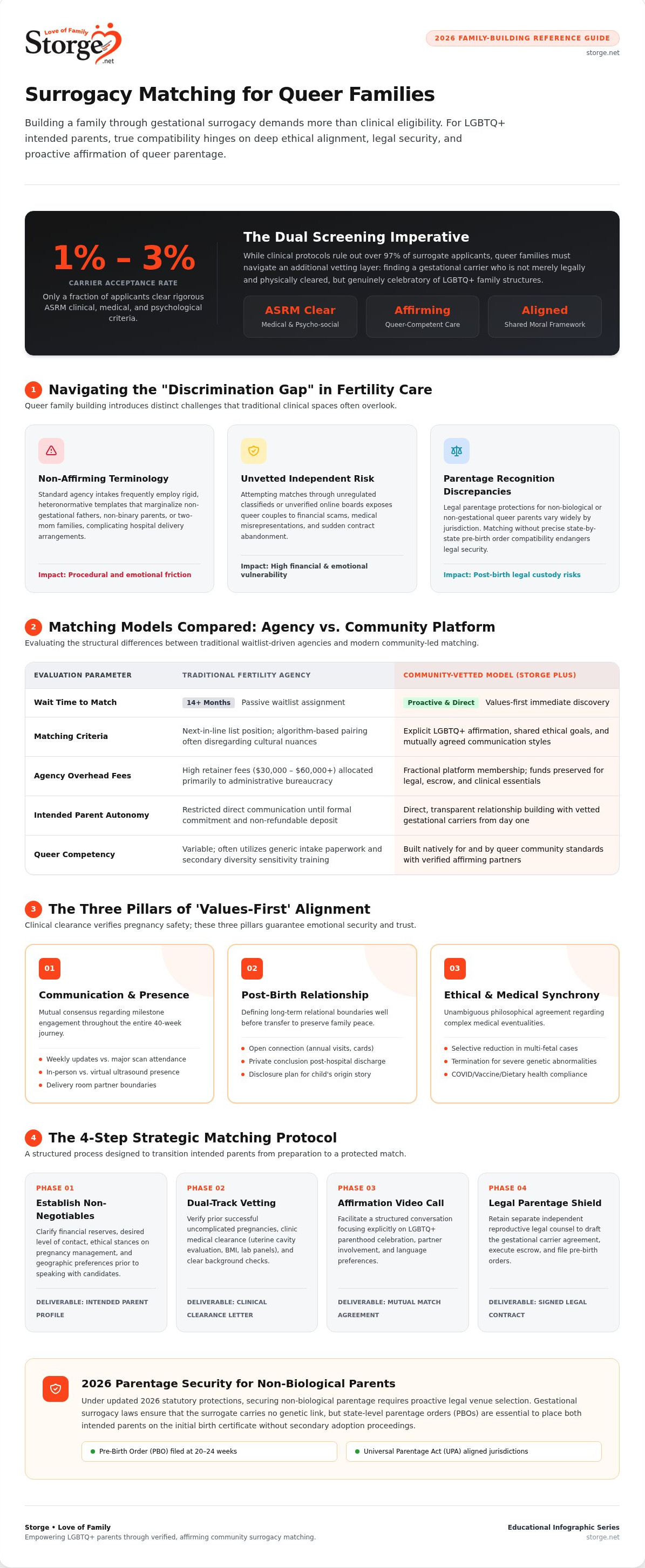
This phase is widely considered the most critical because it aligns the expectations of everyone involved. If a match is misaligned on core issues like communication frequency or ethical decisions, the path ahead becomes significantly more complex. Historically, traditional agencies have managed this through internal waitlists that can extend beyond 14 months. However, 2026 has seen a shift toward community-vetted matching. This model empowers you to find a partner based on shared values rather than just who is next on a list.
The Role of the Gestational Carrier
In 2026, gestational surrogacy is the gold standard for LGBTQ+ family building. Unlike traditional surrogacy, where the carrier uses her own eggs, a gestational carrier has no genetic link to the child. For a more detailed gestational surrogacy overview, it's helpful to understand that this distinction is what allows for secure pre-birth parentage orders in many jurisdictions.
The commitment a carrier makes is profound. Beyond the physical requirements of IVF and pregnancy, she acts as a temporary guardian for your future child. Because only 1% to 3% of carrier applicants typically meet the rigorous medical and psychological screening criteria set by clinics, finding someone who is both qualified and enthusiastic about queer parentage is a specialized search. She isn't just carrying a baby; she's helping you navigate the transition into parenthood.
Why 'Values-First' Matching Matters
Effective surrogacy matching for queer families requires more than a medical clearance. It demands an explicit affirmation of your family structure. You need to know that your carrier is genuinely supportive of LGBTQ+ rights and feels comfortable using your preferred terminology. This alignment prevents the "discrimination gap" that can sometimes occur in traditional fertility spaces. Key areas of alignment include:
- Communication Styles: Do you want weekly updates, or do you prefer to attend every appointment together?
- Post-Birth Relationship: Will you maintain a connection, or do you both prefer a more private conclusion after delivery?
- Ethical Agreement: Are you on the same page regarding sensitive topics like selective reduction or termination?
When these values are synchronized from the start, the relationship evolves with trust. You aren't just looking for a carrier; you're looking for an ally who understands that your path to fatherhood or motherhood is both unique and legitimate.
Navigating Unique Challenges in Queer Surrogacy Matching
Surrogacy matching for queer families involves layers of complexity that go beyond medical compatibility. While every intended parent worries about health and timing, queer individuals must also navigate a landscape where their right to parent is sometimes questioned. This "discrimination gap" isn't always about overt bias. Often, it's found in a subtle lack of inclusive terminology or the absence of gender-neutral care protocols in traditional agencies. Finding a partner who doesn't just accept your family but actively celebrates it is the first step toward a peaceful journey.
Building trust requires a space where safety is prioritized. For marginalized groups, the risk of surrogacy scams is a real concern when searching independently. Vetted communities act as a shield, ensuring that everyone you interact with has been screened for both clinical readiness and values alignment. This focus on safety allows you to move from a place of caution to a place of hopeful anticipation.
Overcoming Discriminatory Barriers
Identifying inclusive carriers and clinics is about more than checking a box. It's about finding professionals who understand modern queer family structures and use affirming language. Adhering to ASRM gestational carrier guidelines provides a foundation for clinical safety, but personal vetting ensures emotional security. You should also look ahead to the delivery experience, specifically seeking out LGBTQ hospital birth inclusive environments. These facilities ensure that both parents are respected and recognized from the moment the baby arrives, preventing uncomfortable or discriminatory encounters during one of life's most significant moments.
Legal Safeguards for Queer Parents
The legal map for surrogacy matching for queer families changed significantly in 2025 as several jurisdictions passed more inclusive parentage acts. These legislative shifts provide gender-neutral pathways to secure your rights, yet the landscape remains a patchwork across the country. Working with a specialized surrogacy attorney for gay couples is non-negotiable. They'll help you navigate pre-birth and post-birth parentage orders to ensure your names are correctly placed on the original birth certificate.
Even in friendly jurisdictions, experts often recommend a confirmatory second-parent adoption. This protects your parental rights if you travel to less inclusive regions or international territories. A robust contract does more than outline compensation; it secures the legal bond between you and your child before the transfer even occurs. If you're ready to start this process with confidence, joining a vetted community of peers can help you find the specialized legal referrals you need to move forward safely.
Matching Models: Traditional Agencies vs. Community Platforms
Deciding how to find your match is often the first major fork in the road. For years, the only path was through a full-service agency, but 2026 has brought more autonomy to the process. Research into the challenges faced by gay intended parents in surrogacy matching shows that systemic barriers in traditional settings often lead to longer wait times and higher emotional stress. Understanding the different models available helps you choose a path that respects both your timeline and your budget while ensuring surrogacy matching for queer families remains a human centered experience.
Many families now opt for a hybrid approach. They use community platforms to find a values aligned carrier and then engage specialized, independent referrals for legal and medical needs. This allows for a more personalized journey without the rigid constraints of a single agency's internal roster. It's about finding the right balance between professional oversight and personal connection.
The Pros and Cons of Full-Service Agencies
Traditional agencies offer a high touch experience where a dedicated coordinator manages every logistical detail. This "one stop shop" model is appealing if you have a demanding schedule and prefer to delegate the heavy lifting of screening and coordination. However, this convenience comes with a trade off. You often face a loss of personal control over the matching process, and waitlists can frequently exceed 14 months before a potential match is even presented. The significant financial overhead of these agencies covers their internal staff and marketing, but it doesn't always guarantee a faster or more inclusive result for queer parents.
The Rise of Community-Vetted Matching
Community platforms like Storge PLUS have emerged as a safer, more empowering alternative to unvetted "independent" searches on social media. These platforms allow you to browse profiles of gestational carriers who have already expressed a specific interest in working with LGBTQ+ families. This model is built on transparency and peer support, providing a bridge between the high cost of agencies and the risks of searching alone.
By joining a community focused network, you gain access to a vetted LGBTQ donor community and a pool of carriers who share your values. This direct connection often speeds up the matching timeline and allows you to build an authentic relationship from day one. You aren't just a number on a waitlist; you're an active participant in building your family, supported by a network that understands the unique nuances of queer parenthood.
Steps to Finding Your Ideal Surrogacy Match
Finding the right partner is a methodical process that rewards patience and clarity. It begins with internal reflection before you ever look at a profile. You must first define your family building goals and your absolute non-negotiables, such as your desired level of contact during the pregnancy. Once you have a clear vision, the next step is to join a trusted community where you can browse vetted carrier profiles. This proactive approach allows you to filter for individuals who are specifically looking to support queer parents.
After identifying potential partners, conduct initial interviews to assess value alignment. This is followed by professional medical and psychological screening facilitated by a fertility clinic. Finally, you will finalize the match with a legal surrogacy agreement that protects everyone involved. Following these steps ensures that surrogacy matching for queer families remains a structured, safe, and deeply rewarding experience.
Vetting for Compatibility and Safety
During the interview phase, your goal is to move beyond surface level pleasantries. Ask direct questions about their motivation and their comfort with queer parentage. You might ask, "How do you plan to explain this journey to your own children or community?" Their answer will reveal their level of comfort and affirmation. Red flags to watch for include inconsistent communication, a lack of support from their own spouse or partner, or a refusal to work with independent legal counsel. To ensure clinical safety, always rely on professional clinic referrals for medical screening rather than taking personal health claims at face value. If you are ready to begin browsing profiles of individuals who share your values, you can find your compatible match today through our community platform.
Aligning on the Surrogacy Journey
Alignment is about the "what ifs" of the pregnancy. You and your carrier must agree on the number of embryos to transfer, usually a single embryo transfer in modern practice, and how the pregnancy will be managed. Discussing boundaries is equally vital. Some families want to be present for every ultrasound, while others prefer a more hands off approach with weekly digital updates.
Setting these expectations early prevents friction later. Your legal agreement should mirror these conversations, covering everything from delivery room protocols to post birth contact. To ensure the contract is fair and enforceable, both parties must have independent legal representation. This ensures that your rights as intended parents are fully protected while respecting the autonomy and well being of your gestational carrier.
How Storge PLUS Empowers Your Matching Journey
Storge PLUS isn't just a database; it's a dedicated ecosystem designed to streamline surrogacy matching for queer families. Unlike the traditional agency models discussed earlier, this platform centers on your specific needs. It provides a vetted network of donors and gestational carriers who've already opted into a community that celebrates LGBTQ+ parenthood. This removes the guesswork and anxiety of wondering if a potential match will affirm your identity from the very first interaction.
Beyond the match, your success depends on a team of professionals who understand the nuances of queer family law and medicine. We provide referrals to LGBTQ-friendly fertility clinics that prioritize inclusive care and gender-neutral protocols. Additionally, our specialized attorney referrals ensure your parental rights are protected from the first contract negotiation. This gives you the legal security needed to focus on the joy of the journey rather than the complexity of the paperwork.
Connecting with Vetted Carriers
Storge PLUS filters for carriers who are not only medically qualified but also deeply committed to the values of the queer community. By facilitating direct connections, we significantly reduce the time and high overhead costs associated with traditional matching. You're empowered to lead your search while being supported by resources like our comprehensive guide on surrogacy for gay couples. This model turns a daunting search into a manageable, transparent process that respects your autonomy.
Your Partnership for Parenthood
Our membership model is designed to prioritize your peace of mind and long-term success over corporate profit. You gain access to essential tools, including hospital searches and attorney referrals, to complete your professional team. This approach transforms the surrogacy experience from a clinical transaction into a collaborative partnership. It's about taking that first step with the confidence that you're surrounded by a community that truly understands your path and is invested in your family's future. You aren't just finding a carrier; you're building a foundation of support that will last long after your child arrives.
Your Future Family Starts with the Right Partnership
The process of surrogacy matching for queer families has evolved into a space where you hold the power to choose. By prioritizing shared values and leveraging community-vetted resources, you can move beyond the high costs and long waitlists of traditional models. You now have the tools to identify compatible partners, navigate the latest legal protections, and build a team of inclusive experts who truly affirm your path to parenthood.
This journey is no longer a path you have to walk alone or in the dark. Storge PLUS provides the bridge between your dream and its practical reality. You'll gain access to a trusted network of gestational carriers and specialized referrals for clinics and attorneys who understand your unique needs. Our empathetic, community-driven support ensures you feel secure and supported throughout every milestone.
Join Storge PLUS today to access our vetted community and start your matching journey. Your path to building a family is valid, achievable, and filled with immense hope. We're honored to be your steady guide as you turn this vision into a beautiful reality.
Frequently Asked Questions
How do I know if a surrogate is truly LGBTQ-friendly?
Identifying a supportive carrier involves asking about their personal motivations and how they plan to discuss the journey with their own family. When using a vetted network, carriers have already self-selected into a community that prioritizes LGBTQ+ parenthood. This initial layer of screening provides a safer starting point than unvetted social media searches, ensuring your values are aligned before you even begin the first conversation during the matching phase.
What is the difference between an agency match and a community match?
An agency match is typically curated by a coordinator who selects a carrier from a private roster, often requiring a significant upfront fee. A community match allows you to browse profiles and connect directly with carriers who share your vision. This model offers greater personal control over the relationship and timeline, whereas the agency model focuses on a hands-off, managed experience that may take longer to initiate and finalize.
Is surrogacy matching for queer families more expensive?
The base costs for medical procedures and carrier compensation remain standard, but surrogacy matching for queer families can become more expensive through high-cost agency fees. By using a community platform, you avoid the heavy administrative overhead associated with traditional matching services. This allows you to focus your financial resources on critical areas like specialized legal representation and high-quality clinical care without sacrificing the safety or legitimacy of your journey.
Do we need a specific attorney for a surrogacy contract in 2026?
Yes, it is essential to work with a specialized reproductive law attorney who understands the 2026 legal landscape. General family law often lacks the specific expertise needed to navigate gender-neutral parentage acts and surrogacy-specific contracts. A specialized attorney ensures that your agreement is enforceable and that your parental rights are protected across state lines, providing the legal security necessary for a peaceful and confident transition into parenthood.
How long does the surrogacy matching process usually take?
The matching timeline varies based on the model you choose. Traditional agencies often have waitlists that exceed 14 months before a match is presented. In a community-led model, many intended parents find a compatible match within 3 to 6 months by actively engaging with vetted profiles. This proactive approach significantly reduces the time it takes to move from the initial search to a confirmed medical and psychological screening with your clinic.
Can we find a surrogate and an egg donor through the same community?
You can find both through a single community platform. This integrated approach allows you to search for egg donors, sperm donors, and gestational carriers within the same trusted network. Streamlining your search this way ensures that every member of your family-building team is vetted and supportive of your journey. It also simplifies the logistics of coordinating between different sources, keeping your focus on the emotional milestones of the process.
What legal steps are necessary to ensure both queer parents are on the birth certificate?
Securing your names on the birth certificate requires a pre-birth or post-birth parentage order obtained through the courts. Even in states with inclusive laws, surrogacy matching for queer families often includes a confirmatory second-parent adoption as a secondary safeguard. This ensures your legal bond is recognized nationally, even if you travel to jurisdictions with different parentage standards. A specialized attorney will guide you through these essential steps to protect your future family.
What happens if a match doesn't work out during the screening process?
If a match falls through for medical or psychological reasons, it is a sign that the screening process is working correctly to ensure everyone's safety. In a community-led model, you can return to the network to browse other vetted profiles without losing a massive agency placement fee. This flexibility allows you to remain hopeful and continue your search with the support of a community that understands the emotional weight of these complex transitions.


