
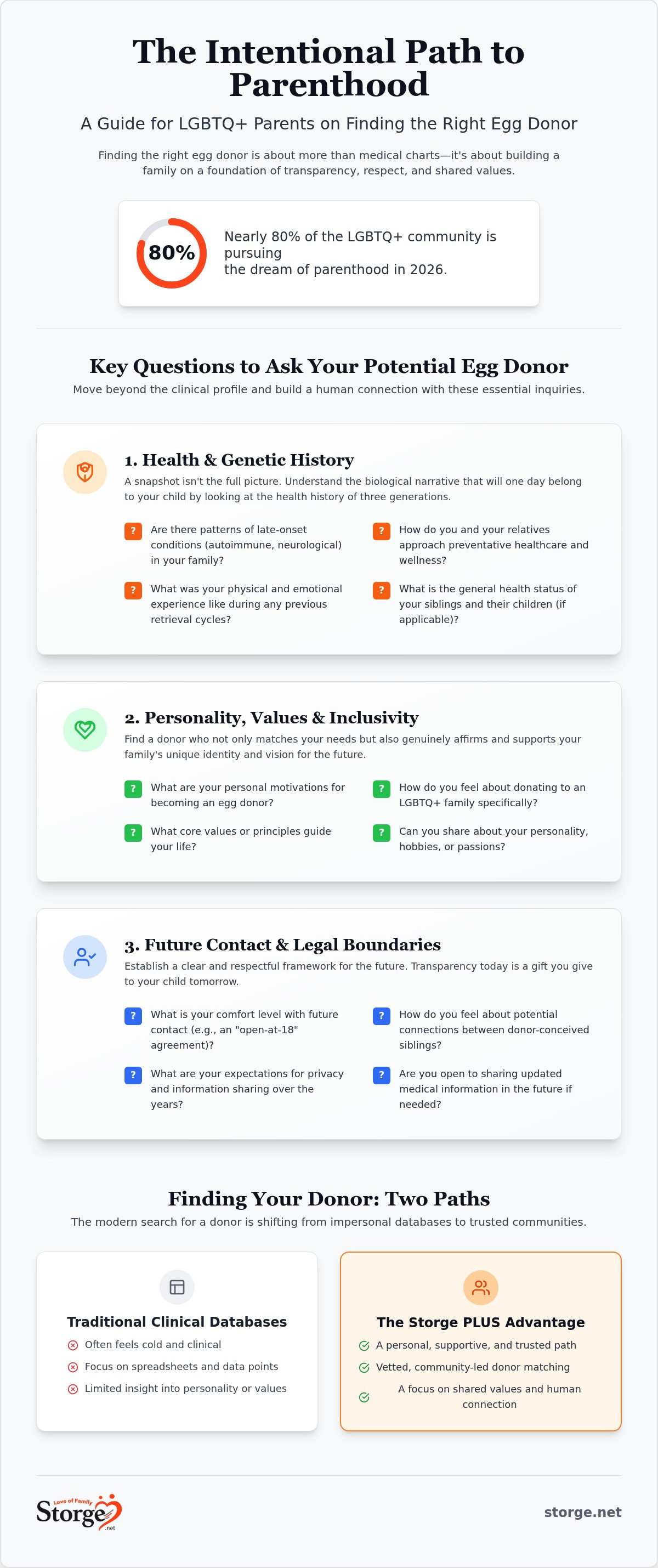
What if the most profound connection you build during this journey isn't found in a medical chart, but in the answers to a few intentional conversations? As we move through 2026, nearly 80% of the LGBTQ+ community is pursuing the dream of parenthood, yet the initial search often feels cold and clinical. It's easy to get lost in spreadsheets of genetic markers while wondering if a donor will truly honor your family's identity. Finding the right questions to ask an egg donor for LGBTQ parents is about more than just checking boxes; it's about ensuring your child's origin story is rooted in transparency and shared values.
You deserve to feel a sense of safety and belonging throughout this transition. We understand the anxiety that comes with choosing a donor who will respect your future contact preferences or disclosure plans. This guide offers a clear, supportive roadmap to help you vet potential matches with confidence. We'll walk you through the essential inquiries that bridge the gap between a clinical profile and a human connection, giving you the tools to build a family founded on mutual respect and a shared vision for the future.
Key Takeaways
- Learn how to move beyond basic medical files by asking about the health history of three generations to better understand your child's genetic heritage.
- Discover the essential questions to ask an egg donor for LGBTQ parents to ensure your donor genuinely affirms and supports your family's unique identity.
- Gain a clear framework for discussing future contact preferences and legal boundaries, including the donor's comfort with potential donor-sibling connections.
- Identify strategies for vetting a donor's personality and temperament to find a match that resonates with your family's values and vision.
- Understand why a community-led search through Storge PLUS provides a more personal and trusted path to finding a donor than traditional clinical databases.
Why the Right Questions Matter for LGBTQ+ Parents
In 2026, the landscape of family building has evolved significantly. We've moved away from the era of strictly anonymous donations toward a more open, identifiable donor model. This shift reflects a deeper understanding of a child's right to know their genetic history. When you prepare your list of questions to ask an egg donor for LGBTQ parents, you aren't just vetting a candidate. You're curating the first chapter of your child's life. This relationship is unique; the donor isn't a co-parent, but they are a vital contributor to your child's sense of self. Approaching this with transparency creates a foundation of respect that will sustain your family for decades.
Setting Your Intentions Before the Search
Before you dive into databases, define your values. What are your "must-haves"? Perhaps it's a specific ethnic heritage or a history of higher education. To Learn about the egg donation process is to realize that the medical aspect is only one layer of the journey. Framing this search as a proactive act of love helps reduce clinical overwhelm. You're looking for a partner in a dream. Identifying what traits matter most allows you to approach the search with clarity rather than anxiety.
- Cultural or ethnic heritage that matches your family's background.
- Personality traits like creativity, resilience, or a sense of humor.
- A shared outlook on the importance of community and inclusivity.
The Role of Disclosure and Transparency
Transparency is a gift you give your future child. Asking a donor about their motivations helps you explain their "why" to your child later on. It's also critical to gauge their comfort with LGBTQ+ families directly. Refining your specific questions to ask an egg donor for LGBTQ parents allows you to move past the clinical data. 2026 has seen a rise in "open-at-18" agreements, where children can contact the donor once they reach adulthood. You're protecting your child's future peace of mind.
By establishing these boundaries and intentions early, you shift the power dynamic from one of uncertainty to one of mutual respect. You aren't just finding an egg; you're finding a person who understands the weight of their contribution to your family. This clarity ensures that every decision you make is aligned with the values you'll one day teach your child.
Essential Health and Genetic History Questions
Most donor profiles provide a snapshot of health, but a snapshot isn't a complete picture. When you review a medical file, you're looking at a single moment in time. Building a family as a queer parent often involves a high level of intentionality. You want to ensure the genetic foundation you're choosing is as robust as the love you'll provide. This means looking beyond the standard screening forms provided by a bank or agency. It's about understanding the biological narrative that will one day belong to your child.
Diving Deeper into Family Medical History
Understanding the health of the donor's parents, grandparents, and siblings offers a window into your child's future. It's helpful to seek expert guidance on receiving a donor egg to understand which genetic markers are most significant for your specific situation. When considering the health of three generations, your list of questions to ask an egg donor for LGBTQ parents should include inquiries about longevity and chronic illness. You should feel empowered to ask about patterns that might not appear in a basic summary.
- Are there any patterns of late-onset conditions, such as autoimmune disorders or specific neurological issues, in your family?
- How do you and your relatives typically approach preventative healthcare and wellness?
- Are there specific genetic traits or predispositions your family talks about openly?
- What is the general health status of your siblings and their children, if applicable?
Questions About the Donation Process Itself
The physical and emotional experience of the donor matters more than many realize. If a donor has completed previous cycles, asking about those experiences can provide insight into their fertility and their commitment to the journey. These are vital questions to ask an egg donor for LGBTQ parents because they help you gauge the likelihood of a successful cycle. A donor who has successfully helped another family build their dream is often referred to as a "proven" donor, which can offer a sense of reassurance during a complex process.
- What was your physical and emotional experience like during any previous retrieval cycles?
- How did you feel about the medical requirements, such as self-administered injections and frequent clinic visits?
- Do you have a reliable support system in place to help you during the recovery phase?
- Are you comfortable with the specific timeline and medical protocol required for this cycle?
Exploring these medical nuances can feel overwhelming at first. If you're looking for a more personalized approach to finding a match, our vetted community resources can help you connect with donors who value transparency. Understanding the donor's current lifestyle and wellness habits further rounds out this picture. It's about finding a person whose approach to health and transparency aligns with your own family's values.
Personality, Values, and Inclusivity Questions
While medical records provide the biological foundation, the donor's personality and values form the heart of your child's origin story. Moving beyond the clinical data allows you to find a person whose temperament and outlook on life resonate with your own family's spirit. In 2026, intended parents are increasingly looking for donors who don't just provide a service, but who feel like a kindred spirit. This connection starts with understanding their "why." Is their motivation rooted in a desire to help others, or is it purely transactional? Understanding their drive helps you frame a positive narrative for your child in the years to come.
Vetting for LGBTQ+ Inclusivity
One of the most vital layers of your search is ensuring the donor genuinely supports and celebrates queer family building. It's a common anxiety for our community that a donor might have reservations about where their genetic material goes. You have every right to seek clarity on this. Professional organizations offer ASRM guidance on LGBTQ+ family building to ensure clinics maintain inclusive standards, but the donor's personal stance is equally important. These specific questions to ask an egg donor for LGBTQ parents help ensure a match based on mutual respect.
- What are your thoughts on helping a same-sex or queer couple realize their dream of parenthood?
- Are you comfortable with your eggs potentially being used by trans or non-binary parents?
- How would you describe your personal values regarding diverse family structures and community support?
- Do you have friends or family members within the LGBTQ+ community who have influenced your perspective?
Understanding Personality and Heritage
A child's identity is often a beautiful tapestry of their environment and their heritage. Asking about a donor's artistic interests, hobbies, or educational background isn't about "designing" a child. Instead, it's about finding points of connection. If your family values music, a donor with a passion for the cello might feel like a natural fit. These details provide the "human" element that clinical databases often strip away. When you consider the right questions to ask an egg donor for LGBTQ parents, focus on the traits that make them a unique individual.
- How would your closest friends describe your personality in just three words?
- What specific aspects of your cultural or ethnic heritage are you most proud of?
- What are your favorite hobbies, and how do they bring fulfillment to your life?
- What is a significant accomplishment in your life that you are particularly proud of so far?
By exploring these nuances, you move from a place of clinical selection to one of intentional connection. You aren't just looking for a donor; you're looking for a person whose values align with the world you're building for your future child. This approach ensures that your family's story is built on a foundation of pride and authenticity from the very beginning.
Navigating Future Contact and Legal Boundaries
Deciding on the level of contact you want with a donor is a deeply personal choice. In 2026, many families prefer identifiable or known donor arrangements to ensure their children have access to their history. This is where your specific questions to ask an egg donor for LGBTQ parents become vital legal and emotional tools. You need to know if the donor's vision for the future matches your own. You're building a bridge to your child's future, and that bridge needs a solid foundation of mutual understanding.
Defining the Level of Future Openness
The spectrum of openness ranges from completely anonymous to fully known. Most contemporary queer families find comfort somewhere in the middle, often referred to as semi-open donation. This might involve an agreement to share photos or medical updates through a secure intermediary. Understanding the donor's comfort level with future contact is essential for your peace of mind. It's also helpful to discuss social media boundaries early to avoid unexpected digital connections later on.
- Are you open to being contacted by the child once they reach legal adulthood at age 18?
- How do you feel about exchanging occasional life updates or photos through a third party?
- What are your specific expectations regarding privacy and the use of social media regarding this donation?
- Are you comfortable with your information being shared in a donor-sibling registry?
The Legal Framework for Your Protection
A handshake is never enough when it comes to family building. You need a formal agreement that clearly defines parental rights and the donor's role. This document protects your family and provides clarity for the donor. It's vital to work with a specialized LGBTQ family law attorney who understands the nuances of reproductive law in 2026. These legal professionals ensure that your intent to parent is recognized and that the donor's waiver of rights is ironclad.
While drafting these agreements, you might also want to review broader legal steps for LGBTQ parents to ensure your entire journey is secure. Your questions to ask an egg donor for LGBTQ parents should bridge the gap between emotional desires and legal realities. Asking a donor if they have any specific legal concerns or if they've reviewed a standard agreement before can save significant time and stress during the final stages of the matching process.
If you're feeling overwhelmed by the legal complexities, we can help. We provide attorney representation referrals to connect you with professionals who specialize in protecting queer families throughout the donation and surrogacy process.
The Storge PLUS Advantage: Finding Vetted Community Donors
Traditional egg banks and clinical databases often feel like scrolling through a cold list of statistics. For queer parents, the search is about more than matching genetic markers; it's about finding a person who understands and honors your path. A community-led search offers a sense of safety that clinical banks often lack. By choosing a platform designed specifically for our community, you skip the fear of encountering donors who don't fully respect your family structure. You're looking for an ally, and that search should happen in a space where your identity is celebrated, not just tolerated.
The Storge PLUS Membership acts as a safety net during this emotional phase. It connects you with a network of donors who have already expressed a clear desire to help LGBTQ+ individuals and couples build their families. This shared understanding significantly reduces the emotional labor of the search. You can focus your energy on the meaningful questions to ask an egg donor for LGBTQ parents, knowing that the baseline of respect and inclusivity is already established. It transforms the process from a clinical transaction into a collaborative journey.
Accessing a Trusted Network
Vetting fatigue is a real challenge for many intended parents in 2026. After months of researching laws and medical protocols, the prospect of interviewing donors can feel exhausting. Starting with a pre-screened pool of individuals who are already aligned with your values changes the dynamic. Instead of defending your right to parent, you're exploring a partnership. Our platform also helps you look beyond the donor, providing resources like questions to ask LGBTQ friendly fertility clinics to ensure every professional on your team is a true ally.
- Connect with donors who specifically choose to work with queer and trans parents.
- Reduce the time spent on basic inclusivity vetting by starting with a trusted community.
- Access verified resources for legal and medical referrals tailored to LGBTQ+ family building.
Next Steps in Your Journey
Once you find a match that resonates with your family's values, the transition to a clinical cycle begins. This is when your broader support team becomes vital. You'll need specialized legal and medical partners to move from a match to a pregnancy. Leverage our community to find attorney and fertility clinic referrals that have been vetted by parents who have walked this path before you. Your journey might be complex, but you aren't walking it alone. Your dream of parenthood is valid and achievable, and there is a community of experts and mentors ready to help you bring your child home.
Your Path to a Confident Connection
You've learned that the right questions serve as the bridge between a clinical database and a meaningful life story for your child. From uncovering deep genetic history to ensuring a donor's values align with your own, each inquiry strengthens the foundation of your future family. In 2026, the shift toward identifiable donors means that your choices today will provide your child with clarity and pride tomorrow. Having a comprehensive list of questions to ask an egg donor for LGBTQ parents allows you to navigate this journey with authority and peace of mind.
To move forward with a partner who truly sees your family, join Storge PLUS to access our vetted community of LGBTQ-friendly donors and resources. Our platform offers a trusted network of donors and gestational carriers, alongside verified fertility clinic directories and referrals to specialized family law attorneys. Your dream of building a family is a beautiful reality waiting to unfold. With the right guide and a supportive community by your side, you can step into this next phase with absolute confidence.
Frequently Asked Questions
Is it better to have a known or anonymous egg donor for LGBTQ+ parents?
In 2026, the trend leans heavily toward identifiable or known donors to support a child's future identity. While anonymity was once the standard, many experts now suggest that transparency helps avoid genealogical bewilderment. Choosing a known donor allows for potential future contact, which can be a significant emotional asset for your child's origin story. Ultimately, the best choice is the one that aligns with your family's comfort level and long-term disclosure plans.
What are the most important medical questions to ask an egg donor?
You should look beyond the basic profile to ask about multi-generational health patterns. Inquire specifically about late-onset conditions, such as autoimmune disorders or neurological health in the donor's grandparents and siblings. It's also vital to ask about her experience with previous retrievals and any known genetic predispositions. These questions to ask an egg donor for LGBTQ parents help you build a comprehensive health narrative for your future child that clinical forms often miss.
How do I know if an egg donor is truly LGBTQ-friendly?
Look for donors who have joined communities specifically designed for queer family building, like Storge PLUS. You can ask directly about their motivations and their personal views on diverse family structures. A truly supportive donor will express a genuine desire to help LGBTQ+ parents and will feel comfortable with your specific family dynamic. Starting your search in a vetted community ensures that the donors you meet are already aligned with your values.
Can I ask an egg donor about their religious or political beliefs?
Yes, you can ask about personal values if they are important to your family's culture. While these traits aren't genetic, they provide insight into the donor's worldview and temperament. You might ask how they describe their community involvement or what personal philosophies they hold dear. Finding a donor whose why resonates with your own beliefs can create a stronger sense of connection and peace of mind during the matching process.
What happens if the egg donor doesn't want future contact?
If a donor prefers a closed arrangement, you must respect those boundaries while considering your child's future needs. Some parents choose to move forward with a different match if they feel future contact is essential. If you proceed, ensure you have a clear medical history and a plan for how you'll discuss the donor's choice with your child. Legal agreements should clearly outline these contact expectations to prevent future confusion or emotional distress.
How much information will the donor have about me and my family?
The amount of information shared is usually determined by the type of agreement you reach. In known or semi-open donations, you might share your first names, general backgrounds, and even occasional photos. In anonymous cycles, the donor typically only receives basic demographic data about the intended parents. You have control over this disclosure level, and it's something you should discuss early in the vetting process to ensure mutual comfort.
Do I need a lawyer to ask these questions or finalize a match?
Yes, professional legal representation is essential to protect your parental rights. A lawyer specializing in reproductive law will draft a donor agreement that clearly defines intent and waives the donor's parental claims. This is especially critical for LGBTQ+ families to ensure legal security across different state jurisdictions. We provide referrals to specialized attorneys who understand the unique needs of our community, ensuring your legal foundation is as strong as your emotional one.
What is the difference between an egg bank and a community donor search?
Traditional egg banks often feel like clinical marketplaces with limited personal connection. A community donor search focuses on building relationships and verifying inclusivity from the start. This approach helps you refine your questions to ask an egg donor for LGBTQ parents by connecting you with individuals who specifically want to help queer families. It moves the experience away from a cold transaction and toward a supportive partnership rooted in shared values.


