
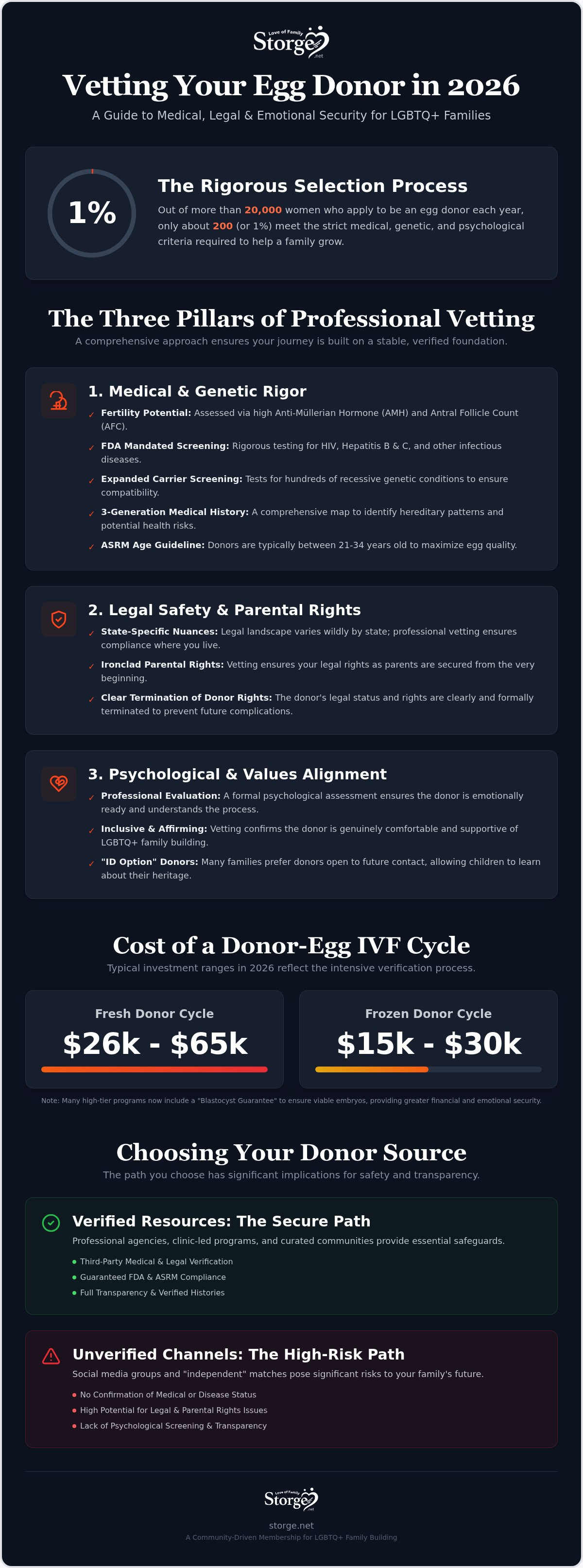
Out of more than 20,000 women who apply to become egg donors each year, only about 200 eventually meet the strict criteria required to help a family grow. This tiny percentage highlights just how rigorous the selection process is, especially when you're looking for a match who aligns with your values and specific legal needs. Vetting LGBTQ+ egg donors involves more than just scanning a medical profile; it's about ensuring your future child's heritage is protected by the most current safeguards available in 2026.
You likely feel the weight of this decision, perhaps worrying about complex medical jargon or the shifting legal landscape across different states. It's completely natural to want a path that feels both secure and deeply personal. We're here to help you move from a place of uncertainty to one of total confidence. This guide explains how to manage the vetting process with a focus on medical excellence and legal safety. We provide a clear checklist for evaluating donors, introduce you to a community of verified resources, and show you how to secure the legal peace of mind your future family deserves.
Key Takeaways
- Discover the 2026 medical and genetic standards that ensure your donor meets the most rigorous health and carrier screening requirements.
- Navigate the specialized legal considerations for vetting LGBTQ+ egg donors to secure your parental rights regardless of state-specific nuances.
- Evaluate the differences between commercial egg banks and clinic-led programs to determine which resource best fits your family's needs.
- Gain access to a practical checklist for reviewing donor profiles, focusing on transparency, legal clarity, and medical history.
- Learn how a community-driven membership can streamline your journey by connecting you with inclusive, pre-vetted donors and specialized professionals.
Understanding the Importance of Vetting LGBTQ+ Egg Donors
Vetting LGBTQ+ egg donors is far more than a simple background check. It's a comprehensive, multi-layered process that integrates medical screening, genetic mapping, and complex legal reviews to protect your future family. For queer parents, this journey carries unique weight. You aren't just looking for biological compatibility; you're looking for a partner in your story who understands and respects queer family structures. The egg donation process is a significant investment of both heart and resources. In 2026, a fresh donor-egg IVF cycle typically costs between $26,000 and $65,000, while frozen cycles range from $15,000 to $30,000. These figures reflect the intensity of the verification required to ensure safety and success.
Legal nuances vary wildly depending on where you and your donor live. While the Michigan Family Protection Act now simplifies parentage for non-biological parents, other states remain less inclusive. This makes vetting the donor’s legal status as critical as their health. You need to know that parental rights are clearly terminated and that your rights are ironclad from the start. This search for security often takes time, with most verified searches spanning several months to ensure every medical and legal box is checked.
The Role of Transparency in Donor Vetting
Seeking donors through unverified channels, such as social media groups, poses significant risks. These "independent" matches often lack the third-party verification necessary to confirm medical history or infectious disease status. In 2026, the FDA requires donors to undergo screening for a panel of diseases, including HIV and Hepatitis, within a specific window of the retrieval. Professional vetting ensures these standards are met without exception. Transparency creates a bridge of trust. When a donor's profile is verified by a reputable resource, it removes the guesswork and allows you to focus on the emotional connection rather than worrying about hidden complications.
Vetting for Shared Values and Inclusivity
It's essential to ensure your donor is genuinely comfortable with LGBTQ+ family building. Many intended parents now prioritize "ID Option" or open-identity donors. This choice allows your future child the opportunity to seek information or contact when they reach adulthood. Vetting for these values requires more than a checkbox; it involves understanding a donor's motivations and their long-term perspective on the gift they're giving. The Storge PLUS Membership was designed to solve this by filtering for both quality and inclusivity. By accessing a curated network, you connect with donors who have already been vetted specifically for the LGBTQ+ journey, ensuring your values are aligned from day one.
The Three Pillars of Professional Donor Vetting
The process of vetting LGBTQ+ egg donors rests on three foundational pillars: medical health, genetic compatibility, and psychological readiness. These standards ensure that your path to parenthood is built on a stable, verified foundation. In 2026, professional vetting goes beyond basic health checks. Many high-tier programs now include a "Blastocyst Guarantee," which promises that the donated eggs will result in at least one viable embryo reaching the blastocyst stage. This shift in the industry places the focus on outcomes and quality rather than just the number of eggs retrieved, providing you with greater financial and emotional security.
Medical and Genetic Rigour
Clinical vetting begins with assessing a donor’s biological potential. Specialists look for high Anti-Müllerian Hormone (AMH) levels and strong Antral Follicle Counts (AFC) to predict how well a donor will respond to stimulation. Beyond fertility, the FDA mandates rigorous infectious disease screening for HIV, Hepatitis B and C, and several other conditions within a strict window of the retrieval. Expanded Carrier Screening has become the norm, testing for hundreds of recessive genetic conditions to ensure compatibility with the sperm source. Documenting three generations of medical history provides a comprehensive map of hereditary patterns, allowing clinicians to identify potential late-onset conditions or recessive traits that a single-generation screen might miss. Following ASRM guidance on gamete donation, donors are typically between 21 and 34 years old to maximize egg quality and safety.
The Psychological Assessment
The emotional landscape of egg donation is just as important as the clinical one. A professional psychological evaluation is a non-negotiable step in the vetting process. It protects everyone involved by ensuring the donor fully understands the long-term implications of her gift. This assessment explores her motivations and her comfort level with "ID Option" arrangements, where the child may seek contact in the future. By addressing these topics early, you avoid potential emotional friction and ensure the donor’s values align with your family’s vision. This thorough approach builds a sense of safety and belonging for your future child. If you're feeling overwhelmed by these technical requirements, finding a trusted guide for your donor search can help demystify the data and focus on the connection.
Legal Safety: Vetting for LGBTQ+ Parental Rights
Vetting LGBTQ+ egg donors requires a sharp focus on the legal framework that will surround your future family. While medical health is the engine of the process, legal clarity is the shield. You must verify the "legal status" of your donor to ensure a total and irrevocable termination of their parental rights. This isn't just a formality; it's the foundation of your security as a parent. In 2026, the legal landscape remains a patchwork. For instance, while Michigan’s Family Protection Act now provides a clearer path for non-biological parents, other states lack these explicit protections. Your donor’s location matters as much as your own because the laws of the state where the retrieval occurs can impact the validity of your contract.
A standard donor agreement is often insufficient for queer families. You need a contract that anticipates your specific needs, including clauses for future medical updates and clearly defined boundaries for "Future Contact." This is why seeking a specialized LGBTQ surrogacy attorney is a non-negotiable step. These experts ensure your agreement is ironclad and recognized across state lines, protecting you from future disputes or jurisdictional confusion. They provide the professional reliability you need to move forward with a hopeful, aspirational outlook for your family's future.
Known vs. Anonymous Donors: A Legal Vetting Perspective
Choosing a known donor, such as a friend or relative, adds a beautiful layer of emotional connection, but it also increases legal complexity. A simple handshake or a verbal agreement is never enough. Vetting a known donor requires independent legal representation for both parties to prevent any claims of coercion or misunderstanding. Conversely, anonymous or "de-identified" donors through a bank offer a legal buffer. The bank typically handles the termination of rights before you even see the profile, providing a streamlined, though less personal, layer of protection.
Securing Your Parental Rights Pre-Conception
Your vetting strategy should always look two steps ahead to the birth of your child. Ensure the donor agreement is compatible with "Second Parent Adoption" or confirmatory adoption processes in your home state. Even if you are both listed on the birth certificate, these legal steps provide an extra layer of security that travels with you globally. Vetting for a "Pre-Birth Order" friendly contract is equally vital, as it allows you to be recognized as legal parents the moment your child is born. To find support and shared experiences during this phase, connecting with a vetted LGBTQ donor community can provide the resources and legal referrals necessary to navigate these transitions with confidence.
Navigating Verified Resources for LGBTQ Donor Conception
Choosing where to find your donor is as significant as the choice of the donor herself. In 2026, the landscape of fertility resources has expanded, offering several distinct paths for intended parents. Vetting LGBTQ+ egg donors requires you to look critically at the platforms hosting these profiles. Commercial egg banks are often the first stop for many because they offer high volume and standardized medical vetting. These banks typically manage the logistics of shipping frozen eggs, which can range from $15,000 to $30,000 per cycle. While they provide a sense of clinical security, they can feel impersonal and may not always prioritize the specific legal or cultural needs of the queer community.
Clinic-specific programs offer a different advantage by providing integrated care. When the clinic performing your IVF also manages the donor pool, communication is often more seamless. However, these programs usually have a much smaller selection of donors. Regardless of the resource you choose, you must stay alert for red flags. These include a lack of transparency regarding infectious disease screening, hidden administrative fees, or a database that uses outdated, non-inclusive language. If a resource cannot clearly explain how they verify a donor's medical history or legal status, it is best to look elsewhere.
Evaluating Fertility Clinics
Your fertility clinic is your primary partner in this journey, so their vetting standards must align with your own. Use a structured questions to ask LGBTQ friendly fertility clinic framework to gauge their expertise. It is vital to check their success rates specifically with donor eggs by reviewing SART (Society for Assisted Reproductive Technology) data. A clinic’s experience with LGBTQ+ family building should be evident in their paperwork, their staff's bedside manner, and their established relationships with inclusive legal professionals. They should treat your family structure with the respect and gravity it deserves.
The Power of Community Vetting
In 2026, we've seen a significant shift toward "Direct-to-Community" donor searches. Peer reviews within the LGBTQ+ community have become one of the most honest and effective vetting tools available. Intended parents are sharing their experiences with specific banks and agencies, highlighting which ones truly support queer families and which ones merely use inclusive marketing. Community platforms like Storge bridge the gap between impersonal banks and risky private searches by providing a safe, pre-vetted environment. This peer-backed approach ensures that the resources you use have been tested and trusted by people who share your values. To move forward with a search that prioritizes safety and belonging, you can find a vetted donor through our community today.
The Storge PLUS Advantage: A Vetted Community Approach
The journey to parenthood shouldn't feel like a solo expedition through a maze of medical data and legal jargon. While the technical rigour of vetting LGBTQ+ egg donors is essential, the practical reality of managing this process alone can lead to significant burnout. Storge PLUS was built to be your companion in this transition. It's more than a database; it's a vetted community designed to create a sense of safety and belonging. By joining the Storge PLUS Membership, you gain access to a curated network of donors who have already been screened through the lens of inclusivity and high medical standards. This community-first approach ensures that you aren't just finding a donor, but a partnership based on shared values and understanding.
Simplified Search, Verified Results
Storge handles the initial layers of verification so you don't have to. We bridge the gap between your personal dream and the practical reality of achieving it by offering professional referrals to specialized attorneys and fertility clinics. This team approach significantly reduces vetting fatigue. Instead of starting from scratch with every profile, you're looking at a selection of candidates who already meet the gold standard for 2026 genetic testing and legal eligibility. This steady, methodical process ensures that your search is defined by hope rather than stress, providing a sense of order and calm during a significant life transition.
Your Next Steps to Parenthood
Taking the next step toward your family starts with moving from research to action. Once you join the community, your first priority should be establishing your legal and medical team through our vetted referrals. Consulting with a specialized attorney early ensures that your donor contract is tailored to your specific state's requirements before you even choose a match. Finally, review your vetting checklist, covering everything from AMH levels to ID Option preferences, to ensure you're fully prepared for your first clinic appointment. This structured progression turns a complex process into a manageable, joyful journey toward parenthood. By prioritizing your peace of mind and long-term success, we help you build a future family on a foundation of professional reliability and deep empathy.
Your Vision for Family Starts with Certainty
The path to parenthood is one of the most significant transitions you'll ever navigate. By focusing on medical rigour, genetic transparency, and specialized legal protection, you've already taken the first steps toward ensuring your future family's security. Vetting LGBTQ+ egg donors is a complex task, but it becomes a joyful journey when you have the right partners by your side. You deserve a process that respects your identity and prioritizes your peace of mind from the very first search.
We invite you to join Storge PLUS to access our vetted LGBTQ+ donor community and move forward with total confidence. Our membership provides you with a direct path to a community-vetted donor and carrier network, an LGBTQ-inclusive fertility clinic directory, and referrals to specialized attorneys who understand the nuances of queer family law. You don't have to navigate these technical and emotional waters alone. With a steady guide and a supportive community, your dream of starting a family is within reach. We look forward to walking this path with you.
Frequently Asked Questions
What does "vetted" actually mean in the context of egg donation?
A vetted donor has undergone a rigorous, multi-layered review involving medical, genetic, and psychological assessments. In 2026, this includes FDA-mandated infectious disease screening and expanded carrier testing for hundreds of genetic conditions. Vetting LGBTQ+ egg donors also requires a thorough legal review to ensure parental rights are irrevocably terminated. This comprehensive process protects your future family from medical surprises and legal complications, providing a foundation of professional reliability and long-term peace of mind.
Is it safer to use an egg bank or a private community donor?
Choosing between a bank and a community donor depends on your priorities for connection and inclusivity. Commercial banks offer high-volume, standardized medical vetting but can feel clinical and impersonal. Community-led platforms provide a more human-centric approach, connecting you with donors who share your values. Both paths require professional legal and medical oversight. Our membership model offers the best of both worlds by providing a vetted network of donors alongside referrals to inclusive clinics and attorneys.
How much does it cost to professionally vet an egg donor in 2026?
While cycle costs vary, professional vetting is typically bundled into agency or bank fees. A fresh donor-egg cycle in 2026 often ranges from $26,000 to $65,000, while frozen cycles range from $15,000 to $30,000. These figures cover donor compensation, medical screenings, and legal contracts. Investing in a verified search ensures that high standards for genetic testing and infectious disease screening are met, reducing the risk of failed matches or future legal disputes.
Can I use an egg donor if I live in a state with restrictive LGBTQ+ laws?
You can certainly grow your family regardless of your home state's laws, but specialized legal guidance is essential. Vetting LGBTQ+ egg donors in this context involves choosing a donor in a jurisdiction with protective laws and securing your parental rights through confirmatory or second-parent adoption. We provide referrals to attorneys who specialize in navigating these state-specific nuances, ensuring your legal status as a parent is protected and recognized across the entire country.
What genetic tests are considered mandatory for donor vetting today?
Genetic vetting in 2026 centers on Expanded Carrier Screening, which identifies potential risks for hundreds of recessive conditions. Clinicians also require a documented three-generation medical history to identify hereditary patterns. These tests are mandatory to ensure compatibility with the sperm source and to protect the long-term health of your child. This data-driven approach removes the guesswork, allowing you to focus on the emotional aspects of choosing the right donor for your family.
How do I know if a fertility clinic is truly LGBTQ-friendly?
A truly inclusive clinic demonstrates its commitment through every interaction, from gender-neutral intake forms to specialized success rates. You should check SART data to verify their experience with donor egg cycles, which often show pregnancy rates between 60% and 80%. An LGBTQ-friendly clinic will also have established referral networks with reproductive attorneys. We maintain a directory of verified clinics that have been vetted by our community for their empathy and professional reliability.
What is the "ID Option" and why is it important for vetting?
The "ID Option" refers to an open-identity arrangement where the donor agrees to be contacted by the child once they reach age 18. This is a critical component of vetting for shared values and long-term psychological well-being. Many queer families prioritize this option to provide their children with access to their biological heritage. Vetting for this preference ensures that the donor's motivations align with your family's vision for transparency and open communication in the future.
Should I vet my donor for their psychological health as well as physical?
Psychological vetting is a non-negotiable step that protects both the intended parents and the donor. A professional evaluation ensures the donor fully understands the medical procedures and the long-term emotional implications of her gift. This assessment identifies any underlying mental health concerns and confirms her readiness for the donation process. By prioritizing psychological health, you build a more stable and ethical foundation for your journey, ensuring a positive experience for everyone involved.


