
Choosing a donor is often framed as a simple medical transaction, but for our community, it's actually the first and most critical legal safeguard you'll ever build for your child. You've likely spent hours scrolling through profiles, feeling the weight of medical jargon and the nagging fear of unverified online groups. Vetting sperm donors for LGBTQ families shouldn't feel like a gamble with your future peace of mind. It's natural to feel overwhelmed by the complexity of genetic screening and the shifting legal realities of 2026.
We understand that you're looking for more than just a vial; you're seeking a foundation of safety and shared values. This guide provides a framework that prioritizes medical rigor, ironclad legal protection, and community-led trust. We'll walk through the latest 2026 FDA requirements, explain how new protections like the Massachusetts Parentage Act secure your rights, and help you find a donor who feels like the right fit for your family's story. By the end, you'll have a clear, actionable plan to move forward with confidence.
Key Takeaways
- Look for expanded genetic panels that test for over 500 conditions, ensuring your donor selection exceeds basic FDA screening requirements for a healthier future.
- Never rely on verbal agreements; instead, prioritize an ironclad Sperm Donor Agreement to protect your parental rights against the legal complexities of 2026.
- Vetting sperm donors for LGBTQ families through a community-driven model offers a safer, more transparent middle ground than anonymous banks or unverified social groups.
- Follow a clear, three-pillar framework that balances clinical data with your family's personal values to reduce anxiety and streamline your decision-making.
- Build a trusted support team by seeking referrals for inclusive family law attorneys and fertility clinics who specialize in queer family building.
What Does 'Vetted' Truly Mean for LGBTQ+ Sperm Donation?
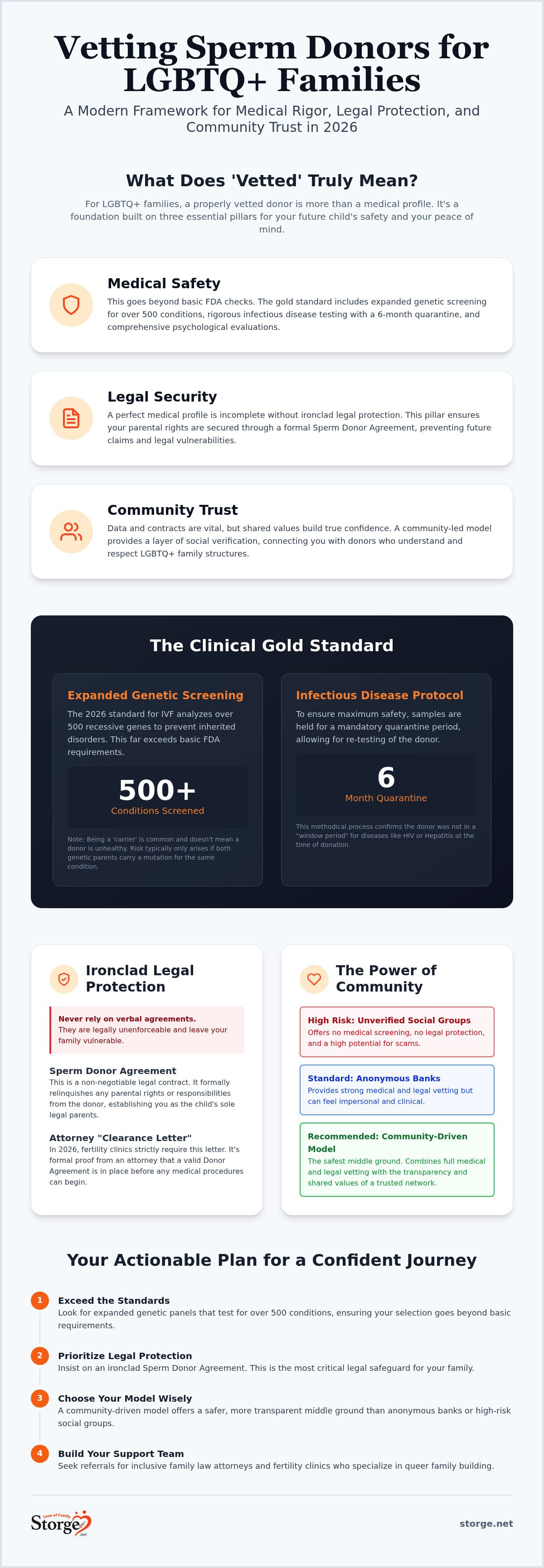
Vetting is often misunderstood as a simple medical checklist. For our community, it's actually a three pillar framework: medical safety, legal security, and community trust. While a sperm donation overview often focuses on the clinical side, vetting sperm donors for LGBTQ families requires a much deeper look. In 2026, standard FDA screening is merely the floor. It ensures basic health, but it doesn't address the nuanced needs of queer parents, such as specific genetic compatibility or long term legal protection.
We've seen a significant shift this year toward 'Open ID' donors. This movement prioritizes the rights of donor-conceived persons (DCPs) to access their genetic history. Modern vetting now includes assessing a donor's willingness to be contacted in the future. This transparency helps prevent emotional hurdles and unexpected health surprises for your child down the road. Proper vetting isn't just about the present; it's about securing your family's future.
Medical Vetting vs. Legal Vetting
A donor can have a perfect medical profile, but without legal vetting, your parental rights remain vulnerable. Medical vetting focuses on genetic panels and infectious diseases. Legal vetting ensures that the donor has no claim to the child and that you're recognized as the sole parents. Clinics in 2026 strictly require "Clearance Letters" from attorneys before proceeding with any procedure. These letters confirm that a valid Sperm Donor Agreement is in place. Always verify that your chosen bank holds current national certifications to ensure they meet 2026 safety standards.
The Rise of Community-Led Vetting
Data points and legal contracts are essential, but they can sometimes feel cold and clinical. This is where community led vetting changes the experience. Shared values matter. Vetting sperm donors for LGBTQ families through platforms like Storge PLUS provides a layer of social verification that anonymous banks simply can't offer. You aren't just looking at a database entry. You're connecting with a network where donors understand and respect LGBTQ+ family structures. This is the vital difference between unverified social media groups, which carry high risks of scams, and a trusted community that prioritizes your peace of mind.
The Clinical Gold Standard: Medical and Genetic Screening
Vetting sperm donors for LGBTQ families begins with a commitment to clinical excellence that goes far beyond basic blood work. In 2026, the gold standard involves a multi-layered approach designed to protect both the birthing parent and the future child. This process ensures that every donor has undergone rigorous physical and psychological evaluations before their samples are ever made available. By adhering to the ASRM guidelines for LGBTQ+ family building, clinics maintain a high threshold for safety and ethical transparency.
Infectious disease testing remains a cornerstone of the vetting process. Samples are typically held in a six-month quarantine period. This delay allows for re-testing of the donor to confirm they weren't in a "window period" for diseases like HIV or Hepatitis at the time of donation. This methodical pace reflects a deep respect for your family's health and long-term security. While you review a donor's profile, you'll also encounter family medical trees and childhood photos. These tools aren't just for curiosity; they're vital data points that help you visualize the genetic heritage you're inviting into your home.
Interpreting Genetic Carrier Screening
Being a carrier for a condition doesn't mean a donor is "unhealthy." It simply means they carry one copy of a mutated gene. Risks only arise if both the donor and the biological parent carry the same mutation. Expanded carrier screening is the 2026 standard for IVF that analyzes over 500 recessive genes to prevent inherited disorders. We highly recommend genetic counseling to help you interpret these results with clarity. If you're feeling overwhelmed by the data, finding vetted fertility clinic referrals can connect you with experts who specialize in navigating these complex genetic matches.
Psychological and Social Vetting
Banks now look deep into a donor's history through personality tests and detailed essays. These documents offer a glimpse into the donor’s motivations and core values. In 2026, donors are increasingly vetted for their "Open ID" willingness, which reflects a mature understanding of a donor-conceived child's future needs. You should watch for red flags in self-reported social histories, such as inconsistencies in education or health claims. A donor who is transparent and consistent in their life story is often a more reliable partner in your family-building journey.
Legal Vetting: Protecting Your Parental Rights
While medical screening ensures the health of your future child, legal vetting is what secures your role as a parent. Vetting sperm donors for LGBTQ families requires a proactive approach to state laws that are rapidly evolving. In 2026, we've seen major shifts with the Illinois Equality for Every Family Act and the Massachusetts Parentage Act, both of which streamline how queer parents establish legal bonds. However, relying on these laws alone isn't enough. You need a customized legal strategy that accounts for your specific family structure and the type of donor you choose.
The "Known Donor Trap" is a common hurdle where families rely on handshake agreements or informal promises. These informal arrangements carry high risks of future custody disputes or unintended child support claims. A robust Sperm Donor Agreement (SDA) is essential. It clearly defines the donor's lack of parental rights and responsibilities. While the FDA Donor Eligibility Regulations mandate specific disease screenings, they don't address parental rights, leaving that critical gap to be filled by private contracts and state level parentage actions.
Even with a strong contract, many families still choose to complete a second parent adoption or a confirmatory adoption. This provides an extra layer of protection that's recognized in every state, regardless of future political shifts. It's about building a legal fortress around your family. By terminating the donor’s potential rights at the outset, you ensure that your parental status is ironclad from day one.
Vetting Your Legal Representation
You shouldn't settle for a general practice lawyer. Assisted Reproductive Technology (ART) law is highly specialized. You need someone who understands the nuances of 2026 parentage statutes and LGBTQ+ family protections. Legal fees for known donor contracts typically range from $1,000 to $3,000, which is a vital investment in your child's security. You can find a vetted professional through Storge's attorney referrals to ensure your representation is both experienced and community-aligned.
Contracts for Known vs. Anonymous Donors
Legal vetting looks different depending on your donor source. With a bank, the legal work is largely handled through their standard terms, but you must still verify how they manage future medical updates. With a friend or known donor, the contract must be much more detailed, covering everything from future contact boundaries to travel permissions. It's a common misconception that a notarized letter is a legally binding donor contract; in reality, only a formal Sperm Donor Agreement drafted by a specialized attorney provides the protection your family needs.
Community-First Vetting: The Storge PLUS Advantage
Clinical sperm banks often feel like vast, impersonal supermarkets. For many queer parents, this "transactional" atmosphere adds a layer of anxiety to an already emotional journey. Vetting sperm donors for LGBTQ families should feel like building a community, not just checking boxes on a medical form. By shifting toward a community-first model, you gain access to a network where donors aren't just anonymous numbers. They're individuals who have specifically chosen to support LGBTQ+ family building. This shared understanding creates a foundation of mutual respect that a standard bank simply cannot replicate.
The Storge PLUS Membership acts as a vital trust filter in this process. While we've discussed medical and legal rigor in previous sections, the "human" side of vetting is where community insights shine. Peer reviews and social verification help you understand a donor's personality and their long-term intentions. This layer of social vetting ensures you're connecting with someone whose values align with your own, reducing the fear of unverified online interactions or scams.
Accessing a Vetted Network
Storge PLUS goes beyond basic screening by ensuring every donor in our network is specifically LGBTQ+ affirming. This transparency is a core part of vetting sperm donors for LGBTQ families. You aren't just searching a database; you're joining a verified LGBTQ donor community where connection is the priority. This model encourages donors to be more open about their motivations, providing you with a clearer picture of the person behind the profile. It's about moving from a place of uncertainty to a place of belonging and confidence.
Beyond the Search: Long-term Community Support
Vetting doesn't end once you've selected a donor or even after your child is born. A community-driven platform provides ongoing support through donor-sibling registries and resources for future family conversations. As your child grows, having access to a vetted network makes it easier to navigate questions about their heritage. This long-term commitment to transparency helps you manage medical updates and social connections with ease. If you're ready to move away from cold, clinical databases, you can start your vetted donor search today to find a partner who truly respects your family's story.
A Step-by-Step Framework for Vetting Your Ideal Donor
Some platforms suggest that finding a match is as easy as 1-2-3. We believe that vetting sperm donors for LGBTQ families deserves more depth and care than a simple transaction. This is about your future child’s health and your own legal security. A structured framework helps you stay organized while managing the emotional weight of these decisions. By following a clear path, you can transition from feeling overwhelmed to feeling empowered. This methodical approach ensures that every medical and legal detail is handled before you begin your fertility cycle.
- Phase 1: Define your deal-breakers. Focus on medical history, physical traits, and values that align with your family’s vision.
- Phase 2: Perform the deep dive. This involves a meticulous review of the donor’s genetic profile and family medical tree to identify potential risks.
- Phase 3: Secure legal clearance. Connect with a specialized ART attorney to ensure your state’s parentage laws support your specific arrangement.
- Phase 4: Verify clinic compatibility. Confirm that your clinic’s storage and shipping logistics match the requirements of your donor source.
- Phase 5: Finalize the contract. Once all boxes are checked, sign your Sperm Donor Agreement and secure your vials to begin your journey.
Following these steps helps demystify the process, breaking it down into manageable phases. Vetting sperm donors for LGBTQ families is a marathon, not a sprint, and having a plan prevents decision fatigue. Each phase builds upon the last, creating a comprehensive safety net for your family's future.
Vetting Your Fertility Clinic
Your fertility clinic acts as the bridge between your donor selection and your future child. It's essential to confirm that they are experienced with third-party reproduction and have inclusive staff training. You should ask about their internal vetting protocols to see how they verify tissue quality upon arrival. A clinic that offers vial quality guarantees demonstrates a commitment to your success, ensuring that the samples you’ve carefully vetted are handled with the highest clinical standards throughout the thawing and insemination process.
Finalizing the Decision with Confidence
Choosing a donor is a significant milestone that requires both logic and heart. While you’ve spent weeks analyzing genetic reports and legal contracts, don't ignore your intuition in the final moments. Involving your partner or a close support system can help ground you when the data feels heavy. Trusting your gut is a valid part of the vetting process. When you're ready to take that first step toward connection, joining the Storge PLUS community provides the supportive environment you need to begin your search with absolute peace of mind.
Building Your Family with Confidence and Safety
You now have the tools to move beyond the clinical jargon and legal uncertainty that often cloud the path to parenthood. Vetting sperm donors for LGBTQ families is a journey that requires a balance of medical rigor, ironclad legal strategy, and a supportive community. By following the three pillar framework of medical, legal, and social verification, you ensure that your family’s foundation is built on transparency and mutual respect. This proactive approach doesn't just result in a healthy child; it guarantees that your rights as a parent are protected for a lifetime.
We believe you shouldn't have to navigate these complex 2026 regulations alone. When you're ready to start your search, we provide access to specialized attorney referrals, a vetted LGBTQ inclusive clinic directory, and a trusted community led donor network. Join Storge PLUS to access our vetted LGBTQ+ family building community and connect with partners who share your vision for the future. Your dream of building a family is within reach, and with the right guide, you can move forward with absolute peace of mind. We're honored to be part of your story.
Frequently Asked Questions
Is it safer to vet a donor from a bank or a known donor?
Safety depends on the vetting framework you choose to follow. Banks offer standardized medical screening, but known donors often allow for deeper community trust and shared values. Vetting sperm donors for LGBTQ families through a community platform like Storge PLUS provides a middle ground. It combines social verification with the clinical rigor of bank-sourced samples, reducing risks associated with unverified private arrangements while maintaining a human connection that respects your family's story.
What are the most important genetic tests to look for in 2026?
In 2026, the clinical gold standard is expanded carrier screening. This testing typically analyzes over 500 recessive genetic conditions to identify potential health risks before conception. You should also look for updated chromosome analysis and specific panels tailored to the biological parent's heritage. Always consult with a fertility clinic to interpret these results, as they ensure the donor’s genetic profile is compatible with your own health history and long-term family goals.
Can a sperm donor claim parental rights if we have a contract?
A well-drafted Sperm Donor Agreement is designed to prevent a donor from claiming parental rights. However, legal protections vary significantly by state. In 2026, modern laws like the Massachusetts Parentage Act provide clearer paths for queer families to establish parentage. To ensure your rights are ironclad, it's essential to work with specialized legal counsel. A contract is a powerful tool, but it's often paired with a confirmatory adoption for maximum security nationwide.
How much does it cost to legally vet a sperm donor contract?
Legal fees for specialized donor contracts vary depending on the complexity of your state’s parentage laws and the donor type. These costs involve an investment in your child’s security and are essential for navigating the intricacies of 2026 Assisted Reproductive Technology law. These fees cover the drafting of a Sperm Donor Agreement and the necessary legal filings to secure your rights. Seeking attorney representation referrals ensures you find a professional who understands these critical protections.
What is the difference between an anonymous donor and an Open ID donor?
Anonymous donors have no contact with the family, while Open ID donors agree to be contacted by the child once they turn 18. The trend in 2026 strongly favors Open ID donors to respect the rights of donor-conceived persons. This transparency allows children to access their genetic history and medical updates later in life. Choosing an Open ID donor is often seen as a commitment to your child's future emotional well-being and sense of identity.
Does the FDA vet sperm donors for LGBTQ+ families specifically?
The FDA sets national standards for screening and testing communicable diseases, but they don't vet for LGBTQ+ specific needs. Their focus is on public health safety rather than legal parentage or community values. Vetting sperm donors for LGBTQ families requires additional layers of screening that go beyond federal requirements. This includes specialized legal contracts and inclusive clinical protocols that ensure the donor understands and respects the unique structure of your family and your parental rights.
How do I know if a fertility clinic is truly LGBTQ-friendly?
A truly inclusive clinic will have specific experience with third-party reproduction and queer family structures. Look for staff who use inclusive language and clinics that have clear protocols for non-biological parents during the treatment process. You can also check for certifications from major industry organizations. Seeking fertility clinic referrals through a community-centric platform can help you find providers who have been social-verified by other LGBTQ+ parents who have successfully navigated their own journeys.
What happens if a donor's medical history changes after I've used their sperm?
Reputable sperm banks and community networks maintain systems for medical updates to protect your child's health. If a donor develops a significant health condition, they are encouraged or contractually required to report it to the bank or platform. This information is then shared with families who used that donor’s samples. Having a donor-sibling registry or an Open ID agreement makes this communication much more effective, ensuring you have the data needed to manage your child’s health.


