

What if the person helping you start your family is legally recognized as a parent, even if you never intended them to be? For many, choosing a friend or a known contact as a donor feels more personal and connected, but it also introduces unique legal vulnerabilities. You want to focus on the joy of your future child, yet the fear of custody disputes or confusion over state laws often lingers. Understanding the legal rights with a known sperm donor for LGBTQ couples is the most critical step in ensuring your family's foundation is built on solid ground. We believe every parent deserves the peace of mind that comes from knowing their path to parenthood is protected by the law.
This guide will help you secure your parental rights and protect your family’s future by demystifying the complexities of modern donor legalities. We'll explore the essential components of a Known Donor Agreement and how 2026 updates, like the Equality for Every Family Act, are reshaping the landscape for inclusive families. From streamlining confirmatory adoptions to finding specialized legal counsel, you'll find a clear path to undisputed parentage. It's time to move from uncertainty to a place of confidence and safety.
Key Takeaways
- Moving beyond biological connections requires a clear legal strategy to avoid "default father" status and unintended child support obligations.
- Learn how to navigate legal rights with a known sperm donor for LGBTQ couples by establishing a robust Known Donor Agreement (KDA) before conception.
- Discover why consulting with an LGBTQ-inclusive family law attorney is a non-negotiable first step in protecting your growing family's future.
- Understand the distinction between a contract between adults and the court’s priority on the child’s best interests, highlighting the need for independent counsel.
- Find out how joining the Storge PLUS community provides a safety net through vetted donor networks and professional legal referrals.
Understanding the Known Donor Path for LGBTQ Families
Choosing a known donor is a deeply personal decision that prioritizes connection over anonymity. A known donor is typically a friend, a family member, or a trusted acquaintance who agrees to provide sperm for conception. For many in our community, this path is chosen because it offers a clear window into the child's medical history and cultural identity. It allows a child to grow up with a narrative of their origins that feels grounded in a pre-existing relationship. However, this beautiful connection also brings a unique set of legal responsibilities. The central challenge lies in the tension between biological reality and parental intent. Historically, courts leaned heavily on biology, but the legal framework is shifting to better reflect the diverse ways we build our lives.
As we move through 2026, the legal landscape for queer families is becoming more affirming. Significant legislative updates, such as the Equality for Every Family Act in Illinois and the Massachusetts Parentage Act, have replaced gendered language with inclusive terms. These laws ensure that parentage cannot be denied based on gender identity or sexual orientation. Many families utilize assisted reproductive technology for LGBTQ people to bring their children into the world, but the legal rights with a known sperm donor for LGBTQ couples require careful navigation to ensure the donor's role is clearly defined from the start.
Known Donor vs. Anonymous Bank: Key Differences
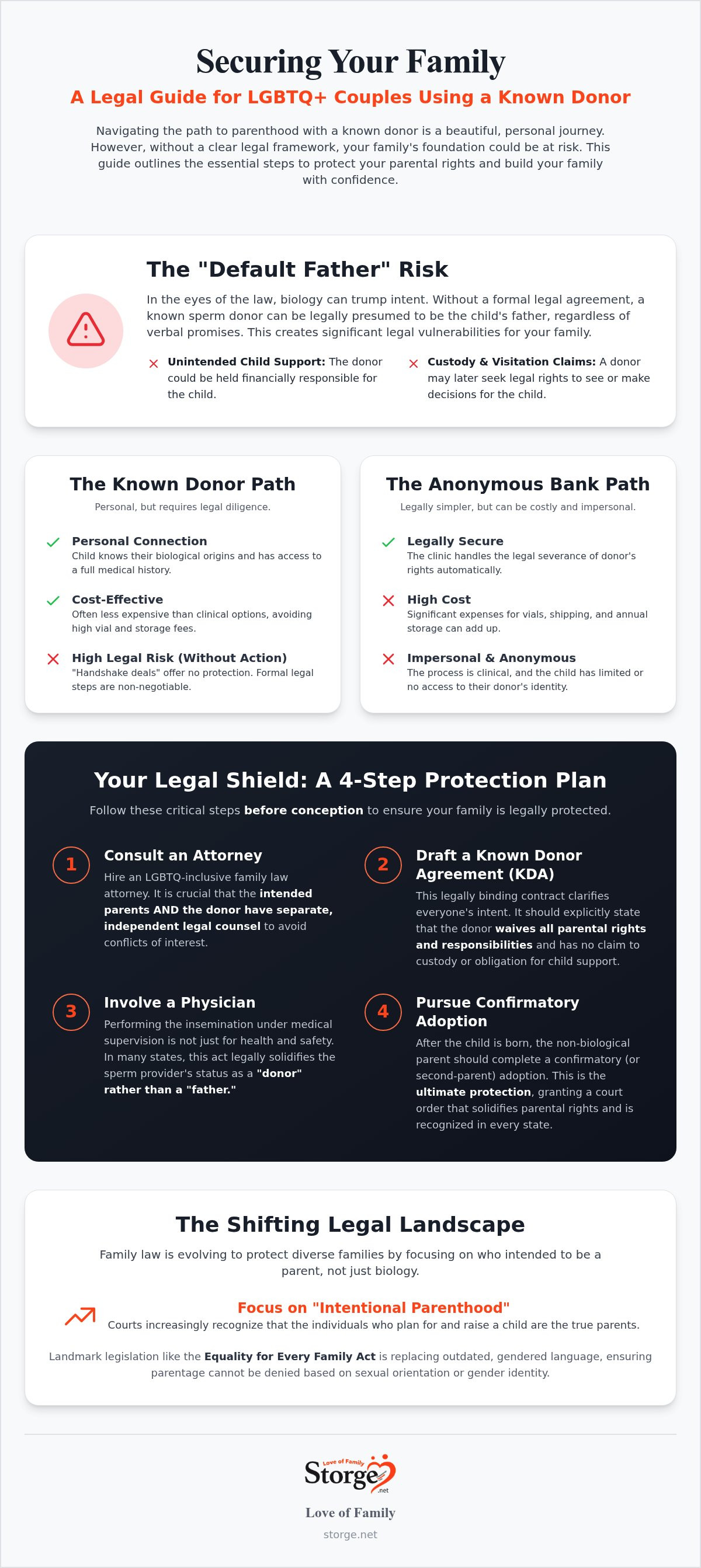
Opting for a clinical sperm bank often feels like the "safer" route because the bank handles the legal severance of the donor's rights. It's a clinical process that can be expensive, often involving storage fees and high costs per vial. In contrast, a known donor arrangement is frequently more cost effective and emotionally resonant. The child gains a biological connection they can actually know, which many parents find invaluable for the child's sense of self. Despite these benefits, the legal rights with a known sperm donor for LGBTQ couples aren't automatically protected the way they are in a clinic setting. Without a formal agreement, the law might still view your friend as a legal father with both rights and obligations.
The Role of Intent in Family Building
Modern family law is increasingly focused on "Intentional Parenthood." This doctrine suggests that the individuals who intended to bring the child into the world and raise them should be recognized as the legal parents. Establishing this intent before any medical procedures take place is a non-negotiable step. While "DIY" home insemination feels private and comfortable, doing so without legal documentation is incredibly risky. Without a contract that clearly states the donor has no parental intent, you leave your family's future up to a judge's interpretation of state law. Securing your family means moving from a handshake agreement to a verified legal foundation.
The Legal Risks of "DIY" Sperm Donation
Choosing a known donor often feels like a warm, community-driven act. It’s built on a foundation of trust and shared history. But in the eyes of family court, trust isn't a substitute for a formal contract. Without a legally binding framework, a biological donor is frequently viewed as the "Default Father." This status carries heavy legal weight. If a court decides the donor is the legal parent, they may be held liable for child support, regardless of what you agreed upon over coffee. Conversely, a donor might later experience a change of heart and seek visitation or custody rights, overriding your family’s boundaries. A simple verbal agreement or a "handshake deal" provides zero legal protection when these life-altering conflicts arise. Securing the legal rights with a known sperm donor for LGBTQ couples requires moving beyond informal promises into verified legal territory.
When Biology Trumps Trust
Even the strongest friendships can fracture under the pressure of major life transitions. We've seen cases where donors, initially happy to be a "cool uncle" figure, feel a biological pull after the child is born and pursue parental rights. In many states, the method of conception matters just as much as the intent. Some jurisdictions only recognize a donor as a non-parent if a physician performs the insemination. Performing the procedure at home without medical oversight can complicate your legal standing, making it harder to prove that the donor waived his parental rights. Coupling medical clearance with a robust legal contract is the only way to ensure the law respects your family structure. Seeking guidance from a professional who understands these nuances is essential, and you can find attorney representation referrals through our network to ensure your path is secure.
Protecting the Donor and the Parents
Clear legal boundaries are a gift to the donor, not just the intended parents. It eliminates the lingering fear of future financial or emotional liability that could arise years down the line. When the donor’s role is clearly defined as "non-parental" from day one, everyone involved can move forward with a shared understanding of their specific role in the child's life. This clarity fosters a healthier environment for the child, who grows up in a family where every adult's position is stable and undisputed. It transforms a potentially volatile biological connection into a secure, intentional relationship. By addressing these legal rights with a known sperm donor for LGBTQ couples early, you're not just signing a document; you're protecting the peace of mind of everyone who loves your child.
Essential Protections: Agreements and Adoptions
Securing your family's future requires a two-tiered approach. First, you establish the intentions of everyone involved through a clear contract. Second, you cement those intentions with a court order. While many people believe that being listed on a birth certificate or being married is enough, the reality of legal rights with a known sperm donor for LGBTQ couples is more complex. Marriage provides a presumption of parentage, but that presumption can be challenged in certain jurisdictions or if you move to a state with less inclusive laws. A contract is a vital record of intent, yet it does not bind a judge who must prioritize the "best interests of the child." To bridge this gap, you need both a Known Donor Agreement and a second-parent adoption.
Key Clauses in a Known Donor Agreement
A robust Known Donor Agreement (KDA) serves as the blueprint for your family's relationship with the donor. It must include a clear, unequivocal waiver of all parental rights and responsibilities. This means the donor acknowledges they have no claim to custody and no obligation for financial support. Beyond the basics, the KDA should outline future contact. Will the donor be an active part of the child's life, or will they remain a distant biological connection? Setting these boundaries in writing prevents emotional confusion and boundary crossing later. Finally, confidentiality and privacy clauses protect your family’s story, ensuring that the details of your journey remain yours to share.
The Necessity of Second-Parent Adoption
If a KDA is the foundation, second-parent adoption is the roof that keeps your family dry. This legal process allows the non-biological parent to establish a permanent, legal bond with the child that is recognized nationwide. Under the "Full Faith and Credit" clause of the U.S. Constitution, a court-ordered adoption in one state must be respected by every other state. This is the only way to fully and finally terminate a donor's potential claims. Even in 2026, as states like New Mexico and Vermont streamline confirmatory adoptions by removing requirements like home studies, this step remains the gold standard for security. It ensures that your legal rights with a known sperm donor for LGBTQ couples are undisputed, no matter where life takes your family. The result is a birth certificate that reflects the true, intended parents and a sense of peace that cannot be shaken.
Step-by-Step Guide to Securing Your Legal Rights
Securing the legal rights with a known sperm donor for LGBTQ couples isn't a single event but a methodical process. It begins long before the first attempt at conception. By following a chronological path, you transform a personal agreement into a legally recognized family structure. This journey requires moving through specific phases that satisfy both state laws and medical best practices. Here is the roadmap to protecting your future child and your parental status.
- Step 1: Schedule a consultation with an LGBTQ-inclusive family law attorney. This should happen before any medical procedures take place to ensure you understand the specific requirements of your state.
- Step 2: Draft and sign your Known Donor Agreement. It's vital that the donor has their own independent counsel to review the document. This prevents future claims that the donor didn't understand the contract or was pressured into signing.
- Step 3: Perform the insemination through a licensed fertility clinic. Many states only offer full legal protection to donors and parents when a physician oversees the process, which effectively "vouches" for the donor's status.
- Step 4: File for a pre-birth or post-birth parentage order where available. These orders provide immediate recognition of your parental status at the moment of birth.
- Step 5: Complete a second-parent or confirmatory adoption. This final step provides the ultimate security, ensuring your rights are protected if you travel or move to a different jurisdiction.
Finding the Right Legal Representation
Not every lawyer is equipped to handle the nuances of assisted reproductive technology (ART). You need a specialist who understands the specific hurdles queer families face. Knowing how to find an LGBTQ family law attorney who has experience with donor contracts can save you from costly errors. One of the most important aspects of this representation is ensuring the donor has their own separate attorney. If the donor doesn't have independent counsel, a court might later set aside the agreement, arguing it was one-sided. We can help you start this process today through our attorney representation referrals.
Working with Your Fertility Clinic
Your medical team is a key partner in your legal strategy. Clinics maintain rigorous records that document the intent of all parties involved. These medical files serve as evidence that the sperm was provided as a donation rather than a parental contribution. Before choosing a provider, prepare a list of questions to ask LGBTQ friendly fertility clinic staff regarding their experience with known donors. A clinic that is well-versed in these arrangements will know exactly how to document the process to satisfy legal requirements, acting as a secondary layer of protection for your family's legitimacy.
Building Your Family with the Storge PLUS Community
Starting a family is one of the most profound transitions you'll ever experience. While the previous sections outlined the technical steps required to secure legal rights with a known sperm donor for LGBTQ couples, we know that a checklist alone doesn't provide the emotional security you need. That's where community comes in. Storge PLUS isn't just a platform; it's a bridge between your personal dream and the practical reality of achieving it. By connecting you with a trusted LGBTQ donor community, we ensure you don't have to walk this path in isolation. You'll find a space where shared values and mutual understanding are the foundation of every connection.
Accessing vetted resources in one place reduces the overwhelming noise often associated with family building. Instead of spending hours searching for a lawyer who "gets it," you can lean on our established network of experts. This centralized approach allows you to focus on the joy of the journey rather than the stress of the logistics. We position ourselves as your long-term partner, standing by you from the initial donor search through to the final legal adoptions that protect your family forever. Our communication rhythm is designed to be methodical and reassuring, providing order during a time of significant change.
Vetted Donors and Verified Resources
Choosing a donor is a decision that carries significant weight. A community-first approach offers a layer of safety that anonymous banks or unverified social media groups simply cannot provide. Within Storge PLUS, we prioritize professionals and donors who truly understand queer family dynamics. This means the attorney representation referrals we provide aren't just legal experts; they're practitioners who specialize in national family building and understand the nuances of parentage orders in 2026. This level of verification ensures that every step you take is backed by high-quality, reliable information, allowing you to build your life on a stable foundation.
Taking the Next Step in Your Journey
The legal process doesn't have to be intimidating when you have the right support system. By joining a network that celebrates and protects diverse family structures, you gain more than just information; you gain peace of mind. We're here to help you move from a place of uncertainty to a place of absolute confidence. Your family deserves a foundation that is legally undisputed and emotionally supported. This partnership is based on shared values and a deep respect for your unique path. Join Storge PLUS today to start building your family with confidence.
Securing Your Family’s Future Together
Building a family with a known donor is a journey of deep intention and connection. While the biological link offers a beautiful narrative for your child, it requires a robust legal architecture to ensure those roles remain clear and protected. We've explored how a Known Donor Agreement serves as your initial foundation; second-parent adoption provides the permanent, nationwide security every queer family deserves. Securing the legal rights with a known sperm donor for LGBTQ couples shouldn't feel like a solitary burden. By prioritizing clear contracts and professional medical oversight, you transform a personal dream into a protected reality.
You don't have to navigate these complexities alone. Our platform is designed to be your steady guide, offering specialized resources and a community that truly understands your path. It's time to move forward with the confidence that your parental rights are undisputed. Access our vetted network of LGBTQ-inclusive attorneys and donors with Storge PLUS to begin your journey with total peace of mind. Your family’s story is just beginning, and we’re honored to help you protect it.
Frequently Asked Questions
Can a known sperm donor sue for custody later?
Yes, a donor can seek custody if his parental rights haven't been legally terminated. While a Known Donor Agreement documents your initial intent, it isn't always enough to stop a biological father from pursuing rights in court. The only way to ensure your family’s safety is to finalize the process through a second-parent adoption. This court order provides a permanent shield that a simple contract cannot offer on its own.
Do we need a lawyer if the donor is a close friend or family member?
You definitely need a lawyer, even if you trust the donor completely. Friendships can change over time, and a specialized attorney ensures that your agreement meets specific state requirements. Legal rights with a known sperm donor for LGBTQ couples are complex and vary by jurisdiction. Having professional representation protects everyone involved from future emotional or financial distress. Storge provides referrals to vetted ART attorneys who understand these unique family dynamics.
Is a signed contract enough to stop a donor from being the legal father?
A signed contract is a vital first step, but it isn't a final solution. Courts prioritize the child's best interests over adult agreements, meaning a judge could potentially override your contract. To fully secure your family, you must follow the agreement with a court order, such as a confirmatory adoption. This ensures the donor's parental rights are formally terminated and the non-biological parent's rights are legally recognized nationwide.
How much does it typically cost to secure legal rights with a known donor?
Industry averages for drafting a sperm donor contract typically hover around $590, though attorney fees can range from $500 to $2,000 depending on your state. If you proceed with a second-parent adoption, you should budget between $250 and $3,000 for legal expenses. While these costs vary, investing in professional legal architecture early on prevents the much higher financial and emotional price of a future custody battle.
Does the non-biological mother need to adopt her own child?
Yes, the non-biological mother should pursue a second-parent or confirmatory adoption. Even if her name is on the birth certificate, that document doesn't provide the same level of protection as a court order. Under the Full Faith and Credit clause, an adoption is recognized in every state, which is crucial if you move or travel. States like New Mexico and Vermont have recently streamlined this process for LGBTQ families in 2025 and 2026.
What happens if we do a home insemination instead of using a clinic?
Home insemination carries significant legal risks because many states only recognize "donor" status if a licensed physician performs the procedure. Without a clinic's medical records, a court might classify your donor as a legal father with full parental rights and obligations. Using a fertility clinic provides a clear medical paper trail that supports your legal rights with a known sperm donor for LGBTQ couples, making your parentage much harder to challenge.
Can the donor waive his child support obligations in a contract?
No, a donor cannot legally waive child support obligations through a private contract alone. Since child support is considered a right belonging to the child, courts can override any agreement between adults to ensure the child is provided for. The only way to permanently sever a donor’s financial obligation is through a court-ordered adoption. This process legally replaces the donor with the second parent, terminating the donor's rights and responsibilities forever.
How do we find an attorney who specializes in LGBTQ family law?
You should look for an attorney who specializes in Assisted Reproductive Technology (ART) and has a proven track record with LGBTQ families. These specialists understand the nuances of parentage acts and evolving state laws. Finding a trusted professional can be overwhelming, which is why Storge PLUS offers a vetted network of attorney representation referrals. We connect you with experts who are dedicated to protecting diverse family structures and securing your legal path.


