

What if the clinical hurdles of the fertility industry were replaced by a path that truly honors your identity? For many, the dream of building a family feels shadowed by the fear of gender dysphoria in medical settings or the overwhelming complexity of securing legal parentage. Exploring surrogacy for transgender parents shouldn't mean compromising your comfort or your future rights. You deserve a process that feels as affirming as the life you've worked so hard to build.
We understand that the journey involves unique considerations, from pausing gender-affirming hormone therapy for genetic preservation to finding a gestational carrier who celebrates your family structure. This guide offers a clear, empathetic roadmap through the medical and legal landscape of 2026. You'll learn how to identify trans-inclusive clinics, manage the financial realities of the industry, and utilize specific legal protections to ensure your parental status is never in doubt. By the end of this article, you'll have the tools to move from a hopeful dreamer to a confident parent, supported by a community that sees and respects you.
Key Takeaways
- Learn why proactive genetic preservation, such as cryopreservation, is the gold standard for protecting your future family options before or during your transition.
- Understand the essential medical and logistical steps involved in surrogacy for transgender parents, including how to manage hormone therapy for successful retrievals.
- Explore diverse paths to biological parenthood, from reciprocal IVF with a partner to finding supportive connections within the LGBTQ donor community.
- Discover why legal safeguards like Pre-Birth Orders and second-parent adoption are vital for securing your parental rights across the country.
- Learn how joining a vetted community helps you avoid clinical bias while connecting with gestational carriers who'll respect and affirm your journey.
Navigating Surrogacy for Transgender and Non-Binary Parents
Transgender surrogacy is a collaborative family-building process that respects and affirms the intended parents identity while securing their genetic legacy. It's a journey that allows you to maintain your reproductive autonomy while continuing your transition, proving that gender-affirming care and parenthood are not mutually exclusive. In 2026, proactive planning is the cornerstone of a successful journey, as it allows you to align the logistical and emotional complexities of surrogacy for transgender parents with your personal timeline. This approach ensures that your path to building a family is defined by your choices rather than clinical limitations.
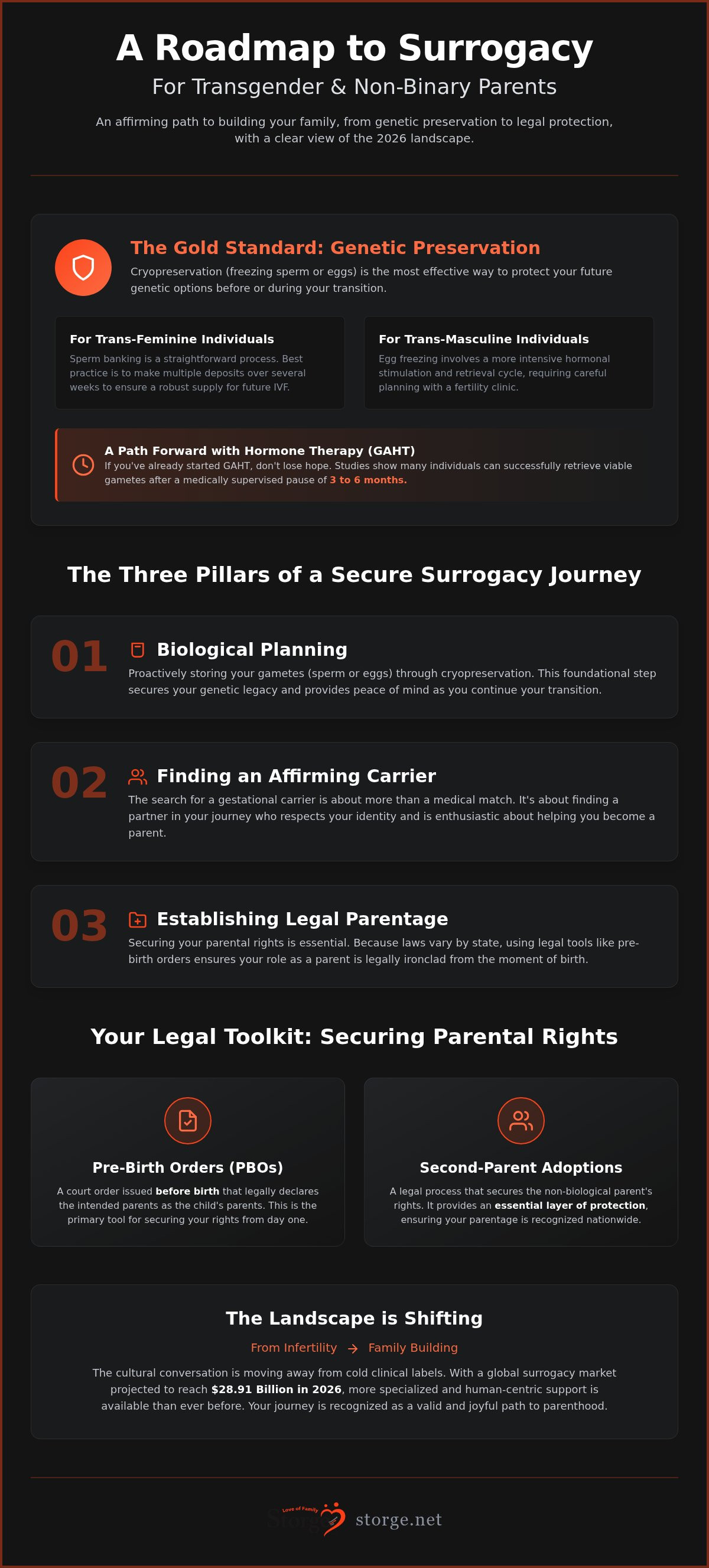
Building a family as a trans or non-binary person often means navigating a system that wasn't originally designed with your specific needs in mind. However, the landscape is shifting. With the global surrogacy market reaching $28.91 billion in 2026, there's more specialized support available than ever before. This growth has paved the way for a more human-centric approach that prioritizes your safety, your identity, and your long-term success.
Shifting the Narrative: From Infertility to Family Building
We're moving away from cold, clinical labels that historically pathologized trans bodies. Instead of viewing fertility through a lens of dysfunction, we recognize it as a powerful choice and a preserved potential. The increased visibility of "seahorse dads" and trans-feminine parents in the media has transformed the cultural conversation, making it clear that trans joy includes the right to raise children. In 2026, setting realistic expectations means acknowledging that while the path is more accessible, it still requires a steady guide to navigate varying state laws and clinical environments. Success today isn't just about medical procedures; it's about finding a community that sees your parenthood as valid and joyful.
The Three Pillars of the Trans Surrogacy Journey
A secure path to parenthood rests on three distinct foundations that provide stability for your future family. These aren't just checkboxes. They're the framework for your peace of mind throughout the process.
- Pillar 1: Biological Planning and Genetic Preservation. This involves the proactive storage of gametes. Utilizing Assisted Reproductive Technology for LGBTQ+ People allows you to secure your genetic legacy before starting or continuing certain aspects of medical transition.
- Pillar 2: Finding Trans-Affirming Carriers. The search for a gestational carrier is about more than a medical match. It's about finding a partner who is enthusiastic about helping a trans or non-binary individual become a parent and who respects your identity throughout the pregnancy.
- Pillar 3: Establishing Legal Parentage. Because laws vary significantly across the country, securing your rights through pre-birth orders and second-parent adoption is essential. This ensures your role as a parent is legally ironclad from the moment your child is born.
By focusing on these pillars, surrogacy for transgender parents becomes a manageable, empowering process. It transforms a complex industry into a clear roadmap toward the family you've always envisioned, supported by experts who understand your unique perspective.
Medical Foundations: Preservation and the Impact of HRT
Cryopreservation serves as the definitive gold standard for anyone considering surrogacy for transgender parents. It's the most effective way to protect your future genetic options. While early preservation is often recommended, 2026 clinical research offers a more hopeful outlook for those who've already begun their medical transition. Recent studies indicate that many individuals can successfully retrieve viable gametes after pausing gender-affirming hormone therapy (GAHT) for a period of 3 to 6 months. This shift in medical understanding means your path to parenthood isn't necessarily closed if you're already on hormones.
Trans-feminine individuals typically find sperm banking to be a straightforward process. Timing is vital, as estrogen can significantly impact sperm production. Clinical best practices in 2026 emphasize making multiple deposits over several weeks to ensure a robust "bank" for future IVF cycles. If you've been on hormones for a long time, don't lose hope. Many people see a return of viable sperm after a temporary, supervised break from GAHT.
Trans-masculine individuals navigating egg freezing face a more intensive retrieval cycle. This process involves hormonal stimulation and transvaginal ultrasounds, which can be emotionally taxing. However, modern protocols are becoming more sensitive to these challenges. By working with experts who understand the nuances of surrogacy for transgender parents, you can design a retrieval plan that prioritizes both your medical success and your emotional well-being.
Navigating the Retrieval Process with Dysphoria in Mind
Advocating for yourself in a clinical setting is vital for a positive experience. Many leading clinics now offer trans-inclusive protocols, such as using alternative medications like letrozole to keep estrogen levels low during egg stimulation. This helps minimize gender-incongruent side effects that might otherwise trigger dysphoria. Finding a trans-affirming fertility clinic that respects your name and pronouns can significantly reduce the weight of these medical appointments. You shouldn't have to choose between your comfort and your future family.
Sperm and Egg Banking Logistics
Privacy is often a top priority for trans and non-binary parents. At-home collection kits for sperm banking have become highly reliable, offering a discreet alternative to in-clinic procedures. For egg retrieval, in-clinic visits remain necessary, but many facilities now provide private waiting areas and gender-neutral facilities. Long-term storage requires careful consideration. Annual storage fees are a recurring cost, so it's wise to factor these into your long-term budget. If you're feeling overwhelmed by the logistics, joining a supportive network can help you find vetted fertility referrals that align with your values.
Genetic, Donor, and Gestational Paths to Parenthood
Choosing how to bring your child into the world is a profound decision that reflects your personal values and your vision for your family. While some individuals prefer the anonymity of large, commercial banks, many find that a trusted, vetted community is safer and more affirming than a public database. This is especially true when navigating surrogacy for transgender parents, where shared respect and mutual understanding are the bedrock of the entire experience. By focusing on connections within a supportive network, you can ensure that every person involved in your journey is genuinely invested in your success.
Reciprocal IVF for Trans-Masculine and Trans-Feminine Partners
For couples, Reciprocal IVF, or the "Co-IVF" model, offers a unique way to share the biological journey of pregnancy. In this scenario, one partner provides the genetic material while the other partner carries the pregnancy. This path allows both parents to have a physical and emotional connection to the process from the very beginning. It's a beautiful way to weave your individual identities into the creation of your child. However, it's vital to consider the legal implications of shared biological parenting in a trans-led household. Even when there is a genetic link, the non-gestational parent often needs to take specific legal steps to ensure their rights are fully protected across all jurisdictions.
The Role of the LGBTQ Donor Community
When your own genetic material isn't the right fit for your journey, you may choose to utilize the LGBTQ donor community for sperm or egg donation. Choosing a donor from within a community that understands the nuances of queer and trans family-building provides an extra layer of comfort. These donors are often more attuned to the importance of identity and legacy, making the selection process feel like a partnership rather than a transaction. This community-driven approach helps minimize the risk of encountering bias and ensures that your donor's values align with your own.
Gestational Surrogacy for Trans Parents
In gestational surrogacy, the carrier has no genetic relationship to the child they're carrying. This distinguishes it from traditional surrogacy and is the preferred path for most families in 2026. Vetting carriers for trans-inclusivity is a critical step; you want a partner who celebrates your identity and feels honored to help you build your family. Finding this alignment early on creates a sense of safety for everyone involved. For those seeking additional perspective on the matching process, our gay surrogacy guide offers shared carrier search insights that are highly relevant to the trans parenting experience. This collaborative approach ensures that your gestational carrier is a true ally in your journey.
Legal Protections and Securing Parental Rights
Securing your family unit requires more than just a name on a piece of paper. While a standard birth certificate is a significant milestone, it may not provide full protection for your parental rights if you travel or move across state lines. The legal landscape of surrogacy for transgender parents remains a complex patchwork of regulations that varies significantly depending on where your child is born. Even with modern parentage laws expanding across the country, a court judgment remains the gold standard for national security. Relying solely on administrative documents can leave your family vulnerable to future legal challenges; therefore, establishing an ironclad legal foundation is your most important step.
To ensure your rights are portable across the entire United States, you'll likely need a combination of a Pre-Birth Order (PBO) and a second-parent adoption. A PBO allows you to be recognized as the legal parent from the moment of birth, but a second-parent adoption provides a court decree that other jurisdictions are constitutionally required to respect. This "belt and suspenders" approach is especially vital for non-biological trans parents who need to guarantee their legal standing is never questioned. Finding an LGBTQ family law attorney who understands the nuances of trans identity is essential to navigating these requirements with confidence.
The Importance of Specialized Legal Representation
General family law practitioners may not grasp the specific language needed to protect trans-led families. Your surrogacy contract should explicitly use your correct gender and parental titles, such as "father" or "parent," rather than defaulting to gendered boilerplate language. These contracts do more than just define intent; they act as a shield for the non-biological parent by clearly documenting the shared goal of building a family. By drafting documents that anticipate and neutralize potential biases in the legal system, your attorney ensures that your identity is a source of strength for your family's legitimacy rather than a point of contention.
Advocating for Inclusive Healthcare Vetting
Your legal safety should be mirrored by your clinical experience. There's a significant difference between "trans-friendly" clinics, which might simply tolerate your presence, and "trans-competent" clinics, which have established protocols for your care. When vetting providers, ask specific questions about their experience with trans-led families and their staff's training on gender-affirming language. The goal is an inclusive birth experience where every professional, from the fertility specialist to the labor and delivery nurse, treats your family with the respect you deserve. If you're ready to start building your professional support team, you can access our specialized attorney and clinic referrals to find partners who truly understand your journey.
Building Your Family with Storge PLUS
Building a family through surrogacy for transgender parents shouldn't feel like a transaction with a detached agency. It's a deeply personal journey that thrives when you're surrounded by people who share your values. While traditional agencies often lead with high fees and clinical distance, a community-driven approach puts your identity at the center of the process. This is exactly where the Storge PLUS Membership makes a difference. It transforms a complex industry into an affirming experience by connecting you with a network that's already been vetted for inclusivity and respect.
Community-based family building is the most empowering path for the trans community because it bypasses the gatekeeping often found in standard medical and legal settings. Instead of explaining your identity to every provider, you start from a place of mutual understanding. This foundation of trust allows you to focus on the joy of becoming a parent rather than the stress of potential discrimination. You deserve a path that's as steady and reliable as the family you're about to create.
Accessing the Vetted Donor and Carrier Network
Finding a match is about more than medical compatibility; it's about finding a gestational carrier who honors your pronouns and a donor who understands the significance of your genetic legacy. Storge PLUS ensures that everyone on the platform is aligned with LGBTQ+ family values. This closed community provides a layer of security that public databases simply can't offer. You can conduct your donor egg or sperm search and your surrogacy search with the peace of mind that you're in a space designed to protect your privacy. It's a safer way to find partners who are genuinely enthusiastic about your journey to parenthood.
Taking the Next Step in Your Journey
Moving from the research phase to active family building is a significant milestone. It's the moment your dream begins to take a tangible shape. By joining the Storge community, you gain access to specialized Attorney Representation Referrals and Fertility Clinic Referrals. These are professionals who don't just "tolerate" trans parents; they specialize in supporting them. You don't have to navigate the legal or medical hurdles alone. Every step you take is backed by a partnership based on understanding and shared goals. Your road to parenthood is ready for you to begin, and we're here to guide you every step of the way. Join us today and start your search for the team that will help bring your child home.
Embracing Your Future as a Parent
The journey toward building your family as a trans or non-binary individual is a profound testament to your resilience and hope. By focusing on the essential pillars of medical preservation, legal security, and community-driven matching, you're creating a stable foundation for your future child. Whether you're navigating the nuances of sperm or egg banking or seeking the national protection of a second-parent adoption, you don't have to manage these steps alone. The landscape of surrogacy for transgender parents is evolving, and the specialized tools you need to succeed are more accessible than ever before.
You deserve a family-building experience that affirms your identity and respects your journey. With a vetted LGBTQ+ community and specialized legal and medical referrals at your fingertips, you can move forward with genuine confidence. Join Storge PLUS to access our vetted community of donors and carriers today and begin an inclusive search that prioritizes your safety and peace of mind. Your dream of parenthood is a beautiful reality waiting to happen, and the roadmap to achieving it is within your reach. We're honored to be your steady guide on this life-changing path.
Frequently Asked Questions
Can I still use my own eggs if I have been on testosterone for years?
Yes, many trans-masculine individuals successfully retrieve eggs after a temporary break from testosterone. You'll typically need to pause hormone therapy for 3 to 6 months to allow your natural cycle to resume. While every body responds differently, 2026 clinical data suggests that retrieval rates for those who pause testosterone are often comparable to those who haven't started. It's a journey that requires patience but offers a viable path to genetic parenthood.
Does gender-affirming surgery always mean I cannot have biological children?
No, gender-affirming surgery only impacts biological parenthood if the reproductive organs are removed. Procedures like chest reconstruction or certain genital surgeries don't necessarily prevent you from using your own genetic material. If you've had an oophorectomy or orchiectomy, you'll need to rely on previously frozen gametes or a donor. It's always best to discuss your specific surgical history with a specialist who understands the nuances of diverse family-building paths and proactive genetic preservation.
How much does surrogacy for transgender parents typically cost?
The total cost of surrogacy for transgender parents in 2026 typically ranges from $150,000 to $220,000. This national average includes surrogate compensation, which often falls between $65,000 and $110,000, along with medical and legal expenses. In some regions, complex cases involving multiple IVF cycles can increase the total. Many families manage these costs by utilizing specialized grants, employer benefits, or community-based support systems that prioritize inclusive and transparent financial planning for every intended parent.
What is a seahorse dad and how does the surrogacy process work for them?
A seahorse dad is a transgender man who chooses to carry and give birth to his own child. When a seahorse dad uses a gestational carrier instead, the process follows the standard surrogacy for transgender parents roadmap. He provides his own eggs, which are fertilized with donor or partner sperm to create an embryo. This embryo is then transferred to a surrogate, allowing the father to build a biological family while bypassing the experience of pregnancy.
Do I need a lawyer if I am using a known donor within the trans community?
Yes, a specialized attorney is absolutely essential even when working with a known donor from your community. A legal contract clearly defines parental rights and responsibilities from the start. This prevents future disputes and ensures the donor's parental rights are formally terminated while yours are legally established. Without these protections, you may face challenges with birth certificates or international travel. Professional legal guidance provides the security and legitimacy your new family deserves from day one.
Can trans women use their own sperm for IVF after starting hormone therapy?
Many trans women can retrieve viable sperm after a temporary break from estrogen and blockers. While hormone therapy often suppresses sperm production, it isn't always permanent. Clinical protocols in 2026 suggest a cessation period of 3 to 6 months to allow production to recover. Success depends on various factors, including the length of time on HRT. Working with a trans-competent clinic ensures your health and identity are respected during this specific retrieval period.
Are there specific grants available for trans people pursuing surrogacy?
Specific grants are often available through national non-profit organizations dedicated to LGBTQ+ family building. These groups offer financial aid cycles to help offset the costs of IVF and gestational carrier fees. Additionally, many modern employers now offer inclusive fertility benefits that cover various paths to parenthood. It's helpful to research community-based scholarships early, as they often have specific application windows designed to support trans and non-binary individuals in their journey.
What happens to my stored genetic material if I decide not to use it?
You have several meaningful options for your unused genetic material. You can choose to keep it in long-term storage for future use, which involves an annual fee. Alternatively, you can donate it to another family through an embryo or gamete donation program. Some individuals choose to donate their material to scientific research to help advance reproductive medicine. If none of these feel right, you can also request that the clinic respectfully and safely discard the material.


