
What if the medical milestones of your transition weren't a closing door, but rather the foundation for a new chapter of parenthood? Many people assume that starting hormone replacement therapy or undergoing gender-affirming surgery means letting go of the dream of having a biological family. However, family building after transition is not only possible in 2026; it's a path being walked by thousands of trans and non-binary individuals using advanced medical technology and evolving legal protections. You've likely felt the weight of conflicting advice or the fear that traditional clinics won't see your family for what it truly is. We understand that this journey often feels like following a map with missing pieces, especially when you're balancing the costs of surrogacy or the complexities of donor searches.
This guide provides the clarity you deserve by breaking down the medical, legal, and community pathways available to you today. You'll discover how options like IVF and ROPA work within a trans-inclusive framework and learn how to protect your parental rights through vetted legal representation. From finding the right donor to connecting with a supportive community, we're here to help you move from uncertainty to a concrete plan for your future family. Our goal is to bridge the gap between your personal dream and the practical reality of holding your child for the first time.
Key Takeaways
- Understand how hormone replacement therapy affects your future fertility and explore modern medical options for family building after transition even if you didn't freeze gametes earlier.
- Learn how to navigate surrogacy and donor searches with confidence by focusing on paths that respect your gender identity and personal values.
- Discover why securing your parental rights requires more than just a birth certificate and how to find specialized legal representation to protect your future.
- Simplify the complexities of your journey by accessing a vetted network of inclusive fertility clinics and community supported resources that prioritize your safety.
What Does Family Building After Transition Look Like?
Family is a legacy. For many in the LGBTQ+ community, the journey toward self-actualization through transition eventually leads to a desire to share that authentic life with a child. This shift from individual growth to building a family is a profound milestone. It represents a move toward a future where your identity and your role as a parent exist in harmony. However, the path isn't always linear. Traditional fertility systems often fail trans and non-binary individuals because they're built on binary assumptions. These "standard" journeys frequently lack the inclusive language, medical protocols, and legal safeguards necessary to protect trans families. Whether you're exploring biological paths, donor assistance, or surrogacy, your journey requires a specialized framework that respects your history and your body.
In 2026, Transgender parenting is more visible than ever, yet the practical steps remain complex. You might choose a biological path by temporarily pausing gender-affirming care, or you may find that donor-assisted reproduction or surrogacy feels like the right fit for your goals. Each of these primary paths carries its own set of emotional and physical considerations. The goal is to move beyond the limitations of traditional care and create a roadmap that honors your unique transition while securing your future as a parent.
The Intersection of Gender Identity and Fertility
Gender-affirming care and reproductive health are deeply connected, even if they're often treated as separate fields. Hormone replacement therapy (HRT) affects gamete production, but it doesn't always mean the end of your reproductive options. Using affirming language in a clinical setting isn't just about comfort; it's about medical accuracy and safety. When providers understand how your specific transition affects your anatomy, they can offer better care. Family building after transition is a multifaceted medical and legal process that requires specialized care and intentional planning. This intersectional approach ensures that your medical needs are met without compromising your gender identity.
Acknowledge the Journey: From Transition to Parenthood
Choosing to become a parent after transitioning is a powerful act of hope. It's common to feel a conflict between your desire for parenthood and your identity, especially if you've been told these two paths can't coexist. We're here to tell you that they can. Overcoming the "fertility vs. transition" binary is a major part of the emotional landscape. You don't have to sacrifice one for the other. Community support is vital during this time, as connecting with others who have navigated family building after transition provides a sense of belonging and practical wisdom. You're extending your journey of authenticity to the next generation, and that's a beautiful legacy to build.
Medical Realities: Navigating Fertility and Assisted Reproduction
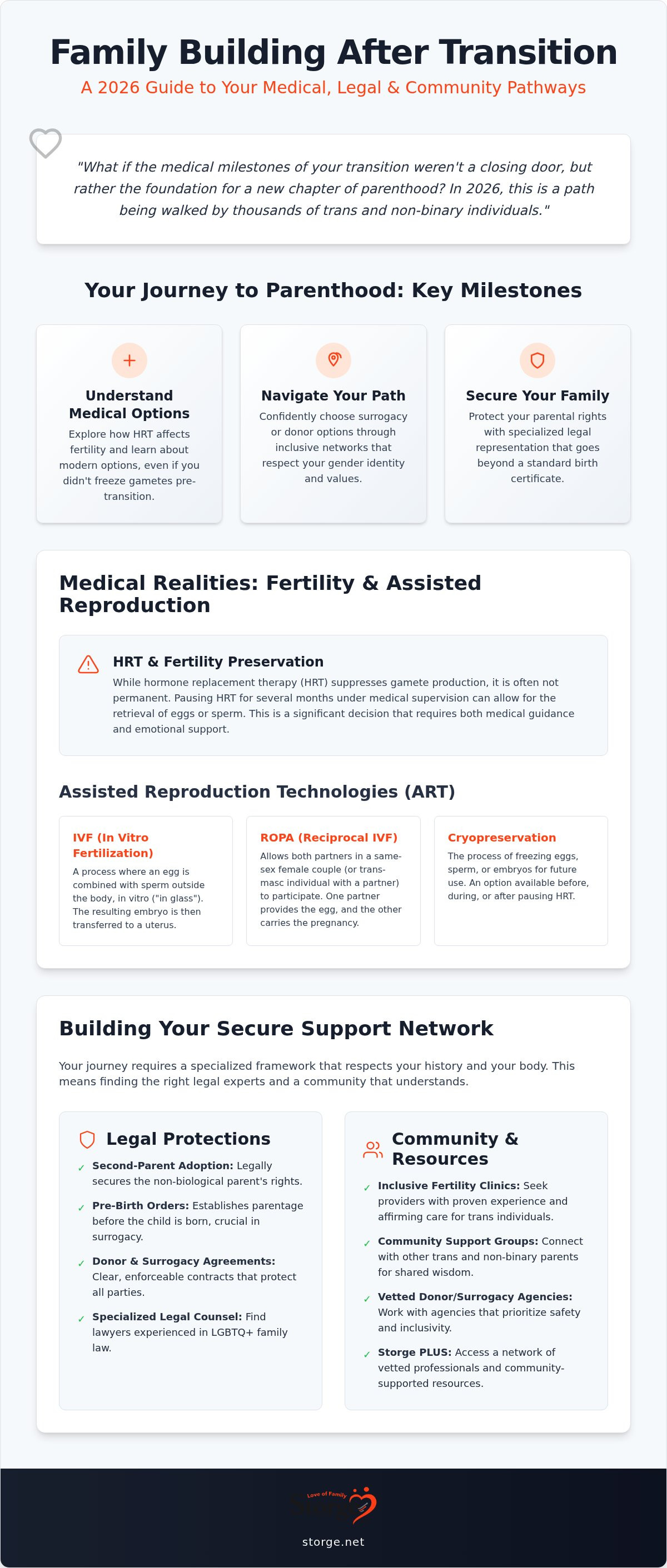
Understanding the medical landscape is often the first hurdle in family building after transition. It's a space where science meets deeply personal hopes. Many people worry that starting hormone replacement therapy (HRT) has permanently closed the door on biological parenthood. While HRT typically suppresses gamete production, it isn't always a one-way street. For those who didn't pursue cryopreservation before starting their transition, there are still viable paths to explore. The process often begins with a thorough assessment at an LGBTQ friendly fertility clinic to determine your current baseline and discuss the possibility of pausing HRT.
Pausing HRT to retrieve eggs or sperm is a significant decision that requires both medical guidance and emotional support. Generally, this involves stopping hormones for several months to allow the body's natural reproductive cycles to resume. It's important to prepare for the return of secondary sex characteristics or gender dysphoria during this window. However, for many, this temporary pause is a manageable bridge to a lifelong dream. Beyond the physical changes, you'll also need to consider the financial and legal considerations for LGBTQ+ families, as these medical procedures represent a major investment in your future.
Advanced Reproductive Technologies for Trans Parents
Modern medicine offers tailored solutions like IVF and IUI that can be adapted for trans bodies. In 2026, the success rate for IVF using PGT-tested embryos has reached 70-80% per transfer, providing a high level of confidence for prospective parents. Reciprocal IVF (ROPA) has become particularly popular for trans-masculine and non-binary individuals with partners who have a uterus. This allows one partner to provide the egg while the other carries the pregnancy, creating a shared biological and gestational connection. Success depends heavily on inclusive lab protocols that treat your samples with the dignity they deserve and use the correct terminology for your anatomy.
Fertility Preservation and Restoration
If you have cryopreserved samples from before your transition, 2026 technology makes utilizing these assets more efficient than ever. For those without stored samples, emerging research on fertility restoration is uncovering new ways to stimulate gamete production even after years of HRT. While HRT affects fertility, it does not always permanently eliminate reproductive options. If you're feeling overwhelmed by these choices, you can find inclusive fertility clinic referrals through our vetted network to help you find a provider who truly sees you and your family goals.
Choosing Your Path: Donors, Carriers, and Surrogacy
Biological paths aren't the only way to create a lasting legacy. For many, donor assistance offers a beautiful and viable alternative when personal gamete retrieval isn't possible or preferred. This stage of family building after transition often involves a shift in perspective, moving from biological connection to the intentionality of chosen family. Whether you're seeking an egg or sperm donor, the process should be one that affirms your identity rather than forcing you into a box that doesn't fit. You're not just looking for a biological match; you're looking for a partner in your journey who respects your history and your future.
The choice between a known donor and a vetted community search is a significant one. While known donors can offer a sense of familiarity, they also bring complex legal and emotional dynamics that require careful management. On the other hand, vetted searches through professional networks provide a layer of safety and clear boundaries. In 2026, the number of gestational carrier cycles has grown to over 11,500 annually, reflecting a broader acceptance and availability of these paths. However, finding someone who truly understands the nuances of the trans experience requires a more curated approach than a standard agency might provide.
The Donor Search: Finding a Match in the LGBTQ Community
Evaluating donors through a queer-affirming lens means looking beyond physical traits. It's about finding a match where there's a shared understanding of what it means to build a family outside traditional norms. Community-vetted donors often provide a higher level of safety because they've been screened for their commitment to inclusive values. Altruistic searches within your own network can be deeply rewarding, but professional search services often provide the logistical and legal framework needed to protect everyone involved. This security is a vital part of family building after transition, ensuring your peace of mind from the very start.
Gestational Surrogacy for Transgender Individuals
For those who require a carrier, finding a surrogacy for transgender parents path is a specialized journey. The relationship between a trans intended parent and their gestational carrier is built on mutual respect and shared goals. It's essential to vet carriers for their understanding of trans-inclusive parenting to ensure a supportive environment throughout the pregnancy. When vetting a carrier or agency, consider these essential criteria:
- A documented history of successfully working with LGBTQ+ intended parents.
- The consistent use of gender-affirming language in all contracts and daily communications.
- A clear willingness to include the intended parent in all medical appointments without bias or gatekeeping.
- A thorough understanding of the specific legal requirements for securing trans parental rights.
By focusing on these vetted pathways, you can simplify the complexities of the process and focus on the joy of your future child. This intentional approach transforms a logistical challenge into a foundational part of your family story.
Legal Protections: Securing Your Rights as a Trans Parent
A birth certificate is a record of birth, not a final determination of parentage. This distinction is vital for anyone engaged in family building after transition. While seeing your name on that document is a powerful moment of validation, it doesn't offer the same universal protection as a court order. In the shifting legal landscape of 2026, state laws regarding gender markers and parental rights vary significantly. A legal judgment, such as a second-parent adoption or a parentage order, travels with you across state lines; it ensures your rights remain intact regardless of where you live or travel.
Second-parent adoption is a critical safeguard for non-biological trans parents. Even if you're married or listed on the birth certificate, legal experts strongly recommend securing a confirmatory adoption to prevent future challenges. This process creates a permanent, legally recognized bond that is much harder to contest than administrative paperwork. Because the requirements for these filings change based on local regulations, you should find an LGBTQ family law attorney who understands the specific hurdles trans parents face. They can help you navigate the divergence in state protections following the 2026 elections, providing the security your family deserves.
Essential Legal Documentation for Trans Families
Your legal strategy should start before the baby arrives. Surrogacy contracts and pre-birth orders are essential for establishing clear intentions and rights from the outset. If you're updating your identity documents during the family building after transition process, your attorney will ensure the parental link remains unbroken. Adopting a "Legal First" approach means you're building your family on a foundation of certainty, rather than reacting to challenges later. This proactive stance protects your peace of mind and your child's future legacy.
Advocating for Your Family in Healthcare Systems
The hospital experience can be a source of anxiety, but preparation helps you maintain control. Beyond parentage orders, legal strategies like medical power of attorney and guardianship documents ensure you can make decisions for your child without delay. These tools empower you to advocate for your family in healthcare systems that may still rely on outdated binary forms. If you need a partner to guide you through these choices, you can access our directory of LGBTQ-inclusive legal representation referrals to find an expert who shares your values and understands your journey.
Building Your Support Network with Storge PLUS
Navigating the complexities of family building after transition shouldn't feel like a second job. For many trans and non-binary individuals, the "trans tax" is a very real burden. It's the extra hours spent researching whether a clinic is truly inclusive or if a donor understands the nuances of your journey. Storge PLUS Membership was designed to remove these barriers. By centralizing vetted resources, we help you reclaim your time and energy so you can focus on the excitement of becoming a parent. We act as a steady guide, ensuring you don't have to vet every professional from scratch.
Accessing a trusted network of vetted donors and carriers is the cornerstone of a secure journey. Instead of guessing which providers might be affirming, you can connect directly with specialized attorney and clinic referrals who have already demonstrated their commitment to the LGBTQ+ community. This streamlined approach reduces the stress of the unknown and provides a clear path forward. Our platform is built on the belief that everyone deserves a safe and respectful environment while growing their family. By choosing a community focused on your specific needs, you're investing in the long term success and peace of mind of your future household.
The Value of a Vetted LGBTQ+ Community
Relying on unvetted social media groups for donor searches can be high risk and emotionally draining. While peer support is valuable, these spaces often lack the medical and legal oversight necessary for a secure transition to parenthood. A vetted community offers the peace of mind that comes with verified resources and clear boundaries. Every donor and carrier in our network is screened through a queer-affirming lens, ensuring they share your values of respect and transparency. This connection fosters a more joyful parenting journey, as you're surrounded by people who understand and celebrate your identity.
Next Steps: Starting Your Journey Today
Your family building roadmap starts with a single, intentional choice. By joining the PLUS community, you gain immediate access to a specialized network of family building after transition experts. This includes referrals to inclusive fertility clinics and attorneys who specialize in trans parental rights. You don't have to navigate these systems alone. We're here to bridge the gap between your dream and your reality. Take the first step today by exploring our community and connecting with professionals who see and respect your family. Your future starts with a plan built on trust and expert support.
Your Path to Parenthood Starts Here
The journey to becoming a parent is one of the most significant decisions you'll ever make. We've explored how medical advancements and specialized legal strategies have made family building after transition a tangible reality in 2026. Whether you're navigating the nuances of pausing HRT for gamete retrieval or securing your rights through a confirmatory adoption, you don't have to carry the weight of these decisions alone. By choosing a path built on expert-vetted resources and inclusive care, you ensure that your family’s foundation is as strong and authentic as your own transition.
Finding the right partners is the key to moving from a dream to a plan. You can join Storge PLUS to access our vetted LGBTQ+ family building community, where we provide a specialized legal representation directory, LGBTQ-inclusive clinic referrals, and a trusted donor and carrier network. This support system is designed to simplify the complexities and protect your peace of mind. Your future family is waiting, and we’re honored to walk beside you as you take these first steps toward holding your child.
Frequently Asked Questions
Can I still have biological children if I have been on HRT for years?
Yes, it is often possible to have biological children even after years of hormone therapy. Many trans people successfully retrieve viable eggs or sperm by temporarily pausing their HRT under medical supervision. While the duration of therapy can influence the time it takes for gamete production to resume, clinical experience suggests that fertility can often be restored. You'll need to work closely with a specialist to monitor your levels and determine the best window for retrieval.
Does testosterone or estrogen therapy permanently cause infertility?
Hormone therapy typically suppresses fertility, but it doesn't always cause permanent infertility. For many, gamete production resumes once hormones are paused for a period of several months. However, because every body responds differently, it's impossible to guarantee a specific outcome without clinical testing. This is why specialists recommend a baseline fertility assessment. Understanding your current reproductive health is a vital step in family building after transition, allowing you to make informed decisions about your future.
What is the difference between traditional and gestational surrogacy for trans parents?
Traditional surrogacy involves a surrogate who uses her own eggs, meaning she has a biological connection to the child. In contrast, gestational surrogacy uses an embryo created from an egg donor or an intended parent's egg. Most trans parents choose gestational surrogacy because it offers clearer legal protections and allows for a biological connection to one or both parents. In 2026, gestational surrogacy remains the preferred path due to its established legal and medical frameworks that protect intended parents.
How do I find a fertility clinic that is truly trans-inclusive?
Finding a truly inclusive clinic requires looking beyond generic marketing. Start by reviewing their intake forms and website for gender-neutral language and specific mention of trans care. Ask direct questions about their experience with ROPA or HRT pauses during your initial consultation. A reputable clinic should have established protocols for trans patients and a staff trained in gender-affirming care. We provide referrals to vetted, inclusive fertility clinics to help you bypass the stress of searching for providers alone.
Is second-parent adoption necessary if my name is on the birth certificate?
Yes, legal experts strongly recommend second-parent or confirmatory adoption even if you're on the birth certificate. A birth certificate is an administrative document that can be challenged or changed depending on state laws. A court judgment, like an adoption decree, is a permanent legal order that must be recognized across all states. This step is essential for protecting your parental rights and ensuring your family's security, especially in a complex and shifting legal landscape where administrative records may not be enough.
What are the costs associated with post-transition family building?
The costs for family building after transition are multifaceted and require a detailed budget covering medical procedures, legal fees, and donor or carrier compensation. While totals depend on your specific needs and the number of cycles attempted, you can utilize financial tools like HSAs or FSAs to manage these expenses. For 2026, individual HSA contribution limits are $4,400, providing a tax-advantaged way to save for these procedures. We suggest working with inclusive financial planners to navigate these significant investments.
How does ROPA work for non-binary or trans-masculine partners?
Reciprocal IVF, or ROPA, allows one partner to be the genetic parent while the other is the gestational parent. For trans-masculine or non-binary couples, this often means one person undergoes egg retrieval to create embryos, which are then transferred to their partner's uterus. This shared journey creates a deep bond and allows both parents to be physically involved in the process. It's a popular option for those who want a shared biological and gestational connection to their child while honoring their bodies.
Can a trans woman use her own sperm for IVF after transition?
Yes, a trans woman can use her own sperm for IVF if she has preserved samples or successfully restores production by pausing HRT. If production resumes, the sperm can be used in IUI or IVF procedures with a partner's eggs or a donor. Success depends on the quality and quantity of the sperm retrieved after the hormone pause. Working with a trans-inclusive specialist ensures that the retrieval process is handled with medical precision and respect for your identity throughout the entire procedure.


