
What if the "LGBTQ-friendly" badge on a clinic's website is just a marketing sticker rather than a deep commitment to your family's legal safety? You've likely spent hours scrolling through glossy portfolios, feeling the weight of medical jargon and the quiet fear that a provider might not truly grasp the nuances of queer parentage. It's exhausting to wonder if you're being "rainbow washed" while making the most significant decision of your life. When weighing the pros and cons of a traditional fertility agency vs online community for LGBTQ+ families, the choice often comes down to finding a space where you don't have to explain your existence before you explain your dreams.
We understand that building a family in 2026 requires more than just medical excellence; it demands legal literacy and cultural empathy. This guide will help you master the art of vetting professionals with a comprehensive framework tailored to our community's unique needs. You'll learn how to interview clinics with confidence, ensuring they understand the latest legal protections. We'll also show you how to connect with a vetted network of experts and peers who have already paved the way. By the end, you'll have a clear roadmap to protect your parental rights and find the compassionate support you deserve.
Key Takeaways
- Learn to identify true clinical excellence by looking past marketing logos to evaluate a provider's specific experience with reciprocal IVF and co-maternity.
- Discover the strategic differences between a fertility agency vs online community for LGBTQ+ families to determine which path offers the best balance of professional guidance and peer support.
- Protect your future family by ensuring your clinic prioritizes independent legal representation to secure your parental rights from the very beginning.
- Use our step-by-step framework to conduct effective "vibe checks" during initial screenings, helping you find a provider who truly respects your family's unique journey.
- Gain access to verified, high-quality donor resources and professional referrals through a trusted, community-led platform like Storge PLUS.
The Landscape of LGBTQ+ Inclusive Fertility Care in 2026
Building a family is a deeply personal act of hope. For the LGBTQ+ community, this journey often involves a complex web of medical technology and legal safeguards that require more than just standard care. In 2026, we've moved past the era where "tolerance" was the benchmark. Today, we seek specialized excellence. Understanding The Landscape of LGBTQ+ Fertility Care is the first step in moving from a visionary dream to a practical reality. It's about finding providers who don't just see you, but truly understand the specific path you're walking.
Choosing between a fertility agency vs online community for LGBTQ+ parents often feels like a significant fork in the road. A traditional agency might offer a high-touch, concierge experience, while a community provides the lived wisdom and verified resources of those who've already paved the way. The goal is to find a partner who understands that "inclusive" isn't just a rainbow logo on a website. It's a foundational commitment to your family's legitimacy and safety. When the right professional partner is involved, they act as a steady guide through the overwhelming medical jargon and high costs that often characterize this process.
Beyond the Exam Room: Cultural Competency
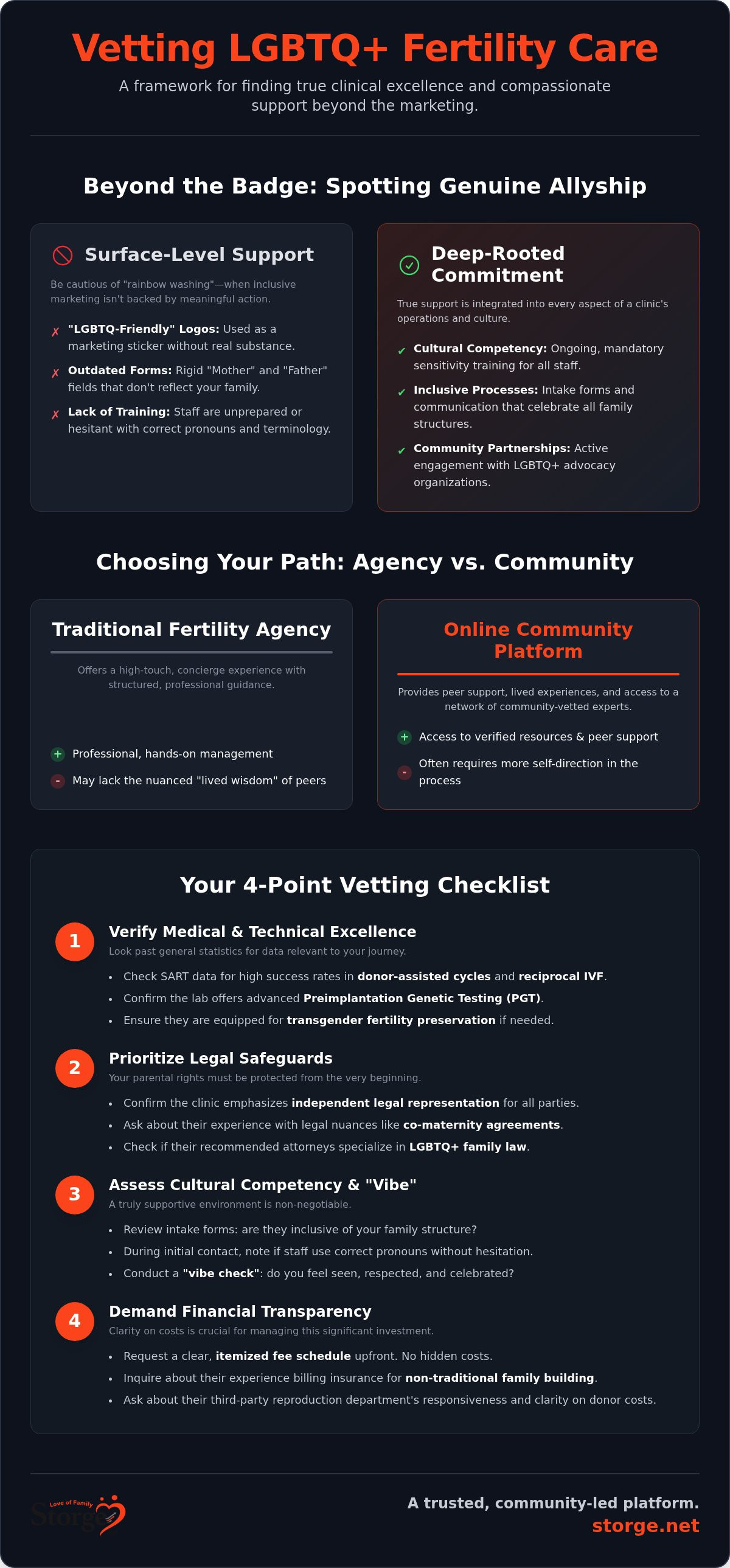
True inclusion starts long before you meet a doctor. It's found in the intake forms that don't force you into "Mother" or "Father" boxes and in a staff that uses your correct pronouns without hesitation. We call this cultural competency, and it's a non-negotiable standard in 2026. Many clinics engage in "rainbow washing," where they use inclusive marketing but lack the internal training to support queer families effectively. You deserve a space where your family structure is celebrated. Look for clinics that invest in ongoing sensitivity training for every employee, from the front desk to the lab technicians. This ensures your experience is supportive at every touchpoint.
The Role of Specialized Fertility Professionals
Navigating "social infertility" requires a team that understands your unique medical and legal needs. You aren't just looking for a doctor; you're looking for a synergy between reproductive endocrinologists and family law attorneys. This is where professional referrals become invaluable. A trusted guide can connect you with clinics that have high success rates for reciprocal IVF or attorneys who specialize in protecting parental rights. These connections save you from the emotional energy of vetting every professional yourself. Whether you lean toward a fertility agency vs online community for LGBTQ+ support, your team should act as a bridge between your personal dream and the medical reality of achieving it.
The Vetting Checklist: How to Evaluate a Clinic
Finding a clinic requires a discerning eye that looks beyond general success rates. You're looking for specialized excellence, not just a high volume of patients. When comparing the merits of a fertility agency vs online community for LGBTQ+ families, you'll find that both can offer valuable perspectives on clinic performance. However, you must dive into the SART (Society for Assisted Reproductive Technology) data yourself. Look specifically for clinics with high success rates in donor-assisted cycles and reciprocal IVF. These numbers are often buried, but they reveal how well a clinic handles the unique protocols of queer family building.
Responsiveness is another critical factor. Evaluate the third-party reproduction department during your first interaction. Do they answer your questions about donor databases with clarity? Are they partnered with LGBTQ+ advocacy organizations? A clinic that stays connected to the community is more likely to stay updated on the evolving social and legal landscape. If you're feeling overwhelmed by the options, our fertility clinic referrals can help you narrow your search to providers who have already been vetted for their commitment to our community.
Medical and Technical Standards
A clinic's technical prowess is your foundation. In 2026, advanced Preimplantation Genetic Testing (PGT) is a standard expectation, but you also need to ensure the lab is equipped for transgender fertility preservation if that's part of your journey. Transparency is equally vital. A truly inclusive clinic will provide clear, itemized fee schedules and have staff who understand how to bill insurance for non-traditional family building. They should strictly adhere to established legal and ethical guidelines to ensure your path is both safe and legitimate.
Administrative and Cultural Inclusivity
Inclusion must extend into the administrative office. Does the clinic have experience navigating the paperwork required for second-parent adoption? Are their hospital partnerships known for being inclusive of same-sex parents? These logistical hurdles can be significant, so having a clinic that anticipates them provides immense peace of mind. Whether you are navigating the choice between a fertility agency vs online community for LGBTQ+ parents, the goal is to find a team that treats your parental rights as a priority. For a deeper dive into these nuances, read our guide on 23 Essential Questions to Ask an LGBTQ-Friendly Fertility Clinic in 2026.
Evaluating Third-Party Reproduction and Legal Support
Third-party reproduction is often the heartbeat of LGBTQ+ family building. It involves coordinating donors, gestational carriers, and legal professionals with surgical precision. When you evaluate a clinic, look for an "Informed Consent" model. This approach respects your autonomy and ensures you're fully aware of the medical and psychological implications of your choices. It's a standard that separates truly inclusive centers from those just checking boxes. When deciding between a fertility agency vs online community for LGBTQ+ support, consider which path offers the most transparent access to these complex moving parts.
One critical red flag is a clinic offering in-house legal services for surrogacy or donor contracts. While it might seem convenient, it creates a significant conflict of interest. Your legal representative must answer only to you, ensuring your parental rights are the top priority. A clinic’s role is medical; an attorney’s role is protective. The best clinics maintain clear boundaries and provide referrals to external experts who specialize in queer family law. This independent oversight is a hallmark of professional reliability when vetting healthcare providers.
Navigating the Donor Search
A clinic's donor database should reflect the diversity of the world we live in. Vetting these databases involves looking at the screening rigor for genetic conditions and the depth of donor profiles. Some clinics have exclusive banks, while others coordinate with external sperm and egg banks. Understanding the nuances of the LGBTQ donor community helps you decide if you prefer a known donor protocol or an anonymous one. Storge PLUS simplifies this by offering a vetted community where you can find high-quality information without the noise of public searches.
Legal Safeguards and Attorney Referrals
Legal safety is the foundation of your future peace of mind. You need to know how a clinic handles surrogacy contracts and birth orders before you start a cycle. Early involvement of a specialized lawyer prevents disputes over parental rights later. This is especially vital in 2026 as state laws continue to shift. Don't wait until a pregnancy is confirmed to seek counsel. Finding the right representation is easier when you know how to find an LGBTQ family law attorney who understands the specific hurdles our community faces. Whether you choose a fertility agency vs online community for LGBTQ+ connections, prioritizing independent legal referrals is a non-negotiable step for your security.
How to Initiate Contact: A Step-by-Step Guide
Transitioning from the research phase to active outreach is a monumental step. It's the moment your dream begins to take a tangible shape. Before you pick up the phone, take a quiet moment with your partner or yourself to define your family building goals. Are you looking for reciprocal IVF, or is surrogacy your primary path? Having these answers ready ensures you're leading the conversation from a place of clarity. When deciding between a fertility agency vs online community for LGBTQ+ support, remember that your initial contact will often reveal which path feels more aligned with your values and emotional needs.
Your first interaction should feel like a partnership, not a transaction. Whether you're inquiring about a virtual tour or an in-person visit, observe how the staff handles your request. This is your journey, and you deserve a team that treats it with the gravity and hope it deserves. If you're ready to move forward with a provider who has already been screened for excellence, you can request specialized fertility clinic referrals to ensure your first call is a positive one.
The Initial Screening Call
The first phone call is your "vibe check." Pay close attention to the receptionist or intake coordinator. Do they stumble over your family structure, or is their language naturally inclusive? You should feel seen from the very first hello. Ask specific questions about their experience with queer families and the typical timeline for a first meeting with a physician. If you find yourself repeatedly explaining your identity or correcting pronouns, it may be a sign to look elsewhere. A truly inclusive clinic in 2026 will have streamlined these processes to make you feel welcome immediately.
The First Consultation
The initial consultation is your opportunity to evaluate the doctor’s bedside manner and specialized knowledge. A great physician will treat all partners in the room with equal respect, ensuring everyone feels heard and involved. This is also the time to discuss financial options. Many clinics now offer LGBTQ-specific grants or have experience with the expanded insurance mandates that took effect in 2026. Observe the clinic environment during your meeting. Does the space feel safe? Are there diverse families represented in their materials? Your comfort level in this space is just as important as the clinic's clinical success rates. A successful partnership is built on trust, transparency, and a shared vision for your future family.
Finding Your Trusted Community with Storge PLUS
The fertility market in 2026 remains deeply fragmented. While medical advancements are moving fast, the social and legal vetting of providers hasn't always kept pace. This is why the choice between a traditional fertility agency vs online community for LGBTQ+ families is so significant. Agencies often operate on a high-cost, transactional model that may lack the lived experience of our community. In contrast, a vetted community platform offers a safer, more transparent alternative to the "wild west" of public donor searches and unverified clinic listings. It's a space where you can find clarity among the noise.
Storge PLUS acts as a bridge between your personal aspirations and the clinical world. It's a space where the "rainbow washing" we discussed earlier is replaced by genuine, verified data. By joining, you move from a place of isolated research to one of collective strength. This community-backed support ensures you aren't just another patient file; you're a member of a network that prioritizes your family’s long-term success and legal security. When comparing a fertility agency vs online community for LGBTQ+ support, the real value lies in the peace of mind that comes from peer-to-peer verification.
The Storge PLUS Advantage
One of the most daunting parts of this journey is finding individuals you can trust. Storge PLUS provides direct access to a vetted community of donors and gestational carriers, bypassing the risks associated with public forums. We also offer specialized professional referrals for surrogacy for gay couples, connecting you with providers who have a proven track record of excellence. Your membership fees directly support the rigorous maintenance of this network. This ensures every clinic, attorney, and donor in our database meets the high-quality standards our community deserves. It's about legitimate connection, not just a list of names.
Your Next Steps to Parenthood
Transitioning from the research phase to active membership is the moment your path becomes clear. You've learned how to vet clinics, what questions to ask, and how to identify legal red flags. Now, it's time to surround yourself with the resources that make those steps feel manageable. You don't have to navigate these complex transitions alone. By joining a community that understands the nuances of your journey, you're setting a foundation for a safer, more joyful experience. If you're ready to take that next step with a partner you can trust, Join the Storge PLUS community today.
Your Path to Parenthood Starts with Certainty
Building your family is a journey that deserves both medical precision and emotional safety. You now know that vetting for cultural competency goes far beyond a rainbow logo; it requires a deep dive into clinical data and a commitment to independent legal representation. Whether you've been weighing the differences of a fertility agency vs online community for LGBTQ+ support, the goal remains the same: finding a team that honors your family's legitimacy and protects your future.
You don't have to navigate these complex landscapes alone. Storge PLUS offers a bridge between your dream and the practical reality of achieving it. When you join, you gain access to a vetted community of donors and carriers, referrals to specialized LGBTQ family law attorneys, and community-verified fertility clinic resources. This collective wisdom ensures every step you take is backed by those who've paved the way before you, providing the order and calm you need to move forward.
Join the Storge PLUS community and access our vetted network of LGBTQ+ fertility professionals to begin your journey with confidence. Your future family is waiting, and we're here to guide you every step of the way.
Frequently Asked Questions
How do I know if a fertility clinic is genuinely LGBTQ-inclusive?
Look for cultural markers that go beyond simple marketing. Check if their intake forms are gender-neutral and if the clinic has a dedicated third-party reproduction department. Ask about their specific success rates for reciprocal IVF or donor-assisted cycles. Genuine inclusion means the staff is trained to handle your family structure with respect and technical expertise, rather than just displaying a rainbow sticker on their website or front door.
What questions should same-sex couples ask during a fertility consultation?
Focus on both medical and administrative logistics during your visit. Ask how many reciprocal IVF or donor cycles they perform annually and if they have experience with your specific family building path. Inquire about their process for coordinating with external attorneys to secure parental rights. You should also ask how they handle insurance billing for social infertility cases to ensure you aren't hit with unexpected out-of-pocket costs later.
Do I need a lawyer before I visit an LGBTQ-friendly fertility clinic?
While you don't strictly need a lawyer for the first consultation, you should have one ready before starting any medical procedures. Parental rights are complex and vary significantly by state law in 2026. A specialized attorney ensures that donor contracts and surrogacy agreements are airtight. We recommend seeking independent legal counsel rather than using a clinic's in-house team to avoid any potential conflicts of interest during the process.
Can transgender individuals preserve their fertility at any clinic?
Technically, many clinics offer cryopreservation, but not all are equipped to handle the specific needs of transgender patients. You should seek a provider with experience in hormone therapy management and gender-affirming care. Ask if their lab protocols and storage facilities are inclusive of trans parents. Finding a clinic that respects your identity throughout the preservation process is essential for your emotional well-being and the long-term success of your family.
What is the difference between a fertility clinic and a surrogacy agency?
A fertility clinic is a medical facility where doctors perform procedures like IVF, IUI, and embryo transfers. A surrogacy agency is a service provider that matches intended parents with gestational carriers and manages the logistics of the journey. When weighing a fertility agency vs online community for LGBTQ+ families, remember that clinics handle the science, while agencies or communities like Storge help you find the people and legal resources you need.
How much does it cost to start the vetting process for a fertility clinic?
The initial vetting process usually begins with a consultation fee, which varies depending on the provider and your insurance coverage. Some clinics offer introductory sessions or virtual tours at a lower cost to help you get started. In 2026, many insurance plans under new mandates cover diagnostic testing and initial visits. It's best to contact the clinic's financial coordinator directly to get an itemized list of expected costs for your first few appointments.
What should I do if I feel a clinic is not respecting my pronouns or family structure?
Trust your instincts and consider finding a different provider immediately. Your comfort and safety are paramount during such a vulnerable transition. If a clinic repeatedly misgenders you or fails to acknowledge your partner's parental role, it indicates a lack of fundamental cultural competency. You deserve a team that celebrates your family. Transitioning to a vetted provider through a trusted referral network can save you from further emotional distress and logistical hurdles.
How can a community platform like Storge help me find a clinic?
Storge acts as a bridge between your personal dreams and the medical reality of family building. Our platform provides specialized fertility clinic referrals to providers who have been community-vetted for their inclusive practices. By joining Storge PLUS, you gain access to a network of donors and carriers who share your values. We help you navigate the choice between a fertility agency vs online community for LGBTQ+ support by offering verified, high-quality information.


