
What if the most difficult part of your journey to fatherhood isn't the sleepless nights, but the complex choice of how to begin? You've likely spent hours researching gay couple family building options, only to feel caught between the staggering $220,000 average price tag of surrogacy and the emotional weight of the adoption waitlist. It's natural to feel overwhelmed by the legal nuances and the fear of making a choice that leaves your future family vulnerable.
We understand that this isn't just a logistical puzzle; it's the foundation of your future. This guide provides a clear, compassionate comparison of surrogacy and adoption in 2026, stripping away the jargon to help you find the path that aligns with your values and your budget. We'll explore the latest legal shifts, such as evolving parentage laws across the nation, and break down the financial realities of both domestic adoption and gestational surrogacy. By the end, you'll have a framework to move forward with confidence, clarity, and a sense of belonging.
Key Takeaways
- Understand the medical and legal distinctions between gestational surrogacy and adoption to determine which biological or social path aligns with your family’s values.
- Compare the 2026 financial realities and expected timelines of various gay couple family building options to build a sustainable plan for your future.
- Identify the "surrogacy-friendly" states and legal safeguards necessary to protect your parental rights and minimize vulnerability throughout the process.
- Learn how to access vetted referrals for attorneys and clinics to ensure every professional on your team is genuinely LGBTQ+ inclusive and experienced.
- Discover the power of a peer-vetted community in finding ethical donors, carriers, and agencies while avoiding the hidden costs of the journey.
Navigating the Crossroads: Surrogacy vs. Adoption for Gay Men
The moment you decide to become a parent, the world suddenly feels both larger and more complex. For many men, the transition from imagining a nursery to interviewing attorneys marks a profound emotional shift. It's the point where your dream gains a timeline, a budget, and a series of legal requirements. When exploring gay couple family building options, you'll quickly discover that surrogacy and adoption aren't just different procedures. They represent distinct philosophies of parenthood, each with its own set of rewards and challenges.
Surrogacy involves working with a gestational carrier and an egg donor to create a biological link to one or both parents. Adoption, conversely, focuses on providing a stable, loving home for a child through domestic agencies or the foster care system. While the outcomes are the same, a child to love and raise, the paths differ significantly in terms of genetic connection, total cost, and the legal steps required to secure your rights. There is no "wrong" choice here. There is only the choice that fits your family's unique values, financial reality, and emotional capacity.
The Core Philosophical Difference
Choosing between these paths requires a deep, honest conversation with your partner about what parenthood means to you. For some, the desire to pass on a genetic legacy and see their own features in their child's eyes is a primary driver. For others, the opportunity to provide a permanent home for a child who is already here feels like a more resonant calling. In both scenarios, you are the "intended parents," but the road to that title involves different emotional milestones. Take the time to discuss your priorities regarding biological heritage versus the desire for a potentially more accessible path. Acknowledging these feelings early prevents resentment and ensures you both feel fully invested in the journey you choose.
Why a Vetted Community Matters Early On
The early stages of research often feel overwhelming, like stepping into a "wild west" of conflicting information. Unverified online groups can be filled with outdated legal advice or high-pressure anecdotes that don't reflect the current reality. This is why starting with verified LGBTQ family building resources is so vital. A peer-vetted community acts as a steady guide, helping you filter out the noise and focus on ethical agencies and clinics. Hearing real stories from other gay men who have navigated these same crossroads can shape your initial preferences and give you the confidence to take the next step. It turns a solitary, daunting search into a collective experience rooted in mutual support and shared success.
The Biological Path: Understanding Gestational Surrogacy
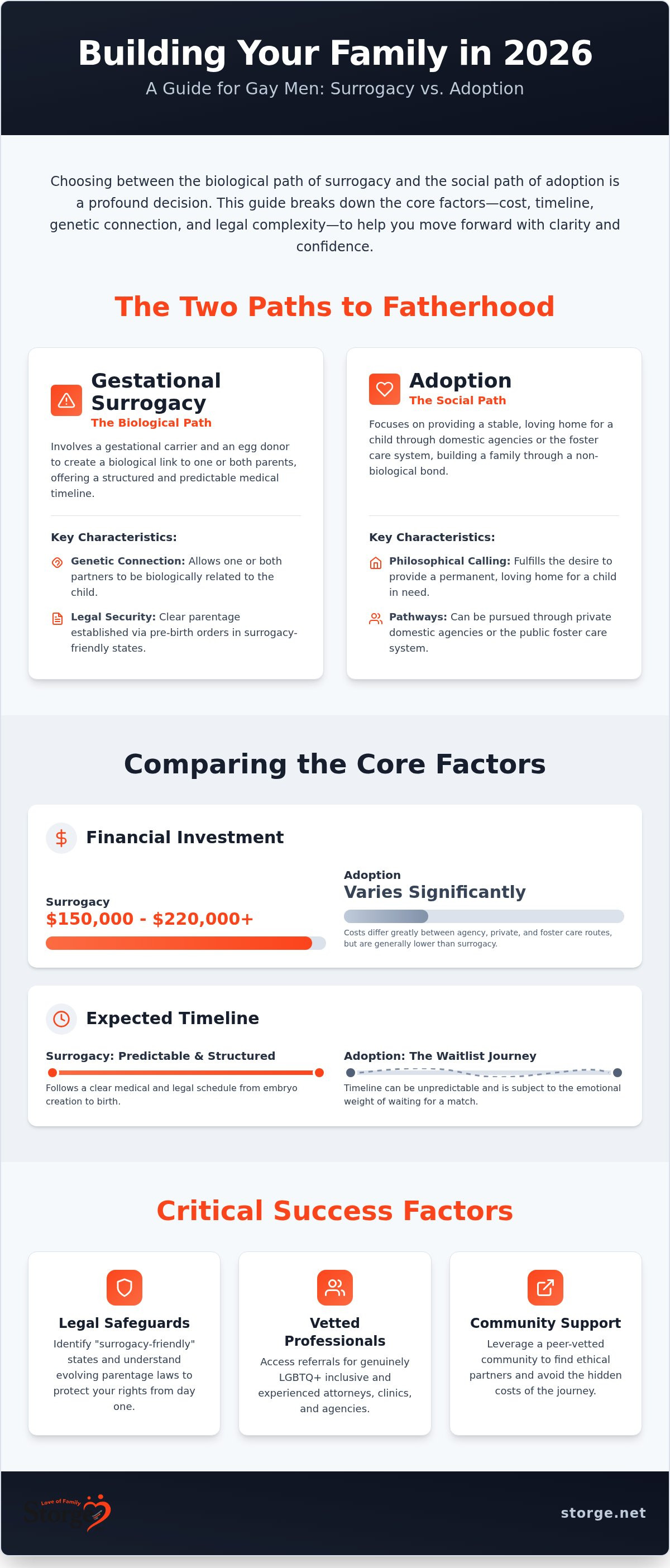
Choosing a biological path allows you to weave your own story into the very DNA of your future child. Among the various gay couple family building options, gestational surrogacy is often favored because it offers the most secure legal framework while allowing one or both partners to have a genetic connection. This journey requires a specialized team, including a gestational carrier, an egg donor, and an LGBTQ-inclusive fertility clinic that understands the specific needs of two-father families. While this path involves a significant financial investment, often ranging from $150,000 to $220,000, it provides a structured and predictable medical timeline.
The standard for gay men in 2026 is gestational surrogacy rather than traditional surrogacy. In a gestational arrangement, the carrier has no genetic link to the baby, as the embryo is created using a separate egg donor. This distinction is vital for your peace of mind. It simplifies the legal process and ensures that parentage is established clearly through pre-birth orders in surrogacy-friendly states. By removing the biological link between the carrier and the child, you minimize legal vulnerability and create a straightforward path to your name being on the birth certificate.
The Role of the Gestational Carrier
The relationship with your carrier is a unique partnership built on mutual respect and shared goals. Vetting for a carrier goes beyond health history; it's about finding someone whose values and communication style align with yours. Many gay dads find that the bond formed during pregnancy becomes a lifelong connection. To ensure a safe match, it's essential to follow a Finding a Gestational Carrier: LGBTQ+ Parent Guide 2026 to understand the screening standards that protect both your family and the carrier.
The Egg Donor Search
For gay male couples, selecting an egg donor is a deeply personal step. You'll decide between an anonymous donor or a known donor, considering factors like genetic health, physical traits, and even personality markers. The search can feel overwhelming, but using a vetted donor search platform helps you navigate this by providing access to donors who have already undergone preliminary screening. This community-based approach ensures you're connecting with individuals who are committed to the ethical standards of the journey.
Working with an LGBTQ-inclusive fertility clinic is the final piece of the puzzle. These experts are seasoned in the nuances of "split-semen" cycles, where embryos are created using sperm from both partners, and they ensure your role as intended parents is honored throughout the medical process. This specialized care turns a complex clinical procedure into a supportive, human-centric experience.
The Social Path: Navigating Domestic and International Adoption
For many, the journey to fatherhood is less about a genetic link and more about the profound act of providing a permanent, loving home. Adoption remains one of the most rewarding gay couple family building options, though it requires a different kind of emotional and legal preparation than surrogacy. In 2026, the landscape of adoption is more inclusive than ever, yet it still demands a steady guide to navigate the nuances of agency policies and birth parent preferences. This path is often defined by the "wait," a period of anticipation that requires resilience and a strong support system.
Before you can be matched with a child, you'll undergo a Home Study. It's a comprehensive review of your lives, including background checks, home visits, and interviews. While it can feel invasive, think of it as a process of preparation rather than an investigation. It's essential to work with LGBTQ-inclusive professionals who understand the specific dynamics of your household. Even in 2026, when same-sex adoption is legal across all 50 states, some private agencies may still have religious-based exemptions. Vetting your partners early ensures you're treated with the respect and legitimacy your future family deserves.
International adoption for gay men has become increasingly restricted over the last decade. As of 2026, the options are limited to a handful of countries, such as Colombia, which has maintained a more inclusive stance. Most other traditional international paths remain closed to same-sex couples. Because of these complexities and the potential for shifting political climates, many gay couples now focus their efforts on domestic programs where legal security is more predictable. Regardless of the path, we strongly recommend completing a second-parent adoption once you return home. Even if both your names are on the birth certificate, a court-ordered adoption decree is the "gold standard" of legal protection that travels with you across state lines and international borders.
Domestic Infant Adoption
Domestic infant adoption involves being chosen by a birth parent who feels your home is the right fit for their child. This "match" is a deeply personal decision. Costs for agency-led adoptions typically range from $30,000 to $50,000, while attorney-led independent adoptions can vary between $8,000 and $40,000. To offset these costs, the federal adoption tax credit for 2026 provides up to $17,670 per child. Success in this path often depends on how well you communicate your story through your parent profile.
Foster-to-Adopt: A Different Journey
Foster-to-adopt is a path driven by the goal of providing stability to children in the state system. It's the most affordable option, with costs often ranging only from $0 to $4,000, and many states provide ongoing subsidies. However, it's vital to remember that the primary goal of the foster system is reunification with biological family. This path involves a higher degree of legal risk and emotional uncertainty, as you must be prepared to support the child while their future is determined by the courts.
Comparing the Core Factors: Cost, Timeline, and Legal Complexity
When you weigh your gay couple family building options, the decision often comes down to three practical pillars: your budget, your preferred timeline, and your need for legal certainty. While the emotional pull of either path is significant, understanding the logistical reality helps you prepare for the road ahead. Surrogacy offers a more clinical, predictable schedule, whereas adoption is often defined by the "match" with a birth parent, which can happen quickly or take several years.
| Factor | Gestational Surrogacy | Domestic Infant Adoption |
|---|---|---|
| Average Cost (2026) | $150,000 - $220,000+ | $30,000 - $50,000 |
| Average Timeline | 18 - 24 months | 12 - 36+ months |
| Biological Link | Yes (One or both parents) | No |
| Legal Process | Pre-Birth Orders (PBO) | Post-Placement Finalization |
Surrogacy timelines are generally more stable because they follow a medical protocol. Once you have embryos and a cleared carrier, the path to birth is relatively linear. Adoption timelines vary because they rely on a birth parent choosing your profile. Beyond the base fees, you must account for "hidden" costs that can impact your budget. These include travel for the birth or IVF transfers, specialized insurance for the surrogate, and the cost of "starting over" if a surrogacy cycle fails or an adoption placement doesn't proceed. These variables make having a financial cushion essential for your peace of mind.
Financial Planning for Family Building
The 2026 landscape offers more financial support than previous years. For those choosing adoption, the federal tax credit has risen to $17,670 per child, which can significantly offset agency fees. For surrogacy, many modern employers now offer fertility benefits that include grants for gestational carriers or IVF. We recommend exploring these benefits early and looking into specialized low-interest loans designed specifically for family building. Planning for the "worst-case" financial scenario, such as an extra IVF cycle or a longer-than-expected wait, ensures that a temporary setback doesn't end your journey.
The Legal Safeguards You Can't Skip
Legal security is the foundation of your future family. In surrogacy, this involves a comprehensive contract and a Pre-Birth Order in a friendly state like California or the newly updated Hawaii. In adoption, it means the finalization of the adoption decree. However, regardless of the path you choose, you must understand the second parent adoption requirements that still exist in many jurisdictions. Even if your names are on the birth certificate, a court-ordered adoption decree is the only document that guarantees your parental rights will be recognized if you move or travel to a less inclusive area. To ensure your family is protected from day one, you can access our directory of LGBTQ-inclusive attorney referrals to find a legal partner who specializes in these specific protections.
Finding Your Support System: How Community Simplifies the Journey
The journey to fatherhood is rarely a straight line. It's a series of peaks and valleys that can leave even the most prepared partners feeling exhausted. While you've spent time comparing gay couple family building options, the missing piece is often a support system that understands your specific perspective. Moving from a state of being overwhelmed to a state of active planning requires more than just data. It requires a community that offers transparency, safety, and shared experience.
A platform-neutral community is your most valuable asset. Unlike groups run by a specific clinic or agency, a neutral space allows for honest, peer-vetted feedback. You need to know which attorneys are truly responsive and which clinics have a proven track record of honoring two-father households. This collective wisdom helps you avoid the "trial and error" phase of the process, saving you emotional energy and financial resources. By tapping into the experiences of those who have already navigated these hurdles, you gain a shortcut to the most ethical and reliable professionals in the field.
The Storge PLUS Advantage
We designed our membership to be the steady hand you need throughout this transition. Instead of searching through unverified forums, you can access a Storge PLUS Membership: Your Vetted Path to connect with a community of vetted donors and carriers. This membership simplifies the logistical burden by providing direct referrals to LGBTQ-inclusive attorneys and fertility clinics. It turns a daunting list of tasks into a manageable, step-by-step roadmap, ensuring you never have to wonder if the professional you're hiring truly has your back.
Building Your 'Village' Before the Baby Arrives
Parenthood is a long-term commitment, and your "village" should be established long before you bring your child home. Connecting with other Intended Parents (IPs) provides a unique form of emotional support that friends and family may not fully grasp. These connections allow you to share practical resources, such as recommendations for inclusive hospitals and pediatricians who are experienced in working with families created through surrogacy or adoption. This network becomes a lifelong source of belonging for both you and your child.
As you stand at this crossroads, remember that your desire to nurture and protect a child is the only qualification that truly matters. Whether you choose the biological link of surrogacy or the social path of adoption, your family is legitimate, your journey is valid, and your future is bright. You don't have to carry the weight of these decisions alone. With the right tools and a supportive community, the path to fatherhood becomes less about the obstacles and more about the incredible life you're about to build.
Your Future Family Begins with a Single Step
Deciding between surrogacy and adoption is a deeply personal milestone that requires balancing your biological hopes with practical realities. We've explored how surrogacy offers a predictable medical timeline and genetic connection, while adoption provides a transformative social path to parenthood. Regardless of the route you choose, securing your rights through specialized legal counsel remains a non-negotiable safeguard for your family's future.
Finding the right fit among gay couple family building options doesn't have to be a solitary struggle. By surrounding yourself with a vetted network of experts and peers, you can replace uncertainty with a clear, actionable roadmap. Join Storge PLUS to access our vetted community of donors and carriers today. You'll gain exclusive access to verified attorney and clinic referrals, alongside the empathetic, expert-led guidance you need to navigate every legal and emotional transition with peace of mind.
Your dream of becoming a parent is valid and achievable. We're here to walk beside you as you turn that dream into a beautiful, lived reality for your family.
Frequently Asked Questions
Is surrogacy or adoption more common for gay couples in 2026?
Surrogacy and adoption are both widely embraced paths, though surrogacy has seen a rise in popularity due to the predictability of medical timelines. Recent data indicates that LGBTQ+ couples are significantly more likely to raise adopted or foster children than their heterosexual peers. While surrogacy offers a biological link, many men find that adoption aligns more closely with their values of providing a permanent home to a child in need.
What is the average cost of surrogacy for a gay couple compared to adoption?
Surrogacy typically requires a higher financial investment, with costs in the U.S. generally ranging from $150,000 to $220,000. Domestic infant adoption is often more accessible, with average costs between $30,000 and $50,000. These figures represent the baseline for gay couple family building options, though variables like travel, legal fees, and insurance can impact your final budget. Programs like the federal adoption tax credit can help manage these expenses.
Do gay couples have a harder time adopting infants?
Legally, same-sex adoption is protected in all 50 states, though the experience often depends on the agency you choose. While the vast majority of agencies are inclusive, some private organizations still utilize religious-based exemptions to limit their services. This is why vetting your partners early is essential. By working with professionals who have a documented history of successful LGBTQ+ placements, you ensure your family is presented to birth parents with respect and legitimacy.
Can both fathers be listed on the birth certificate in a surrogacy journey?
Yes, both fathers can usually be listed on the birth certificate if you complete your journey in a surrogacy-friendly state. This is achieved through a legal document called a Pre-Birth Order (PBO), which instructs the hospital to name both intended parents as the legal guardians. States like California, Connecticut, and the recently updated Hawaii provide clear statutory protections that allow for this streamlined process, ensuring your parentage is established from the moment of birth.
What is second-parent adoption and why do we need it if we are married?
Second-parent adoption is a judicial decree that secures the parental rights of the non-biological parent. Even if you are married and both names appear on the birth certificate, an administrative document may not be recognized in every jurisdiction or country. A court-ordered adoption decree is the "gold standard" of legal protection. It ensures your parental status is irrevocable, providing security if you move or travel to a less inclusive state or international region.
How do we find a gestational carrier who is comfortable working with a gay couple?
Finding a carrier who shares your values is best accomplished through a vetted, community-first platform. Most gestational carriers who work with agencies specifically express their desire to help create families of all types, including those with two fathers. By using a membership-based search, you can connect with carriers who have already been screened for their medical history and their comfort with LGBTQ+ family building. This ensures your partnership is built on mutual respect.
Are there specific states that are safer for gay couples pursuing surrogacy?
Several states offer high levels of legal security for gay couples, including California, Colorado, Illinois, and New York. As of January 1, 2026, Hawaii has also modernized its laws to expressly authorize gestational surrogacy and pre-birth orders. These "surrogacy-friendly" jurisdictions have clear statutes that protect intended parents and carriers alike. You should generally avoid states with restrictive laws, such as Arizona or Louisiana, where surrogacy contracts may be considered unenforceable or void.
What happens if an adoption match falls through?
If an adoption match falls through, it can be emotionally devastating, but it doesn't mean your journey is over. Most reputable agencies have "risk-sharing" programs or policies that allow your fees to roll over to a future match. While the "wait" may feel longer after a disruption, staying connected to your support community helps you process the grief. Having a specialized attorney can also help you recover any funds that were not already spent on birth parent expenses.


