

Being a parent isn't defined by a genetic link or who carries a child; it's defined by the intentional choice to love and protect a new life before they even arrive. If you're starting the path of assisted reproduction, you've likely felt the weight of clinical terms like "gestational carrier" or "escrow management" and wondered where your heart fits into the paperwork. It's natural to feel a bit lost in the terminology. You want to ensure you're recognized as the "real" parent from day one, without the fear that a legal technicality might stand in the way of your family's security.
This guide is designed to transform that confusion into a clear, actionable roadmap for intended parents surrogacy in 2026. We'll break down the specific roles you'll play, from the emotional support of your carrier to the vital legal steps required in an evolving landscape. You'll learn about recent legislative shifts in states like Hawaii and Michigan that offer new protections for LGBTQ+ families. By the end of this reference, you'll have a firm grasp on the legal transition to parenthood and the community resources available to support your unique path.
Key Takeaways
- Define your role through the lens of legal intent to ensure you're recognized as the protector and parent of your child from the very start.
- Learn how to manage the practicalities of the journey, including financial stewardship of escrow accounts and selecting the right medical partners.
- Secure your future with a clear roadmap for intended parents surrogacy to establish parental rights through Pre-Birth Orders and legal referrals.
- Address the unique emotional landscape of the LGBTQ+ journey by learning to manage the wait and establish a strong, healthy bond with your carrier.
- Discover how to build your support village through vetted referrals to inclusive attorneys and gestational carriers within the Storge PLUS community.
Defining the Intended Parent in Modern Surrogacy
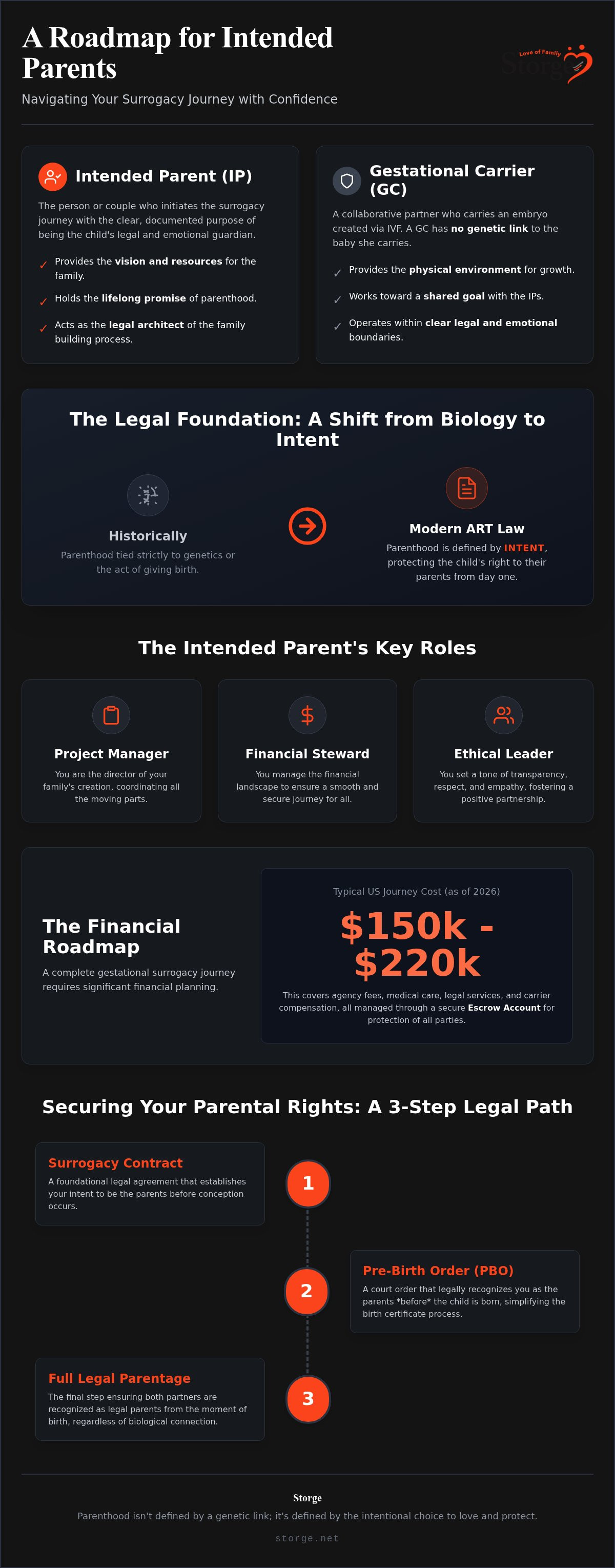
In the context of modern family building, an Intended Parent is the person or couple who initiates the journey with the clear, documented purpose of being the legal and emotional guardian of a child. This definition moves beyond biological ties. It focuses instead on the commitment to raise and nurture. For those exploring intended parents surrogacy, this role is a proactive one. You aren't just waiting for a child; you're actively orchestrating every legal and medical milestone to ensure your family's foundation is secure from the very start.
The role of an Intended Parent (IP) is distinct because it's rooted in the future. While a gestational carrier provides the physical environment for growth, the IP provides the vision, the resources, and the lifelong promise of parenthood. This role applies equally to single parents and same-sex couples, though the logistics of the journey may shift. Single parents often manage the full weight of decision-making alone, while couples navigate a shared path of choosing gamete donors or deciding whose genetics will be represented. Despite these differences, the core identity remains the same: you are the person the child will call "parent."
The Legal Foundation of Intent
Historically, parenthood was tied strictly to genetics or the act of giving birth. Modern Assisted Reproductive Technology (ART) has shifted this paradigm toward "intent." This means that the law increasingly recognizes who intended to create the child rather than who provided the egg or sperm. For queer couples, prioritizing intent in your legal strategy is vital. It's the mechanism that ensures both partners are recognized as parents from the moment of birth, regardless of biological contribution. Surrogacy contracts establish these rights before conception even occurs, providing a safety net that protects the child's right to their parents. This shift from biological-only parenting to intent-based parenting is what allows LGBTQ+ families to thrive with full legal legitimacy.
Intended Parent vs. Gestational Carrier
It's essential to understand the difference between the roles in this collaborative partnership. A gestational carrier (GC) has no genetic link to the baby; she carries an embryo created via IVF. This differs from a traditional surrogate, who uses her own eggs. Most modern journeys favor the gestational path because it offers greater legal clarity and fewer emotional complications for all parties. For a comprehensive overview of surrogacy methods and history, you can see how the terminology has evolved to protect the rights of everyone involved. The relationship between IPs and carriers is built on shared values and mutual respect. You are working together toward a shared goal, but the boundaries are clear. An Intended Parent is the legal architect of the family building process.
Roles and Responsibilities of Intended Parents
The path of intended parents surrogacy requires you to be more than a dreamer; you're the project manager of your future family. While your gestational carrier focuses on the physical journey of pregnancy, you're responsible for the structural and emotional framework that makes the birth possible. This involves balancing high-level medical coordination with the daily nuances of relationship building. You'll need to select a fertility clinic, manage the IVF timeline, and ensure that every person involved feels respected and informed. Taking on these duties ensures that intended parents surrogacy remains a positive, life-changing experience for everyone.
Ethical leadership is just as important as logistics. You're the one who sets the tone for the journey. This means ensuring transparency in every conversation and maintaining a consensual, supportive environment. You aren't just paying for a service. You're entering a deep, collaborative partnership. By leading with empathy and clarity, you protect the well-being of your carrier and the future of your child. If you're looking for a community that shares these values, the Storge PLUS membership offers a space to connect with others who prioritize an ethical approach to family building.
The Financial Roadmap for IPs
Managing the financial landscape is a primary responsibility. In 2026, the typical cost of a complete gestational surrogacy journey in the United States ranges between $150,000 and $220,000, covering everything from agency fees to specialized medical care. You'll be responsible for funding an escrow account. This account acts as a neutral third party to handle carrier compensation and medical reimbursements. It protects you by ensuring funds are used correctly; it also protects the carrier by guaranteeing her payments are secured. You'll also need to manage specialized maternity insurance, which can cost between $10,000 and $25,000 if the carrier's existing plan doesn't cover a surrogate pregnancy. Understanding the legal rights of intended parents helps you navigate these contracts with confidence.
Building the Relationship with Your Carrier
A healthy bond with your gestational carrier is built on trust and clear boundaries. You'll need to decide early on how you want to communicate. Some parents prefer weekly video calls, while others stick to text updates after medical milestones. Attending appointments, whether in person or via video, shows your commitment to the process and her health. It's about finding a rhythm that feels supportive without being overbearing. For more on fostering this unique connection, see our Finding a Gestational Carrier: LGBTQ+ Parent Guide 2026. This relationship is the bridge to your child, and investing in it pays dividends in peace of mind for everyone.
From 'Intended' to 'Legal': Securing Your Parental Rights
Securing your legal status is the final bridge between the dream of a child and the reality of a protected family. For those navigating intended parents surrogacy, this transition requires a proactive legal strategy. You aren't just signing a contract; you're establishing a permanent, court-ordered bond. It's essential to work with an LGBTQ-inclusive surrogacy attorney who can anticipate the specific hurdles queer parents face. This expertise is also vital during your hospital search. You want a birth facility that isn't just "tolerant" but has clear, inclusive protocols for nursery access and birth certificate processing for same-sex couples. Having these logistics settled early allows you to focus on the arrival of your child rather than legal technicalities.
The Pre-Birth Order (PBO) Process
A Pre-Birth Order (PBO) is a critical legal tool that establishes your parental rights while the carrier is still pregnant. This order ensures that when the baby arrives, your names go directly onto the birth certificate and the carrier's name is omitted. As of 2026, legal clarity has improved significantly in several regions. Hawaii's Act 298 and Michigan's Assisted Reproduction and Surrogacy Parentage Act now provide clear pathways for these orders, offering much-needed security for queer families. Conversely, states like Arizona and Indiana remain high-risk areas where contracts are often unenforceable. You must verify your state's PBO status by the second trimester to allow your legal team to petition the court effectively.
Second-Parent Adoption and Confirmatory Adoption
Even with a PBO in hand, many non-biological parents in queer couples choose to complete a second-parent or confirmatory adoption. This might feel redundant, but it's a powerful safeguard. A court-ordered adoption is recognized in every state and most countries, providing a level of "portability" that a PBO might lack. It protects your family if you travel or move to a less inclusive jurisdiction where surrogacy laws might be more restrictive. This step is about more than just paperwork; it's about making your family's future airtight. Specialized legal representation is key here to ensure every document is filed correctly. Through the Storge PLUS community, you can access referrals to vetted attorneys who understand these protective layers. This ensures your family's legitimacy is never in question, regardless of where life takes you.
Emotional and Ethical Considerations for LGBTQ+ Intended Parents
The emotional landscape of intended parents surrogacy is often more complex than the legal or medical ones. It's common to experience a sense of "imposter syndrome," especially if you aren't the gestational or biological parent. You might feel like a spectator in your own family's creation. This feeling usually stems from the loss of control that comes with trusting another person to carry your child. To manage this, focus on the preparations you can control, like setting up the nursery or attending newborn care classes. These proactive steps help bridge the gap between "intended" and "active" parent long before the delivery date.
The "wait" during pregnancy can feel like an eternity. Unlike a gestational parent who feels every movement, you're experiencing the process through updates, phone calls, and ultrasound photos. Use this time to build your resilience. Staying connected to the pregnancy without overstepping the carrier's boundaries requires a delicate balance. It's about being present for the milestones while respecting her physical space. Preparing for the sudden transition to life with a newborn is equally vital. The shift from a clinical, planned process to the beautiful chaos of parenthood can be jarring if you haven't mentally prepared for the change in pace.
Navigating the Stigma of Surrogacy
Many people outside the LGBTQ+ community still view surrogacy through a narrow, transactional lens. They might not see the deep, consensual bond you've built with your carrier. Educating your inner circle about the collaborative nature of this path is a key part of your role. You're building a family based on mutual respect, not just completing a business deal. It's also helpful to start crafting your child's origin story now. How will you explain their arrival? Framing it as a story of immense love and community support empowers both you and your child for years to come. For those still weighing their options, our Surrogacy vs. Adoption for Gay Couples: 2026 Guide explores these emotional differences in greater detail.
The Power of Community Support
Isolation is a significant hurdle in the surrogacy process. Connecting with other LGBTQ+ intended parents reduces the feeling that you're navigating this alone. Within a trusted network, you can share vetted carrier leads and exchange resources that clinical agencies might overlook. This shared resilience makes the long wait more manageable. Finding your "village" isn't just about logistics; it's about emotional survival. You can join the Storge PLUS community to find mentors and peers who truly understand the specific weight of this transition. Sharing experiences with others who have walked this path before you provides a sense of order and calm during an otherwise intense journey.
Finding Your Path with Storge PLUS
The previous sections outlined the complex legal and emotional landscape of intended parents surrogacy. It's a path filled with deep significance, but you don't have to walk it in isolation. Storge PLUS was built to be the bridge between your dream of parenthood and the practical resources needed to achieve it. By joining a community-first platform, you gain access to a vetted network that prioritizes the safety and belonging of LGBTQ+ individuals. This approach to intended parents surrogacy puts you in the driver's seat while providing a steady, professional hand to guide you through the most technical phases.
Your Vetted Resource Network
Searching for a gestational carrier or a donor can feel like an impossible task without a guide. Storge PLUS simplifies this by providing a database of vetted donors and carriers who are specifically looking to work with queer families. You'll also find referrals to LGBTQ-inclusive family law attorneys and fertility clinics. These professionals have been screened to ensure they provide high-quality information and affirming care. This community-led approach ensures that your legal rights are secured by experts who understand the nuances of your journey. You aren't just finding a service provider; you're finding a partner who shares your values.
Taking the First Step Toward Parenthood
Starting your journey within a community is often more empowering than starting with a traditional agency. While agencies often charge high coordination fees to manage every detail, our model provides the tools for you to lead your own family building process. You'll have the resources to search for a gestational carrier and manage your own path with the backing of a trusted support system. This long-term value extends beyond the birth, providing a network of peers who understand the joys and challenges of raising a child in a queer family. Learn how to join the Storge PLUS Membership: Your Vetted Path to LGBTQ+ Family Building. Take the first step today and join the Storge PLUS community to start your journey with the confidence of a seasoned professional by your side.
Your Journey to Parenthood Starts with Intent
Becoming a parent through surrogacy is a transformation that begins long before your child arrives. It's about shifting your perspective from a clinical process to a profound act of building a family with intention. By understanding your legal rights and embracing your role as the architect of this journey, you've already taken the most important step. Remember that securing your family's future requires a proactive approach to intended parents surrogacy, from navigating state specific laws to fostering an ethical, supportive relationship with your gestational carrier.
Accessing a trusted network of carriers and LGBTQ inclusive attorney referrals shouldn't feel like an impossible task. You deserve a village that understands the unique emotional and practical weight of your transition. Join Storge PLUS to access our vetted LGBTQ+ surrogacy community and find the empathetic, community driven support you need to move forward with confidence. Your path to parenthood is unique; let's walk it together. We're here to ensure you feel seen, respected, and fully prepared for the beautiful reality of life with your newborn.
Frequently Asked Questions
What is the legal definition of an intended parent?
An Intended Parent is the individual or couple who enters into a legal agreement to be the parent of a child born through assisted reproduction. This legal status is rooted in "intent" rather than biology or the act of giving birth. It's a foundational concept in intended parents surrogacy that ensures you're recognized as the child's guardian from the moment of conception, provided you have a valid contract in a supportive jurisdiction.
Can a single gay man be an intended parent?
Yes, a single gay man can certainly be an intended parent. Many individuals choose this path to build their families independently. This typically involves working with an egg donor and a gestational carrier. While the process requires careful coordination of medical and legal resources, it's a well established route to parenthood. Starting with a supportive community helps single men find vetted professionals who understand the specific needs of solo queer parents.
What is the difference between a gestational carrier and a surrogate?
A gestational carrier has no genetic connection to the child; the embryo is created using an egg donor or an intended parent's egg. A traditional surrogate uses her own egg, making her the child's biological mother. Most modern legal frameworks and clinics prefer gestational arrangements because they offer clearer parental rights for intended parents. This distinction is vital for minimizing legal risks and ensuring a smooth transition of custody after delivery.
How do intended parents get their names on the birth certificate?
Intended parents typically get their names on the birth certificate through a court order, such as a Pre-Birth Order (PBO) or a Post-Birth Order. A PBO is filed during the second trimester and instructs the hospital to list the intended parents as the legal parents immediately upon birth. This process varies by state, so working with a specialized attorney is essential to ensure the paperwork is filed correctly and recognized by the birth facility.
Do intended parents have to adopt their own child?
Even if you are a biological parent, completing a confirmatory or second-parent adoption is often recommended for LGBTQ+ families. This provides a court judgment that must be recognized in all 50 states and internationally, offering a layer of security that a birth certificate alone might not provide. It ensures your parental rights are portable and protected if you travel or move to a jurisdiction with less favorable intended parents surrogacy laws.
What happens if the gestational carrier changes her mind?
It's a common fear, but it's exceptionally rare in gestational surrogacy. Because the carrier has no genetic link to the baby and a clear legal contract is in place, she has no legal basis to claim parentage in surrogacy-friendly states. Proper screening and vetted legal agreements are designed to protect everyone. These safeguards ensure that the intent to parent remains with you, providing peace of mind throughout the entire pregnancy.
How much control do intended parents have over the pregnancy?
Intended parents have control over the legal and medical framework of the journey, such as choosing the clinic and donor. However, the gestational carrier maintains bodily autonomy regarding her health and daily life. The surrogacy contract outlines expectations for communication, lifestyle choices, and medical milestones. This creates a collaborative partnership based on mutual respect rather than a relationship of absolute control, ensuring a healthy environment for both the carrier and the baby.
Is surrogacy legal for LGBTQ+ couples in all 50 states?
No, surrogacy is not legal or enforceable in all 50 states. While states like California and Michigan have clear, supportive laws, others like Nebraska and Louisiana consider surrogacy contracts void and unenforceable. Arizona and Indiana also present significant legal challenges. Because state law is paramount, many parents choose to work with a carrier in a "surrogacy-friendly" state to take advantage of established legal protections and ensure their parental rights are fully recognized.


