
What if the right donor is someone you trust, but you still need to discuss expectations, health history, and their possible future role? A known sperm donor search for LGBTQ families can feel personal and hopeful while raising practical questions about where to begin and how to plan. A familiar connection can be meaningful, but it works best alongside thoughtful conversations, clinical evaluation, and legal guidance.
This guide explains how to compare known-donor arrangements with other options, prepare for conversations, and decide what support could help you take the next step. You’ll find questions to consider about screening, boundaries, privacy, and future contact. Legal rules vary, so an attorney familiar with reproductive law can explain the considerations that apply to your circumstances.
You don’t have to figure it all out alone. Storge connects LGBTQ+ individuals and couples with a community that includes donors and family-building resources, as well as referrals to fertility clinics and attorneys. Whether you’re exploring or ready to plan, you can move forward one informed conversation at a time.
Key Takeaways
- A known donor is someone whose identity is known to the intended parent or parents. A sperm bank offers a different route to donor information and connection.
- In a known sperm donor search for LGBTQ families, compare the options by identity, available information, and expectations for an ongoing relationship.
- A personal connection doesn’t replace clinic-led medical evaluation. Discuss health history, infectious-disease testing, and genetic counseling with clinicians.
- Clarify family goals and donor criteria, then talk early about privacy, contact, boundaries, and legal guidance.
- Storge PLUS provides access to a community of donors and family-building resources, with fertility clinic and attorney referrals to support planning.
Known sperm donor search for LGBTQ families: what the choice involves
There’s no single path to building a family, and you can explore donor conception at a pace that feels right. In a known-donor arrangement, the intended parent or parents know the donor’s identity. That familiarity can make it easier to start a conversation, but it doesn’t answer questions about treatment, contact, or legal parentage. A known donor is someone whose identity is known to the intended parent or parents; the term alone doesn’t define the donor’s future role.
This distinction matters. Knowing who a donor is doesn’t automatically mean they’ll have ongoing contact with a child, take part in parenting, or have a particular legal status. Discuss those expectations separately. For general background, the Sperm donation overview describes different donor arrangements and considerations. Your own plans should reflect the people involved and include appropriate professional guidance.
What does a known sperm donor arrangement mean?
“Known” describes identity or relationship, not a fixed level of future connection. A donor might be a close friend, an acquaintance, or someone met through an LGBTQ+ community or family-building network. Each connection is different, so consider whether everyone can communicate openly and think through what the arrangement could mean over time.
Before treatment begins, intended parents and the prospective donor should discuss expectations. Will the donor want updates? Does anyone expect the donor to meet the child? How would you handle a change in circumstances or feelings? Write down areas of agreement and questions that still need discussion. Bring those questions to a fertility clinic or reproductive-law attorney. A shared understanding is useful, but it doesn’t replace professional guidance.
Why LGBTQ families may consider a known donor
Some LGBTQ+ people and couples value the possibility of openness: a child may have access to information about their donor, or the family may share a connection with someone they already know. A known donor may also bring shared cultural, personal, or community context that matters to the intended parents. These are possibilities to consider, not guarantees about how a relationship will develop.
Familiarity doesn’t remove the need to consider health, emotional, and legal questions. A trusted friend still needs appropriate medical evaluation, and close relationships can make boundary-setting more complex. Donor conception can involve different family structures, relationship statuses, and conception pathways. There’s no single model that defines an LGBTQ+ family or determines which donor arrangement will fit.
As you begin a known sperm donor search for LGBTQ families, separate what you know about a potential donor from what you still need to discuss. Identity is only one part of the decision. Expectations, health information, and professional guidance help shape an arrangement around the family you hope to build.
Known donor or sperm bank: compare the paths before deciding
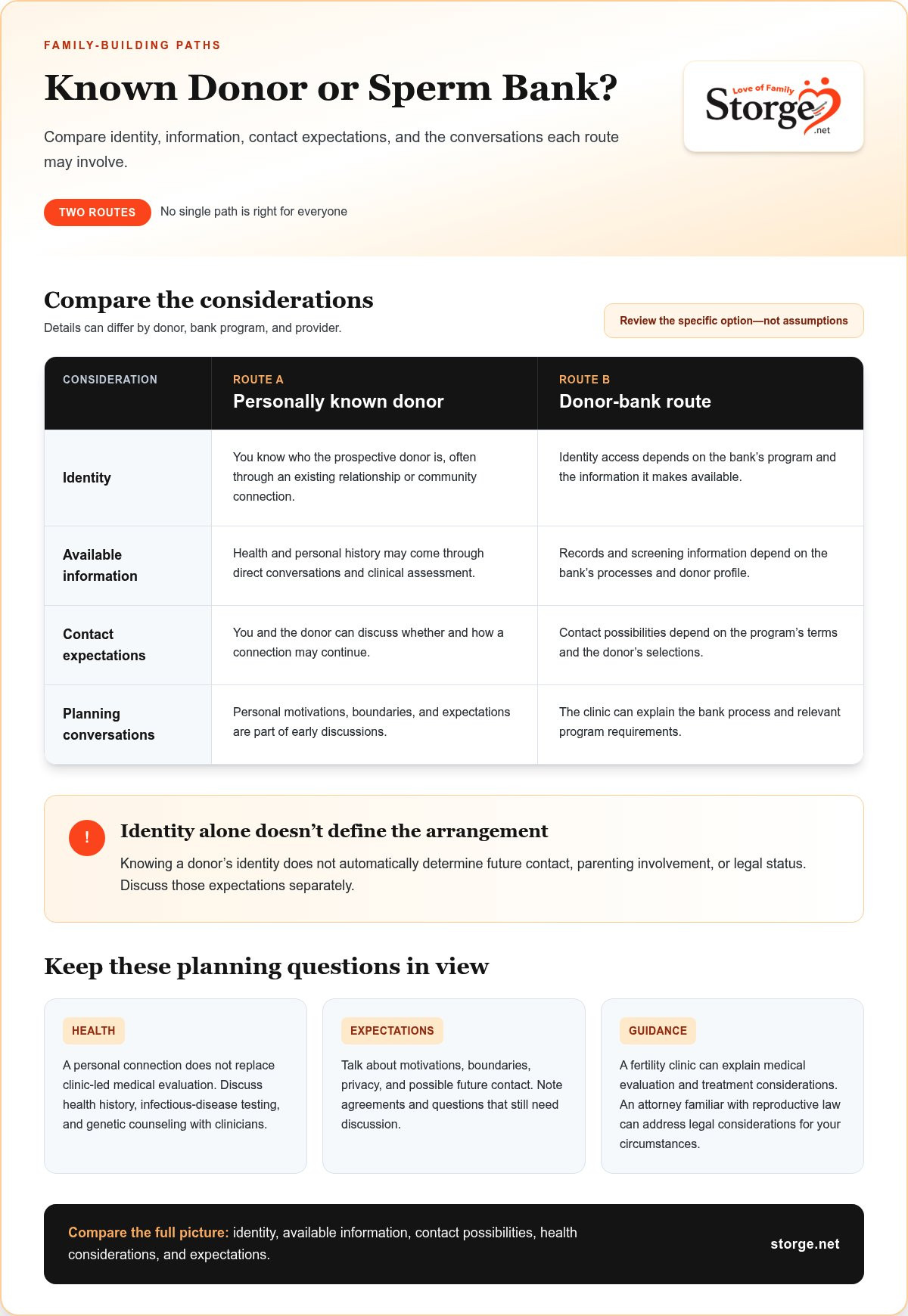
There’s no universally right route. A personally known donor may offer an existing relationship, while a sperm bank may provide a structured process and donor information through its records. Details vary: some bank programs offer identity-release options, while others provide different levels of identifying information. Compare the specific options available rather than assuming every bank or known-donor arrangement works the same way.
| Consideration | Personally known donor | Donor-bank route |
|---|---|---|
| Identity | You know who the prospective donor is, often through an existing relationship or community connection. | Identity access depends on the bank’s program and the information it makes available. |
| Available information | Health and personal history may come through direct conversations and clinical assessment. | Records and screening information depend on the bank’s processes and donor profile. |
| Contact expectations | You and the donor can discuss whether and how a connection may continue. | Contact possibilities depend on the program’s terms and the donor’s selections. |
| Planning conversations | Personal motivations, boundaries, and expectations are part of early discussions. | The clinic can explain the bank process and relevant program requirements. |
What a known-donor path may involve
A known-donor connection might begin with a friend, an acquaintance, or someone you meet through a family-building community. Before taking practical steps, discuss why each person is considering the arrangement, what communication feels comfortable, and what everyone hopes the relationship will look like. Notice where expectations align and where you need more time or professional support.
Keep clinical assessment and legal advice separate from the personal relationship. A fertility clinic can explain medical evaluation and treatment considerations, while an attorney can provide guidance relevant to your circumstances.
What to consider when comparing donor routes
Look beyond whether you’ll know the donor’s name. Consider how much health information is available, how records are maintained, what screening process applies, and whether future contact is possible or desired. Processes and records can differ by route and provider. Ask a fertility clinic to explain how its donor process works and which requirements apply to your planned treatment. The American Society for Reproductive Medicine’s LGBTQ+ Family Building Options resource offers further context on family-building paths.
For a known sperm donor search for LGBTQ families, a community connection can help you explore possibilities without deciding in advance that someone is the right match. Storge’s LGBTQ donor community guide offers additional perspective. Storge PLUS community access connects members with donors and family-building resources.
Health screening and safety questions for a known sperm donor
A trusted relationship can make it easier to start a conversation, but it can’t replace medical evaluation. In a known sperm donor search for LGBTQ families, work with a fertility professional to understand what health information and testing are relevant to your circumstances. A donor’s account of their health is useful context, not a clinical assessment.
Screening can inform medical care and help identify considerations, but it can’t guarantee a particular outcome. Results need to be interpreted in context, and no evaluation can remove every possible health risk. Clinical recommendations and requirements may change, so treat general information as a starting point for a conversation, not individualized medical advice.
What should intended parents discuss with a fertility clinic?
Ask the clinic to explain how it reviews a donor’s personal and family health history and which tests may apply to your situation. Find out how results are documented, who will interpret them, and how you’ll receive guidance if a finding needs follow-up.
- Which health-history details should the donor share, and how far back should family history be considered?
- What infectious-disease testing is appropriate, and how does timing affect the clinic’s recommendations?
- Would genetic carrier screening or genetic counseling be useful for the donor, intended parent or parents, or both?
- How could a screening result affect treatment choices or prompt additional evaluation?
- Which current FDA-related requirements apply to this donor and the planned conception pathway?
There isn’t one answer that fits every family. A clinician can explain the current protocol for your circumstances, including any applicable federal requirements, and help you understand what a result does and doesn’t mean. For current FDA-related information, use authoritative sources alongside the clinic’s guidance rather than relying on older online summaries.
Why informal arrangements deserve careful planning
The conception method can affect which clinical steps apply. A clinic can explain the evaluation and care relevant to the approach you’re considering, without assuming every family will use the same method. Involving a fertility professional before attempting conception gives you space to discuss the plan, the donor’s evaluation, and questions about handling or timing.
This guidance is educational, not a diagnosis or a substitute for medical advice. Screening and a personal relationship both have limits: a donor may feel healthy and still have a finding worth discussing, and some risks may not be identified through available evaluations. Share relevant records with the clinical team and ask what follow-up, if any, they recommend.
These steps aren’t a reason to distrust someone you care about. They help you make health decisions with clear information and professional support, while respecting the donor and the family you hope to build.
Plan the search: conversations, expectations, and legal guidance
A steady plan can make a personal decision feel more manageable. Start by clarifying what you hope family life will look like, then identify donor criteria and discuss expectations with a potential donor. Bring medical and legal questions to the appropriate professionals. You don’t need every answer before beginning, but discussing expectations early can help everyone make informed choices.
- Clarify your family goals. Consider what matters to you about the donor’s identity, background, and possible connection with your family.
- Identify your priorities. Separate essential criteria from preferences, and think about what information you’ll want to share with a child in the future.
- Talk openly with a potential donor. Discuss motivations, privacy, communication, boundaries, and hopes for future contact.
- Seek professional guidance. A fertility clinic can explain medical steps and its treatment requirements. An attorney familiar with LGBTQ+ family formation can provide guidance about parentage and planning.
Questions to discuss with a potential donor
Make room for a two-way conversation. Ask what motivates the donor, what they understand the arrangement to mean, and how they prefer to communicate. Discuss whether anyone hopes for updates or future contact, how privacy will be handled, and how you’d respond if expectations change. You can also agree on how to approach a child’s questions about donor conception and identity.
These conversations can surface differences before treatment begins, when there’s more space to consider them. Agreement is valuable, but a shared understanding doesn’t replace individualized legal advice. For tailored support, LGBTQ family law attorney guidance can help you prepare for that conversation.
When clinic and legal guidance can help
A fertility clinic can describe the medical process and explain the requirements that apply to its treatment pathway. Questions about clinic care can help you understand what to expect; the LGBTQ-friendly fertility clinic questions guide can help you prepare. An attorney can address legal considerations specific to your circumstances.
Parentage rules can vary by jurisdiction and by the details of an arrangement. Don’t rely on a general template or assume that a conversation alone determines everyone’s legal status. An attorney familiar with reproductive law and LGBTQ+ family formation can explain the relevant considerations and help you understand what steps may apply before conception.
For a known sperm donor search for LGBTQ families, professional guidance doesn’t take the meaning out of a personal connection. It helps you approach conversations with care and understand medical and legal questions. Storge connects LGBTQ+ people with family-building resources and referrals to fertility clinics and attorneys. Explore Storge’s donor and family-building community as you consider your next steps.
Find LGBTQ-inclusive known-donor support with Storge
A donor search can raise questions that are easier to consider with community support and professional guidance. Storge is an online platform connecting LGBTQ+ individuals and couples with donors and family-building resources. It offers a place to explore possible connections and learn from others’ experiences, while leaving personal decisions in your hands.
How community access can support a donor search
Shared experiences may help you clarify what matters to your family, prepare for conversations, and identify questions you hadn’t yet considered. A community connection is one way to explore donor possibilities, not a promise that you’ll find a match or that a particular person will be right for you. Take time to understand your priorities before moving from conversation to commitment.
- Write down the values and preferences that matter most to your family.
- Consider what kind of communication and future contact you’d be comfortable discussing.
- Keep medical decisions with fertility professionals and legal planning with an attorney familiar with your circumstances.
Storge PLUS provides membership access to the community. Members can explore a vetted network of donors and family-building resources, then pursue conversations at a pace that feels manageable. Community participation can support your search, but it doesn’t replace clinical evaluation, legal guidance, or thoughtful conversations with a potential donor.
Storge also connects members with fertility clinic and attorney referrals. A fertility clinic provides guidance about medical care and treatment requirements; an attorney offers legal advice tailored to your situation. These professionals can help you turn questions into an informed plan, while you remain in control of the decisions that shape your family’s path.
Take one informed next step
If you’re considering a known sperm donor search for LGBTQ families, you don’t need to have every detail settled before seeking community. Start with one clear question: what would help you feel informed and supported at this stage? You might want to learn about donor connections, prepare for a conversation, or find professional guidance.
Family building is personal. Your priorities, relationships, and timeline may differ from someone else’s, and there’s no need to force your process into a single model. You can pause, gather information, and revisit decisions as your understanding grows.
When you feel ready, explore the Storge PLUS community as one supportive place to continue learning about donor connections and family-building resources.
Choose a next step that feels right
You don’t have to settle every question before taking a first step. Decide what would help you feel more grounded right now: making space to reflect, talking with someone you trust, or exploring donor connections that may fit your hopes. A small, considered step can create clarity without asking you to rush toward a decision.
A known sperm donor search for LGBTQ families is deeply personal, and your path can take shape around the relationships, values, and support that matter to you. Give yourself permission to revisit priorities as you learn more. Thoughtful progress is still progress, even when it happens gradually.
Explore the Storge PLUS community to connect with donors and family-building resources as you consider your next step.
Frequently Asked Questions
Can a known sperm donor be a family member?
Yes, a relative may be considered, but the family relationship makes medical and personal guidance especially important. A fertility clinician can explain whether genetic counseling or additional assessment may help clarify inherited health considerations. Families should also discuss how the donor’s place in the family could affect relationships and a child’s understanding of their origins. Legal implications depend on the circumstances and jurisdiction, so get advice from a reproductive-law attorney before proceeding.
Should parents tell a child they were conceived with a known donor?
Many families choose to share this information in age-appropriate ways as a child grows, rather than treating it as a single conversation later in life. With a known donor, a child may encounter the donor as part of their family or community, making a shared, thoughtful approach especially useful. Parents can agree on simple language, preserve relevant records, and seek support from a counselor familiar with donor conception if questions feel difficult.
Can a known sperm donor be compensated?
Possibly, but whether compensation or expense reimbursement is appropriate can depend on the arrangement and applicable law. Discuss expectations openly before moving forward, including what any payment represents and whether it could affect the donor’s understanding of the agreement. Don’t assume that calling a payment a gift or reimbursement settles its legal or tax treatment. An attorney familiar with reproductive law can advise on the specific circumstances.
Can a known donor provide sperm directly without a fertility clinic?
Some people consider arranging conception without clinic involvement, but doing so can leave important medical and legal questions unresolved. A fertility professional can explain what evaluation, testing, and care apply to the method you’re considering. Direct arrangements may also have different implications from treatment through a clinic, depending on local law and the facts. Before attempting conception, discuss the plan with a clinician and an attorney rather than relying on informal assumptions.
Can one known sperm donor help more than one family?
Yes, a donor may help more than one family, but there isn’t a single answer that fits every arrangement. Families and the donor can discuss intentions, future contact, and how donor-conceived children might learn about genetic connections. A clinic can explain what records it maintains and any relevant policies for its treatment pathway. Clear communication helps families consider future questions, including whether children may want to connect with donor siblings.
How can parents talk with a child about donor conception?
Use clear, reassuring language that fits the child’s age, and let the conversation develop over time. For example, a young child might hear that a donor helped their family grow; older children may ask for more detail about the donor or conception. Follow the child’s questions without pressuring them to respond a certain way. Keeping accurate family-building records can help you answer questions consistently as your child grows.


