

Understanding surrogacy agency fee structures in the U.S. means looking beyond the headline fee to see what it covers, what may be billed separately, and how costs can add up.
It’s reasonable to want a clear picture before making decisions with personal and financial weight. Agency fees can cover different services, so comparing headline amounts alone may not show which arrangement fits your needs.
This guide explains common surrogacy cost categories, possible additional expenses, and legal fees, then offers practical questions to ask when comparing agency fee structures. You’ll be better prepared to understand what an estimate includes, identify costs that may sit outside it, and plan thoughtfully for the next steps in your family-building journey.
Key Takeaways
- Separate the agency’s fee from surrogate compensation and pregnancy-related expenses to understand what the overall estimate covers.
- Look beyond the headline total for possible additional costs, including medical, insurance, travel, and donor-related expenses.
- Account for legal work such as drafting agreements and establishing parentage, which may be billed separately from agency services.
- When comparing agencies, ask what each fee includes, which expenses are separate, and how payments are handled.
How Much Does Surrogacy Cost?
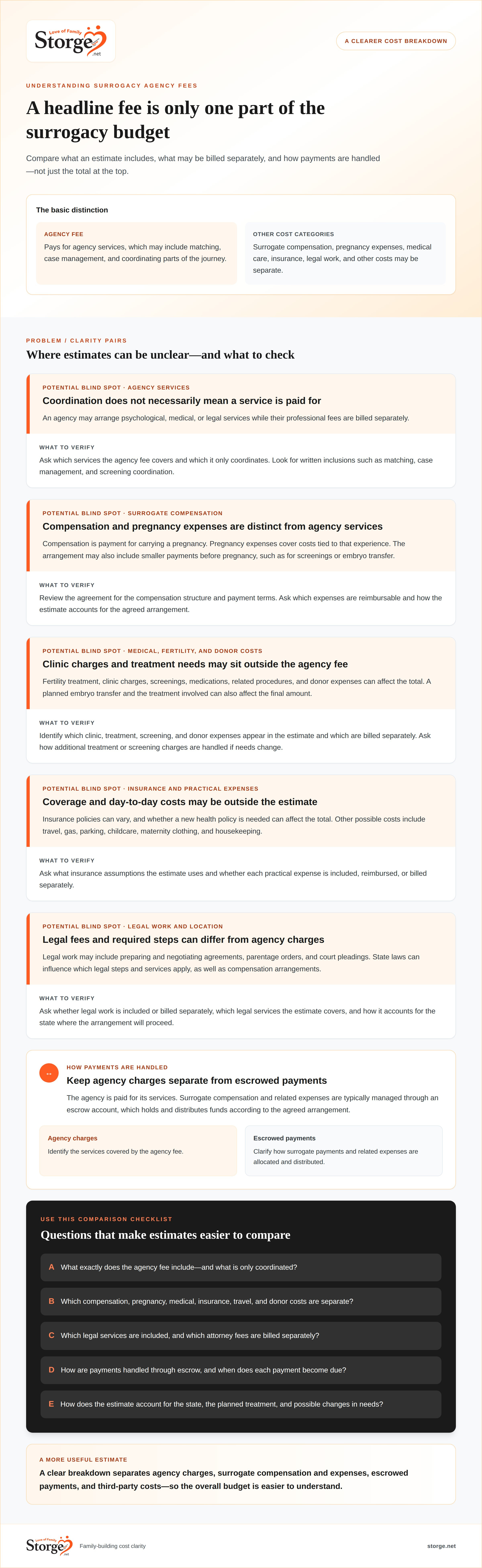
Agency fees, surrogate compensation, medical care, insurance, and legal work can all contribute to the total. When understanding surrogacy agency fee structures, the final amount depends on what each estimate includes.
Agency fees pay for agency services, while compensation and pregnancy-related expenses are allocated for the surrogate. Payments are typically managed through an escrow account, which handles funds according to the agreed arrangement.
Surrogate Compensation and Pregnancy Expenses
Surrogate compensation is payment for carrying a pregnancy, while pregnancy expenses cover costs tied to that experience. Together, they form a substantial part of the surrogacy cost and affect how families plan their budget.
The agreement outlines the compensation structure, including any smaller payments due before pregnancy, such as those related to screenings or embryo transfer. Matching terms and the agreed arrangement can also affect the estimate.
Itemized Quotes and Direct Payments
An itemized quote separates agency services from payments for the surrogate, medical care, and other expenses. This breakdown matters because a single total may not show which services are included or billed separately.
Ask how the agency fee is separated from compensation and reimbursable pregnancy costs. The agency is paid for its services; surrogate compensation and related expenses are allocated to the surrogate and typically managed through escrow. A clear estimate should identify separately billed medical, legal, travel, or donor costs rather than folding them into an unexplained total.
Insurance and Miscellaneous Expenses
Insurance and miscellaneous expenses may fall outside the agency fee and compensation estimate. Including them in your budget helps reveal the broader financial picture.
Surrogate insurance for a U.S. journey requires careful planning, as policies can vary significantly. Estimates for a U.S. gestational carrier often account for specialized coverage. These categories can include travel, gas, parking, childcare, maternity clothing, or housekeeping. Whether a new health policy is needed can also affect the total.
Covered and Unexpected Costs
Covered surrogacy expenses may include screenings, medications, fertility treatment, legal fees, and related procedures. They may also include travel and practical pregnancy-related costs.
Costs can change as the journey unfolds. Medical needs, insurance requirements, travel, and donor expenses can affect the final budget, while pregnancy circumstances may bring additional surrogate payments. An itemized estimate shows which costs are included and which could arise separately, giving intended parents a clearer basis for planning.
Transparency and potential additional costs
A transparent estimate separates agency charges from fertility, donor, and third-party costs. The final surrogacy budget depends on the services used and the needs of the journey.
Factors Affecting Surrogacy Costs
Services and circumstances can change a journey’s total. An agency fee may not include fertility treatment, donor expenses, or every clinic charge, so these categories need to be considered separately.
These are distinct cost categories, so before adding estimates, check what each one covers. A planned embryo transfer and the treatment involved can also affect the final amount.
Excluded and Third-Party Costs
Excluded costs are charges outside the agency fee, often billed by clinics, attorneys, or other service providers. Identifying them matters because coordination does not necessarily mean the service charge is included.
An agency may organize psychological, medical, and legal services without covering their fees. Ask which third-party expenses appear in the estimate and which are billed separately. Surrogate payments are typically managed through an escrow account, which holds and distributes funds according to the arrangement. A clear breakdown distinguishes agency charges, escrowed payments, and clinic or donor costs. It should also explain how additional treatment or screening charges are handled if needs change.
State Laws and Surrogacy Fees
State laws can influence which legal steps and services apply, affecting fees and compensation arrangements. Location therefore matters when estimating a surrogacy budget, even when two journeys involve similar services.
Ask how the estimate accounts for the state where the arrangement will proceed. Clarify whether legal work and required services are included or billed separately. Compensation terms may also depend on the arrangement and applicable state rules. These questions help distinguish a general estimate from one tailored to the intended journey. They also clarify why agency quotes may differ, without treating one headline fee as the whole cost.
Legal fees and parental establishment
Legal fees are separate from agency charges in many surrogacy estimates. The distinction matters because intended parents need to understand both service coordination and the legal work involved in establishing parentage.
Estimates for a U.S. Contracts may involve preparing and negotiating agreements, parentage orders, and court pleadings. An agency may organize legal services without covering the attorney’s bill.
The agency fee may cover services such as matching, case management, and coordinating parts of the journey. Inclusions vary: psychological, medical, or legal services may be arranged separately, with their charges billed to families outside the agency fee.
Ask for the fee breakdown and identify each included service, each separate payment, and the point when it becomes due. A PLS program or Platinum Plan title alone doesn’t explain what the fee covers. Compare written inclusions such as matching, case management, screening coordination, and legal-service coordination, while distinguishing coordination from payment for the professional service itself.
Lower agency fees can reduce upfront agency costs, but they don’t show the full financial picture. This approach may also shift coordination responsibilities away from the agency. Compare the responsibilities and separately billed services, not just the initial charge.
For intended parents, the useful comparison is the full payment structure: agency services, legal representation, and parentage work. Ask whether the agreement includes preparing and negotiating the contract, and whether parentage orders or court pleadings are separate. This clarifies differences between agency fees and which legal expenses remain outside the quoted amount.
Questions to ask when comparing agencies
Read the fee contract for included services, excluded charges, payment timing, and terms for additional expenses. Understanding surrogacy agency fee structures starts with seeing how each charge connects to the full journey, rather than comparing headline fees alone.
Request an itemized schedule separating agency charges from surrogate compensation, medical costs, insurance, and legal work. Clarify when payments are due, including costs linked to matching, embryo transfer, pregnancy, and delivery. Some agencies allow larger fees to be paid in installments. Ask whether that schedule applies only to the agency fee or to other expenses, too.
- Which services does the agency fee include, such as matching or case management?
- Which screening, clinic, legal, or insurance charges are billed separately?
- How are surrogate compensation and pregnancy-related expenses paid and tracked?
- What events could trigger additional charges, such as a transfer or C-section?
Ask for clear definitions of “included,” “covered,” and “additional.” Maternity clothing or travel, for example, may be treated differently from medical treatment. Find out how the contract addresses changing needs, unused funds, and unexpected expenses. A written explanation helps you compare coverage and understand what each agency’s terms mean in practice.
Review cancellation and rematching terms, too. Ask what happens to payments if a match ends before embryo transfer or the journey pauses after treatment begins. The contract should explain which charges remain due and how remaining escrow funds are handled. These details make the financial commitments at each stage easier to understand.
Understanding surrogacy agency fee structures also means weighing the full scope of support, not just the initial charge. If you’re exploring a carrier match, explore gestational carrier search as one part of planning your journey.
Storge: Surrogacy / Gestational Carrier Search
Storge offers a gestational carrier search for LGBTQ+ individuals and couples exploring this family-building path. It can be a helpful next step after reviewing possible costs and considering what support you need with your search.
Storge also offers Fertility Clinic Referrals and Attorney Representation Referrals, helping you find resources for medical and legal parts of the process. These referrals are distinct from direct medical procedures or in-house legal services, so you can understand how each resource fits your plans.
If you’re ready to explore a carrier search or discuss which resources may support your next steps, contact Storge.
Make room for your next decision
Financial planning is one part of a deeply personal family-building decision. Give yourself space to consider what matters most in the support around your journey, and use clear written terms to keep your priorities in view. Understanding surrogacy agency fee structures can help you make decisions with greater confidence, without letting a single headline figure define your path.
Storge PLUS is a community resource to consider alongside your plans. Explore the network connecting LGBTQ+ individuals and couples with gestational carriers, egg donors, and sperm donors, and take the next step at your own pace.
Contact Storge to discuss surrogacy and consider what your next step could look like. Your path can move forward one considered decision at a time.
Frequently Asked Questions
What does a surrogacy agency fee pay for?
A surrogacy agency fee pays for the agency services included in its agreement, which may include matching coordination and case management. It doesn’t automatically cover every professional bill. An agency may organize medical, psychological, or legal services while those providers charge separately. Before comparing agreements, ask which tasks the agency performs, which expenses it pays, and which costs remain your responsibility.
How Can I Afford Surrogacy?
Families may combine several funding sources, such as savings, employer benefits, and grants. Grant application cycles may take 6-12 months, so timing matters. Build a funding plan around when payments are due, rather than relying on one source to cover the whole journey.
How are payments structured throughout the surrogacy journey?
Payment timing varies by cost type and agreement. Surrogate compensation is generally paid in monthly installments after pregnancy is confirmed, with smaller payments potentially due earlier for contract signing, screenings, or embryo transfer. A final lump sum may be due after delivery. Some agencies let intended parents divide larger agency fees into installments. A written schedule connects each due date to the stage of the journey.
How much do surrogacy agencies charge in the United States?
U.S. The amount depends on which agency services are included and how the fee is structured. Compare the scope behind each quote, not only the headline amount. A lower agency fee may leave more coordination or separately billed services outside the quoted charge.
What is the typical total cost of surrogacy in the U.S., including agency and non-agency expenses?
An overall estimate can include agency services, surrogate compensation, medical and IVF expenses, legal work, insurance, and other costs. The share assigned to each category varies by journey. Use the total as a planning range, then compare its categories with the timing and scope of your own arrangement.
What additional or hidden fees can arise during a surrogacy journey?
Additional expenses may include insurance, donor-related costs, travel, and pregnancy-related payments. Insurance and miscellaneous costs can also increase the budget. Treat “hidden fees” as costs not obvious in a headline quote, and identify their triggers in the written estimate.


