

What if the clearest sign of an ethical surrogacy journey isn’t a polished sales pitch, but the respect and transparency shown to everyone involved? For same-sex parents, that distinction matters. Concerns about exploitation, confusing state laws, and unclear expenses can make an already personal decision feel harder to approach. Ethical surrogacy for same-sex parents begins with informed choices, the carrier’s autonomy, and a legal plan built around the family you’re creating.
It’s reasonable to want reassurance that your future child’s parentage will be protected and that your gestational carrier will be treated as a partner, not a means to an end. This guide offers a practical framework for assessing those questions, recognizing red flags, and finding LGBTQ-inclusive professionals who understand the journey.
We’ll explore what ethical care can look like in practice, why laws differ from state to state, and how to ask about expenses before you commit. We’ll also explain how community-based vetting and access to specialized attorney referrals, including through the Storge PLUS Membership, can help you make decisions with greater confidence. The goal isn’t to rush toward a match. It’s to build a family through a process grounded in mutual respect and legal clarity.
Key Takeaways
- Ethical surrogacy for same-sex parents centers on informed consent, carrier autonomy, fair treatment, and respect throughout the journey.
- Use clear questions about compensation and expenses to understand the financial arrangement and identify potential hidden costs.
- Seek separate legal representation and ask a reproductive attorney how parentage is established under the laws that apply to your journey.
- Evaluate providers by their experience supporting LGBTQ+ families and by how they explain carrier screening and ongoing support.
- Learn how the Storge PLUS Membership connects families with a community-vetted network of carriers and donors, along with specialized legal and medical referrals.
Understanding Ethical Surrogacy: Why Intentionality Matters for Same-Sex Parents
Ethical surrogacy is more than reaching an agreement to pursue pregnancy. It’s a process grounded in informed consent, fair and transparent compensation, and mutual respect for the intended parents and gestational carrier. Ethical surrogacy for same-sex parents also means recognizing each family’s path without treating one family structure as more legitimate than another.
For LGBTQ+ parents, family-building decisions can involve added questions about donor conception, legal parentage, and whether professionals understand their family structure. That experience can make clarity and accountability especially important. Rather than assuming good intentions are enough, intended parents can ask how a provider supports the carrier’s choices, explains financial arrangements, and uses inclusive language in conversations and documents.
This approach reflects a shift from treating surrogacy as a transaction to building a relationship with clear boundaries and shared expectations. The carrier isn’t simply a participant in a medical process; she is a person whose health, privacy, and autonomy deserve ongoing consideration. Respectful communication helps make those values practical, from early discussions through pregnancy and beyond.
The Evolution of Surrogacy for LGBTQ+ Families
Same-sex couples and LGBTQ+ individuals have built families through a range of pathways, including adoption, donor conception, and surrogacy. As these journeys have become more visible, many intended parents have sought processes that are transparent rather than relying on anonymity or assumptions. For newcomers, Understanding Surrogacy offers an overview of traditional and gestational arrangements. In gestational surrogacy, the carrier isn’t genetically related to the child.
In 2026, prioritizing a carrier’s long-term well-being means discussing support, privacy, and expectations openly, not focusing solely on pregnancy outcomes. A respectful match makes room for the carrier to ask questions and express boundaries without pressure.
Distinguishing Between Altruistic and Commercial Surrogacy
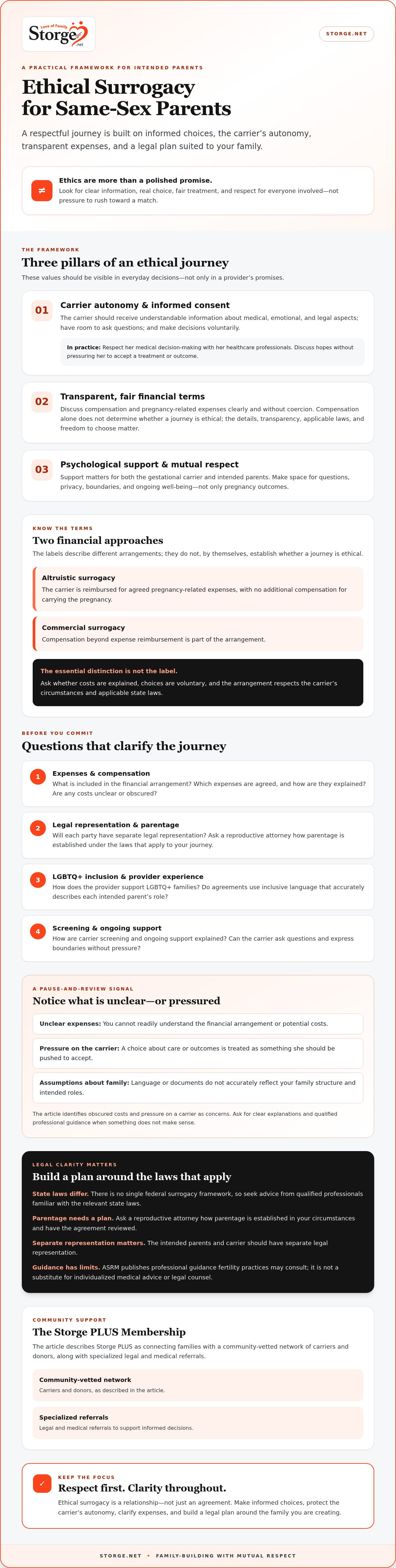
In altruistic surrogacy, the carrier receives reimbursement for agreed pregnancy-related expenses but no additional compensation for carrying the pregnancy. In commercial surrogacy, compensation beyond expense reimbursement is part of the arrangement. These terms describe different approaches; they don’t, by themselves, establish whether a particular journey is ethical. The details, transparency, applicable state laws, and the carrier’s freedom to make informed choices all matter.
Reasonable compensation should be discussed clearly and without coercion, with the carrier’s time, effort, and circumstances treated with respect. A profit-driven approach that obscures costs or pressures a carrier raises concerns, while compensation alone doesn’t determine whether a journey is exploitative. There’s no single federal surrogacy framework, so seek advice from qualified professionals familiar with the relevant state laws.
Informed consent means the carrier receives understandable information about the medical, emotional, and legal aspects of the arrangement, has an opportunity to ask questions, and makes decisions voluntarily.
Finally, agreements should use LGBTQ-inclusive language that accurately identifies everyone’s intended role as a parent and avoids assumptions about gender, biology, or family structure. Ask a reproductive attorney to review the language and explain how it applies to your circumstances.
The Three Pillars of an Ethical Gestational Journey
Ethics need to show up in the day-to-day decisions, not just in a provider’s promises. A useful framework includes bodily autonomy and informed consent, transparent compensation, and psychological support for both the gestational carrier and intended parents. The American Society for Reproductive Medicine (ASRM) publishes professional guidance that fertility practices may consult, but it isn’t a substitute for individualized medical advice or legal counsel.
Carrier Autonomy and Medical Decision-Making
The carrier should be able to make decisions about her own medical care in consultation with her healthcare professionals. Intended parents can discuss hopes and concerns, but those conversations shouldn’t become pressure to accept a particular treatment or outcome. Agreements should address sensitive possibilities, including selective reduction or termination, with care and clarity. These discussions can prepare everyone for difficult circumstances, but a contract shouldn’t be treated as a way to override the carrier’s bodily autonomy.
Before moving forward, clarify who provides medical and psychological support and how the carrier can access it independently. Intended parents and the carrier should each have their own legal representation, so everyone can ask questions and understand the agreement from their own perspective. Support should make room for honest conversations, not steer someone toward a decision that serves another party’s preferences.
Fair Compensation and Financial Transparency
Ethical compensation is openly discussed, documented, and understood by everyone involved. Rather than relying on a headline figure or broad promise, review what the agreement covers, how payments are handled, what expenses may arise, and who is responsible for them. ASRM guidance can inform professional practice, but it shouldn’t be presented as a universal rate or a guarantee that an arrangement is fair. A fair framework avoids pressure and gives the carrier enough time and information to decide whether the terms work for her.
A third-party escrow account can help organize and document funds according to the agreed terms. Ask who manages the account, what expenses it can pay, how approvals work, and how unused funds are handled. Escrow can support financial transparency, but it doesn’t replace clear agreements, independent legal advice, or respect for the carrier’s choices. For another overview of family-building considerations, read the Gay Surrogacy Guide: Building Your Family in 2026.
Psychological Support for Everyone
Surrogacy can bring hope, uncertainty, and complex feelings for intended parents and the carrier. Ethical planning recognizes those emotional needs throughout the process, rather than treating support as a formality at the beginning. Ask what psychological resources are available, who can access them, and how privacy is respected.
For families seeking LGBTQ-inclusive guidance, Storge offers the Storge PLUS Membership, with access to a community-vetted network and specialized referrals. Learn more about LGBTQ+ family-building support as you consider which partners align with your values.
Navigating Legal and Financial Ethics: Protecting All Parties
Legal clarity is part of ethical care. Surrogacy law varies by state, and the process for establishing parentage can depend on where the child will be born. Before matching or signing an agreement, intended parents should consult a reproductive attorney licensed in the relevant state. The gestational carrier should have independent legal counsel, too. Separate representation gives each party space to understand the terms, ask questions, and make informed decisions without relying on someone else’s lawyer.
A pre-birth order (PBO), where available, may establish intended parents’ legal parentage before birth. It can be an important step toward recognizing a child’s family promptly, but procedures and eligibility differ across jurisdictions. Don’t assume an order will be available or work the same way for every family. Ask counsel to explain the applicable parentage process, including whether a second-parent adoption or another legal step may be relevant to your circumstances. Thoughtful planning can reduce uncertainty and help guard against future disputes, though no legal document can promise a particular outcome.
Finding LGBTQ-Inclusive Legal Representation
General family-law experience may not be enough. Look for an attorney who understands assisted reproduction, gestational carrier agreements, and the parentage questions that can arise for same-sex parents. Ask about their experience with LGBTQ+ families, PBOs, second-parent adoption, and parental rights in the state relevant to your journey. Also ask how they explain options and risks, and whether they’ll represent only your interests. Community referrals can offer a useful starting point, alongside checking an attorney’s relevant experience and professional standing. For more questions to ask, see How to Find an LGBTQ Family Law Attorney.
Ethical Financial Planning for Intended Parents
Financial planning should make the full picture easier to understand, not create pressure to cut safeguards. Request an itemized estimate that explains what is included, what may change, and who is responsible for each expense. Clarify how insurance coverage will be reviewed and how medical costs and carrier support are handled. If a quote seems unusually low, treat it as a reason to ask questions, not proof of wrongdoing: which services or protections are excluded, and could additional expenses arise later?
“Surrogacy tourism,” or choosing a jurisdiction primarily because it appears cheaper or more convenient, can leave families unclear about how local rules affect agreements and parentage. Instead, ask a reproductive attorney to assess the laws that apply to the birth and the entire arrangement before making location decisions. Ethical surrogacy for same-sex parents means weighing cost alongside the carrier’s protections and the child’s path to legal recognition.
Storge offers referrals to specialized LGBTQ-inclusive legal representation, helping families explore professionals who understand these concerns. Learn more about attorney representation referrals as one resource for building a legally informed plan.
How to Vet Partners for an Ethical Surrogacy Path
Choosing partners is about more than comparing credentials or reported success rates. For ethical surrogacy for same-sex parents, look for providers who can explain their practices clearly, treat every family with respect, and welcome questions without rushing you. Use these steps to assess whether a provider’s actions match its promises.
- Ask about LGBTQ+ experience. How have they supported same-sex parents and families with different identities or paths to parenthood? Can they explain how their forms, communication, and processes accommodate your family?
- Review carrier screening and support. Ask what medical and psychological screening involves, how the carrier’s privacy is protected, and what support is available throughout the journey. Look for clear explanations rather than vague assurances.
- Interview clinics and hospitals. Ask how staff communicate with gestational carriers and intended parents, how they record each person’s role, and how they respond to questions or concerns. A respectful birth environment should recognize your family without making assumptions.
- Seek community feedback. Ask other LGBTQ+ parents about their experiences with communication, transparency, and follow-through. Peer accounts can add valuable context, but consider them alongside professional qualifications and written policies.
Vetting Fertility Clinics and Hospitals
A clinic’s clinical expertise matters, but so does the way it treats the people involved. Ask whether the carrier can communicate privately with her care team, how staff protect confidentiality, and how intended parents are included in discussions with the carrier’s consent. For a hospital, ask how staff will use names and pronouns, recognize the parents’ roles, and handle questions about parentage respectfully. The LGBTQ hospital birth inclusivity guide offers more questions to consider as you assess care settings.
The Role of Community in Vetting
Community feedback can reveal patterns that a website or introductory call may not show, such as whether a provider listens, communicates changes promptly, and follows through on commitments. Ask specific, open-ended questions, and remember that one person’s experience may not represent every family’s. Marketing that promises guaranteed outcomes, pressures you to decide quickly, or leaves fees and responsibilities unclear deserves closer scrutiny.
Community vetting reduces the risk of exploitation by helping families compare firsthand experiences and notice concerns that a provider’s marketing may not disclose.
Storge’s community-based model connects LGBTQ+ families with a vetted network of gestational carriers and referrals to specialized professionals. Explore Storge’s family-building community as you research potential partners and decide which standards matter most to your family.
Building Your Family with Integrity: The Storge PLUS Community Advantage
Ethical family building doesn’t have to begin with a sales-driven process. A community-first platform can offer another way to explore your options, make connections, and find referrals while keeping informed choice at the center. The Storge PLUS Membership connects LGBTQ+ families with a vetted network of gestational carriers and donors, along with specialized legal and medical referrals.
That structure can help you move from searching on your own toward becoming part of a community that understands queer family-building questions. It doesn’t replace independent legal advice or care from qualified medical professionals. Instead, it can help you identify potential connections and professionals to evaluate as you decide what fits your family.
Accessing a Trusted Community of Donors and Carriers
For intended parents, a vetted network can offer a starting point for conversations with potential carriers and donors. Ask what vetting means in practice, what information is shared before a match, and how privacy and consent are respected. You can also discuss whether a potential carrier is comfortable supporting LGBTQ+ parents and what communication preferences matter to everyone involved. A community connection is a beginning, not a substitute for independent screening, clear agreements, or each person’s right to make their own decisions.
Membership platforms may differ in how they fund their operations and maintain their networks. Before joining any platform, ask what membership includes, how its vetting process works, and whether any costs or responsibilities fall outside the membership. These questions help you assess transparency without assuming that one model guarantees an ethical outcome. For more detail about the membership, read Storge PLUS Membership: Your Vetted Path to LGBTQ+ Family Building.
Your Next Steps Toward Ethical Parenthood
You can begin by writing down your priorities: the kind of support you want, questions about legal parentage, your expectations for communication, and what respectful treatment means to you. Then use those priorities to guide conversations with potential carriers, clinics, hospitals, and attorneys. Storge PLUS includes referrals to specialized LGBTQ-inclusive legal representation and medical professionals, so families can explore relevant expertise as they plan their next steps.
A supportive community can also make the process feel less isolating. Connecting with people who understand the questions LGBTQ+ families may face can offer perspective as you evaluate options, while qualified professionals help address the legal and medical details specific to your circumstances.
Starting this journey in 2026 doesn’t mean you need to have every answer today. Take time to ask questions, compare providers, and make decisions that honor both your hopes and the carrier’s autonomy. An intentional path is built one informed, respectful step at a time.
Take Your Next Step Toward Parenthood with Confidence
Ethical surrogacy for same-sex parents is built through thoughtful choices, not a single decision. Keep the carrier’s autonomy and well-being central, seek independent legal representation, and ask providers for clear answers about their practices and costs. Community insight can help you evaluate those answers, while qualified legal and medical professionals can guide decisions specific to your circumstances.
You don’t have to begin with every detail settled. Start by identifying what matters most to your family, then look for support that respects your values and recognizes your family without assumptions. A community-centered approach can help you connect with donors and gestational carriers, alongside referrals to LGBTQ-inclusive attorneys and clinics.
The Storge PLUS Membership offers access to a community-vetted network and specialized referrals, helping you explore family-building options with connection and care at the center. Join Storge PLUS to access a vetted community of carriers and LGBTQ-friendly resources.
Your path can move at a pace that feels right. With clear information, respectful support, and room to ask questions, you can take the next step toward building your family with confidence and hope.
Frequently Asked Questions
Is surrogacy for same-sex parents legal in all US states?
No, surrogacy is not governed by one uniform federal law, and state laws and parentage procedures vary. The rules that apply can depend on factors such as where the child will be born, so don’t assume that a contract or process used elsewhere will work for your family. Before making commitments, consult a reproductive attorney licensed in the relevant state about the agreement and steps to establish parentage.
What makes a surrogacy journey “ethical” for the gestational carrier?
An ethical journey respects the carrier’s autonomy, supports informed and voluntary decisions, and makes compensation and expenses transparent. She should have independent legal representation and access to appropriate medical and psychological care. Agreements can clarify expectations, but they shouldn’t be treated as a way to control her medical decisions. Ask providers how they protect her privacy, explain choices, and respond if her preferences differ from the intended parents’ hopes.
How much does ethical surrogacy typically cost for same-sex couples?
There isn’t one standard total cost, and the amount depends on the specific medical, legal, insurance, donor, and support needs of a journey. Ask providers for an itemized estimate that explains what’s included, what could change, and who pays each expense. Review insurance coverage and carrier compensation with qualified professionals. A clear budget helps you plan without treating lower cost as more important than informed consent or carrier well-being.
Can same-sex parents both be listed on the birth certificate?
Sometimes, but it depends on the applicable state law and parentage process. A pre-birth order may establish intended parents’ legal status before birth where available, but eligibility and procedures vary. Don’t assume both parents will be listed automatically or that a birth certificate alone resolves every legal question. Ask a reproductive attorney licensed in the relevant state to explain the process and whether any additional parentage steps may apply to your family.
How do we find a gestational carrier who is specifically LGBTQ-friendly?
Look for a provider or community with experience supporting LGBTQ+ families, then discuss family structure and expectations directly with potential carriers. Ask what information is shared before a match, how preferences and boundaries are discussed, and how everyone’s privacy is respected. Storge PLUS Membership connects members with a vetted network of gestational carriers. Treat a platform connection as a starting point, and confirm compatibility through open conversations and appropriate independent screening.
What is the difference between a traditional surrogate and a gestational carrier?
A traditional surrogate uses her own egg, so she is genetically related to the child. A gestational carrier carries an embryo created using an egg from another person and is not genetically related to the child. Gestational surrogacy is the modern standard described in this guide, but legal treatment can vary by state. Discuss the medical approach and its legal implications with qualified fertility and reproductive-law professionals before proceeding.
How does the Storge PLUS Membership help with ethical vetting?
Storge PLUS Membership connects LGBTQ+ individuals and couples with a community-vetted network of gestational carriers and donors, along with specialized legal and medical referrals. These connections can help you identify potential partners and ask informed questions about experience, screening, support, and legal needs. Membership access doesn’t replace independent professional advice or guarantee a particular outcome, so review each referral and make decisions that respect everyone involved.
Should we use a surrogacy agency or pursue an independent journey?
Neither approach is automatically right for every family; compare the support, responsibilities, costs, and safeguards involved. An agency may coordinate parts of the process, while an independent journey means intended parents arrange more elements themselves. In either case, prioritize separate legal representation, clear financial terms, carrier autonomy, and appropriate medical and emotional support. Storge is a community platform offering carrier and donor connections and professional referrals, not a full-service surrogacy agency.


