

Planning how to pay for surrogacy without a loan often means combining savings, employer benefits, crowdfunding, grants, and contributions from loved ones.
It’s understandable to focus first on the overall cost: knowing what expenses may arise can make the next decisions feel less overwhelming. The total depends on your journey and may include medical care, carrier compensation, legal support, insurance, and other expenses.
This guide covers the main costs to plan for and how non-loan options, including crowdfunding and grants, may help. You’ll also find practical ways to coordinate multiple funding sources and create a plan that feels manageable for your family.
Key Takeaways
- Map the major expense categories and build a flexible budget that leaves room for changing needs along the journey.
- Make crowdfunding easier to understand by sharing a clear goal, a personal story, and specific updates with your community.
- Explore grant eligibility and application timelines early, since funding rules can shape which opportunities fit your family.
- Compare how embryo creation, donor eggs, and fertility treatment can affect the overall budget before deciding how to combine funding sources.
1. What Does Surrogacy Actually Cost?
A U.S. surrogacy journey requires a clear understanding of total expenses when learning **how to pay for surrogacy without a loan**. Agency and independent arrangements differ in cost structure and coordination. An independent arrangement may reduce agency fees, but intended parents take on more responsibility for matching, screening, and coordination. Missing medical, legal, or payment details can add practical and financial risks. Either way, budget for the full journey, not just the carrier’s compensation.
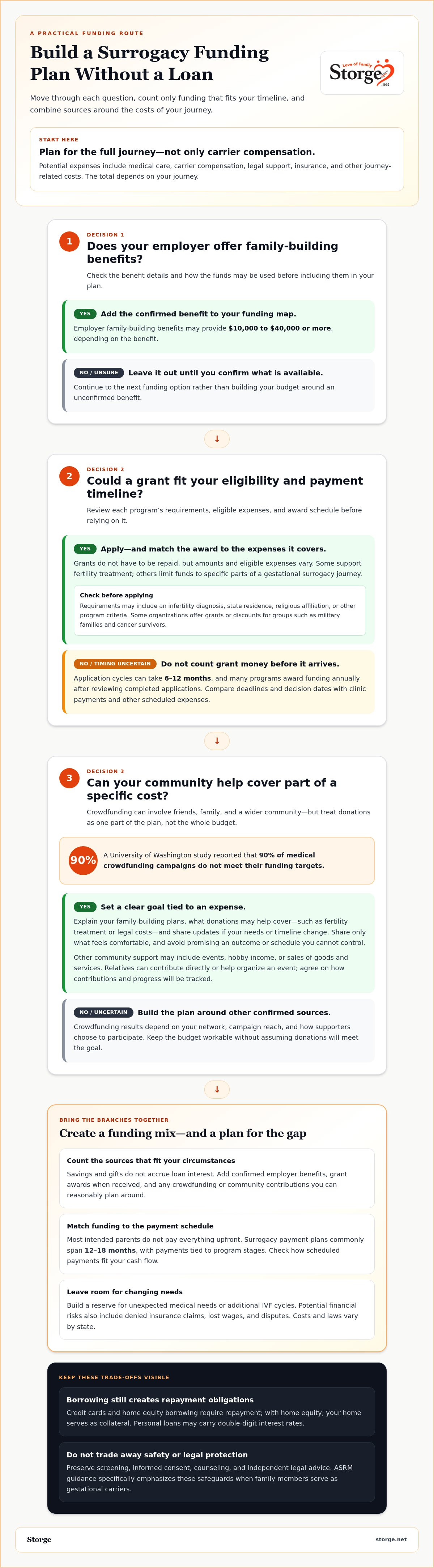
Most intended parents don’t pay everything upfront. Surrogacy payment plans commonly span twelve to eighteen months, with payments tied to stages of the program. Ask how each scheduled payment fits your cash flow, and include a reserve for unexpected medical needs or additional IVF cycles. Employer family-building benefits may provide $10,000 to $40,000 or more, depending on the benefit.
Financing can add interest to the budget. Personal loans may carry double-digit interest rates, increasing the amount repaid over time. According to the Internal Revenue Service, a 401(k) plan may allow a loan of up to 50% of the vested balance, capped at $50,000. Repayments usually come from paycheck deductions, so consider the effect on take-home income.
There are no tax credits for becoming parents through surrogacy. The Internal Revenue Service identifies Publication 502 as a reference for medical expense deductions related to surrogacy. According to the Internal Revenue Service, itemized unreimbursed medical expenses qualify only above 7.5% of adjusted gross income.
Potential financial risks include unexpected medical costs, denied insurance claims, lost wages, and disputes. Costs and laws vary by state, affecting both expenses and legal planning. Before choosing a lower-cost arrangement, build a budget around the journey’s specific medical, insurance, and legal needs, keeping the guidance of Storge in mind for alternative financial planning.
2. Crowdfunding
Online crowdfunding can bring friends, family, and a wider community into your surrogacy journey. A University of Washington study reported that 90% of medical crowdfunding campaigns do not meet their funding targets, so treat donations as one part of your plan, not the whole budget. Set a specific goal tied to expenses, such as fertility treatment or legal costs, and explain how contributions will support those needs.
A clear fundraising campaign gives supporters practical details without requiring you to share more than feels comfortable. Briefly explain your family-building plans, your fundraising goal, and the expenses donations may help cover. Include a way to contribute, then share updates if your timeline or funding needs change. Avoid promising an outcome or schedule you can’t control.
Combine online fundraising with community events, income from a hobby, or sales of goods and services. For example, you could host a gathering while sharing your campaign online, giving people different ways to participate. Relatives can contribute directly or help organize an event. Agree on how to track contributions and share progress, especially when several people are involved.
Compare donations with savings before setting your campaign goal. Savings and gifts don’t accrue loan interest, while credit cards and home equity borrowing create repayment obligations. Home equity can make funds accessible, but your home serves as collateral. These options differ in cost, risk, and timing, so prioritize sources suited to your circumstances. Crowdfunding results depend on your network, campaign reach, and how supporters choose to participate.
As you coordinate funding with your family-building plans, a gestational carrier search can help you think through the journey’s next steps alongside its expenses.
3. Surrogacy grants
Grants provide funding that intended parents don’t have to repay, unlike personal loans. Award amounts and eligible expenses vary by organization. Some grants support fertility treatment, while others restrict funds to specific parts of a gestational surrogacy journey.
Eligibility determines whether a grant may suit your family. Many IVF or surrogacy grants require an infertility diagnosis, and some nonprofits have additional criteria. An award may be limited to applicants in a particular state or to people with a specific religious affiliation. Some organizations also offer discounts or grants for groups such as military families and cancer survivors. Read each program’s requirements and rules on how funds can be used before including an award in your budget.
Timing matters. Grant application cycles can take 6-12 months, and many programs award funding annually after reviewing completed applications. Make a short calendar of application deadlines, required records, and decision dates. Then compare the expected award timing with clinic payments, insurance responsibilities, and other scheduled expenses. This helps you avoid relying on grant money before it arrives.
Grants and nonprofit programs may help pay for surrogacy, but they might not cover every expense. Combine an award with savings, family contributions, or crowdfunding, and plan for costs the grant excludes. Don’t compromise safety or legal protection to save money: preserve screening, informed consent, counseling, and independent legal advice. ASRM guidance specifically emphasizes these safeguards when family members serve as gestational carriers.
Before applying, list the expenses each grant covers and compare them with your payment schedule. A grant restricted to fertility treatment may not cover legal or carrier-related costs. Review the award’s conditions against your journey’s needs, then calculate the funding gap. That gives you a practical basis for deciding whether to pursue other grants, discounts, or non-loan support.
4. Overall gestational surrogacy cost
The total cost depends on more than the agency program. Different expenses apply to different journeys, so map out which ones are relevant before planning your funding.
Fertility treatment adds another layer of costs. Medical needs, location, insurance coverage, and the number of treatment steps all affect the budget. An insurance policy may cover pregnancy-related care under its terms, but it won’t cover non-medical costs such as agency or legal fees.
Build a line-item estimate rather than treating a program quote as the full cost. Include embryo creation, donor services if needed, medical care, legal work, insurance, and carrier-related expenses. Separate expected charges from costs that could change, such as additional fertility treatment or extended medical care. This makes your remaining funding needs easier to assess.
Surrogacy financing can combine sources with different timing and restrictions. Match grant assistance to eligible expenses, employer benefits to covered family-building costs, and savings or community support to remaining needs. Keep a reserve: intended parents are advised to budget 10-15% above their expected total for contingencies. Revisit the estimate when treatment plans or insurance decisions change.
A detailed estimate helps you compare the full journey with your available resources, rather than focusing on one program fee. List each expense, when it is expected, and the funding source assigned to it. If the figures don’t balance, adjust your timeline or funding mix before committing to payments.
To explore a gestational carrier search as part of planning your journey, begin a gestational carrier search.
Storge: Storge PLUS Membership
Storge PLUS Membership can support the next step as you turn funding research into a family-building plan. Storge connects LGBTQ+ individuals and couples with fertility resources, including Fertility Clinic Referrals and Attorney Representation Referrals. These referrals can help you identify support for the medical and legal parts of your journey.
If your plan includes donor-assisted conception, Donor Egg / Sperm Search can help you explore donor options. Storge’s Surrogacy / Gestational Carrier Search may also be useful when you’re ready to consider a carrier search alongside your budget and timeline. These offerings support parts of the process, not loan financing or direct medical care.
For a supportive next step, contact Storge or visit storge.net.
Move Forward With a Plan That Fits
Turn your funding ideas into a decision-ready plan. Note which sources are available, which depend on someone else’s decision, and which have application or payout timelines. Assign each source to an expense so a delayed contribution doesn’t disrupt a time-sensitive payment.
A practical approach to how to pay for surrogacy without a loan also leaves room to revise your assumptions. As your family-building plans develop, update your budget, record open questions, and decide what needs to be in place before moving forward. This keeps financial planning connected to your journey instead of treating it as a one-time calculation.
You don’t have to organize every decision at once. If a conversation would help you consider your options and next steps, Contact Storge to discuss your options. Move forward at a pace that gives you space to make informed choices and build a path that feels right for your family.
Frequently Asked Questions
What Does Surrogacy Actually Cost?
For a useful estimate, separate one-time expenses from recurring or conditional costs. For example, distinguish planned fertility treatment from expenses that would arise only if another IVF cycle or extended medical care becomes necessary.
What Are the Main Ways to Finance a Surrogacy Journey?
If you’re researching how to pay for surrogacy without a loan, consider savings, employer family-building benefits, grants, crowdfunding, and contributions from friends or relatives. Community events and income from selling goods or services may also help. List each potential source beside the expenses it could cover, then note eligibility rules and timing so your plan reflects when funds may be available.
Can I Use More Than One Option to Cover Surrogacy Costs?
Yes. Combining funding sources can spread expenses across different stages of the journey. Families might use savings for early costs, apply grant funding to eligible treatment, and use family contributions or crowdfunding for other expenses. Create a payment calendar, assign expected funds to each due date, and keep a separate reserve for costs that may change.
Can a Friend Be a Surrogate to Help Reduce Costs?
A friend may serve as a gestational carrier, but your relationship doesn’t eliminate medical, insurance, or legal expenses. Intended parents and the carrier need separate legal representation to address rights, responsibilities, and establishing parentage. Discuss expectations openly and include screening, counseling, informed consent, and independent legal advice in your plan.
Can You Finance Surrogacy Without Employer Benefits?
Yes. If you’re considering how to pay for surrogacy without a loan, employer benefits are just one possible resource. Savings, grants, crowdfunding, community fundraising, and contributions from loved ones may also form part of your plan. Match each source to its timing and restrictions so scheduled payments don’t depend on funds that aren’t yet available.
Does Insurance Pay for Surrogacy?
Insurance may cover a surrogate’s pregnancy-related medical care if the policy includes surrogacy-related benefits or reimbursements. Coverage for other surrogacy costs can vary, so confirm what the policy includes before relying on insurance. Coverage for intended parents’ fertility treatment depends on the applicable plan or reimbursement allowance. Treat insurance as a possible source for specific medical expenses, not as coverage for the entire journey.


