

What if a carefully written surrogacy agreement still leaves questions about who will be recognized as a parent? For queer families, choosing a Surrogacy contract lawyer for queer families means looking beyond the document itself. Legal guidance should connect the agreement’s terms with the parentage steps that may apply to your family and the state where the birth will take place.
It’s understandable to want clarity before making decisions that affect your family, your relationship with your gestational carrier, and your child’s legal security. You deserve counsel that understands your family structure and explains the process without treating it as an exception.
This guide explains what a lawyer can do before, during, and after contract drafting, and what an agreement should address, from responsibilities and expectations to separate representation. You’ll also learn why state-specific parentage rules matter and which questions can help you assess a lawyer’s experience and fit. Storge connects LGBTQ+ individuals and couples with attorney representation referrals and other family-building resources, helping make it easier to find affirming support.
Key Takeaways
- A Surrogacy contract lawyer for queer families can help connect agreement terms with the parentage steps relevant to your family and the state involved.
- Contract discussions may cover responsibilities, communication, decision-making, expenses, and unexpected circumstances. Details depend on each family’s situation.
- Look for relevant surrogacy experience, LGBTQ+ competence, clear communication, and a clear understanding of whom the lawyer represents.
- Allow time for legal advice, coordination with other professionals, and careful review before signing.
- Storge connects LGBTQ+ individuals and couples with attorney representation referrals and other family-building resources.
Why queer families benefit from a surrogacy contract lawyer
A surrogacy contract is more than a record of shared intentions. It sets out how intended parents and a gestational carrier plan to work together, including their responsibilities and expectations, subject to applicable law. A Surrogacy contract lawyer for queer families advises a client on the agreement and related legal steps, helping turn priorities and questions into terms everyone can review carefully.
In brief: A surrogacy contract lawyer helps a client understand and negotiate agreement terms. The lawyer’s guidance does not guarantee legal parentage or a particular court outcome. A contract is one part of a family-building journey, and parentage steps can depend on the circumstances and relevant state law. The general overview of Surrogacy explains some of the arrangements involved, while a lawyer can advise on how the law applies to a specific situation.
What does a surrogacy contract lawyer do for intended parents?
The lawyer’s role begins before anyone signs. Counsel can explain proposed terms, flag language that may create uncertainty or risk, and help intended parents identify what the agreement should address. For example, parents may want to clarify how updates will be shared during treatment, how decisions will be discussed, or how a change in plans will be handled. A lawyer can help translate these priorities into questions and proposed contract language.
Legal advice should also be considered alongside medical and family-building decisions. Plans involving embryos, donor participation, treatment, and the relationship with the gestational carrier may raise legal questions to discuss with counsel. A fertility clinic handles medical care, while a surrogacy agency may coordinate parts of a journey. Neither role replaces a lawyer’s responsibility to advise their client about legal terms and risks. Coordination helps keep these parts connected while making clear who provides which guidance.
Why queer-family experience matters in surrogacy law
Affirming, LGBTQ+-informed counsel can help ensure conversations and documents reflect your family accurately. Inclusive language is one part of that work. So is understanding that intended parents may be a couple or an individual, and that each parent may have a distinct legal position to discuss. You should be able to explain your plans without first correcting assumptions about gender, relationships, or who will parent the child.
Genetic and non-genetic connections may also shape the questions counsel considers. For example, one intended parent may have a genetic connection to the embryo while another does not. That fact alone doesn’t answer the legal parentage question, so discuss each parent’s path in light of applicable law. Families exploring the broader process can also read Storge’s gay surrogacy family-building guide.
The goal isn’t to make every journey follow the same script. It’s to work with counsel who listens carefully, explains legal choices in clear language, and helps you understand how agreement terms relate to your family’s circumstances.
What a queer-family surrogacy agreement should address
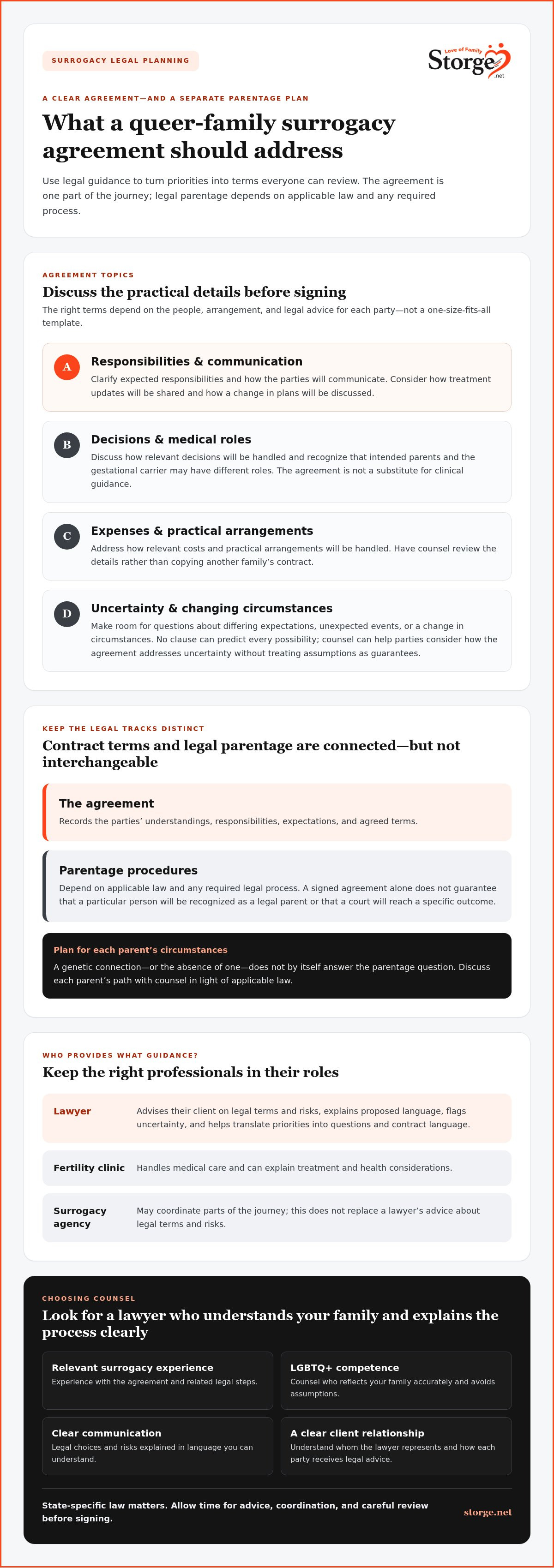
A surrogacy agreement should reflect the people and circumstances involved, not rely on a one-size-fits-all template. Each party’s lawyer can identify topics that need discussion, explain how proposed language may affect their client, and review the agreement in light of applicable law. The aim is informed understanding, not simply checking off standard clauses.
Contract terms and parentage procedures are related but distinct: an agreement records the parties’ understandings, while legal parentage depends on applicable law and any required legal process. Keeping that distinction in view helps families plan without assuming that signing an agreement settles every question.
Responsibilities, decisions, and unexpected events
The agreement may describe each party’s expected responsibilities, how they’ll communicate, and how certain decisions will be discussed. Rather than relying on informal assumptions, use legal counsel to consider practical questions: How will updates be shared during treatment? How will a change in plans be communicated? The appropriate terms depend on the people involved, the arrangement, and legal advice for each party.
Expenses and practical arrangements may also need careful discussion. The agreement can address how relevant costs are handled, but the details should be reviewed with counsel rather than copied from another family’s contract. Medical decisions deserve particular care: intended parents and the gestational carrier may have different roles, and the agreement is not a substitute for clinical guidance. Qualified medical professionals can explain treatment and health considerations; lawyers can advise on legal implications and wording.
Some conversations may feel difficult, especially those about uncertainty, changing circumstances, or differing expectations. Addressing them before signing gives each person an opportunity to ask questions and understand the proposed terms. No clause can predict every possibility, so counsel can help the parties consider how the agreement addresses unforeseen events without treating assumptions as guarantees.
Plan for parentage alongside the agreement
A signed agreement does not, by itself, guarantee that a particular person will be recognized as a legal parent or that a court will reach a specific outcome. Depending on applicable law and the family’s circumstances, parentage planning may involve a court order or other legal steps. Whether those options are available, when they may be pursued, and what they require are questions for a lawyer familiar with the relevant jurisdiction.
For queer families, discuss each intended parent’s position rather than assume the same process will apply to everyone. Genetic connection, the place of birth, and other facts may shape the legal questions counsel considers. A Surrogacy contract lawyer for queer families can connect agreement review with a broader legal plan while keeping those two parts distinct.
Families can build on this planning by learning about essential legal steps for LGBTQ+ parents. Storge connects LGBTQ+ individuals and couples with attorney representation referrals, offering a starting point for finding legal guidance within a broader family-building journey. Explore Storge’s family-building resources as you prepare for those conversations.
How to evaluate a surrogacy contract lawyer for queer families
Choosing counsel is about more than finding someone who has handled a surrogacy matter. Look for a lawyer who can explain the work clearly, understands your family structure, and defines exactly whom they represent. Use consistent criteria to compare options, then consider whether the answers leave you feeling informed and respected. No lawyer can promise a particular outcome, but clear communication helps you make informed decisions.
Relevant experience: Ask about work with gestational-carrier agreements and family structures like yours. Look for a clear explanation of how the lawyer approaches the agreement, not just a general claim of experience.
LGBTQ+ competence: Notice whether the lawyer uses inclusive language and makes room for your family’s circumstances. Ask how they consider each intended parent’s legal position, including when one parent has a genetic connection and another does not.
Parentage questions: Ask how the lawyer assesses parentage issues that may depend on the jurisdiction and facts of your arrangement. A useful answer should distinguish general information from legal analysis specific to your situation.
Communication and scope: Discuss who will handle your matter, how updates and questions are managed, and what the engagement includes. Ask how fees are calculated, what they cover, and which services may be separate so expectations are clear before you agree to representation.
Questions that reveal relevant experience and inclusive practice
Ask direct, practical questions: “How do you approach reviewing a gestational-carrier agreement?” “What family structures have you worked with?” and “How do you handle parentage questions when the law may depend on where the birth occurs?” You can also ask how the lawyer explains options and uncertainty as your circumstances become clearer. The answers help you compare both legal experience and whether the lawyer’s approach fits your needs. For more ideas on assessing fit, see this guide to finding an LGBTQ family law attorney.
Representation, communication, and the attorney-client relationship
Make representation explicit. Ask whether the lawyer represents you, your partner, or another participant in the arrangement, and clarify that each person’s interests and legal advice are distinct. Don’t assume one lawyer advises everyone just because the parties share a goal.
Good fit often shows up in the details: counsel listens without making assumptions, explains unfamiliar terms in plain language, and answers questions without making you feel rushed. Before proceeding, review the engagement agreement so you understand the scope of work and how communication will happen. The attorney-client relationship is established directly with the lawyer, not through a referral platform. Storge connects LGBTQ+ individuals and couples with attorney representation referrals, offering a starting point for finding legal support. Explore Storge’s attorney representation referrals as you consider your next step.
When to hire a lawyer and prepare for the contract process
Consider speaking with a Surrogacy contract lawyer for queer families early, before relying on proposed agreement terms or signing anything. Advice while plans are taking shape gives you time to understand questions, identify decisions that need attention, and coordinate legal considerations with the rest of your family-building journey. You don’t need every detail settled before the first conversation. A list of priorities and open questions is a useful start.
This flexible sequence can help organize the work:
- Identify priorities. Write down what matters to you, what you hope the agreement will clarify, and what remains undecided.
- Seek legal counsel. Share the facts you know and ask what legal issues may need attention before you rely on or sign proposed terms.
- Coordinate with relevant professionals. Where applicable, align legal discussions with information from your fertility clinic or surrogacy agency.
- Review the agreement. Read proposed language with your lawyer, raise questions, and allow time for revisions and discussion.
- Sign only after you understand the terms. Make sure you’ve received legal advice about the agreement and understand the next steps relevant to your situation.
What to organize before an initial legal conversation
A short written overview can make an initial discussion more focused. Include your family structure and goals, who is involved, and where you are in the process. If available, gather information about clinic or agency procedures and any draft documents you’ve received. These materials are a starting point, not a universal checklist. Counsel can tailor requests to your matter.
- Note decisions already made, such as known participants or treatment-related plans.
- List questions about responsibilities, communication, expenses, and legal parentage.
- Mark unresolved choices so you can discuss them without feeling you must decide everything in advance.
Why timing and legal steps vary across the United States
Timing and legal steps vary with the parties’ circumstances and the applicable law. The relevant jurisdiction and details of the arrangement can affect what legal advice is needed and which parentage procedures may be available. Don’t treat a particular timeline or court process as universal. Ask counsel how the facts of your journey shape the sequence, including what should happen before signing, during the process, and after the agreement is in place.
Preparing early doesn’t mean rushing into decisions. It gives you time to understand them. For attorney representation referrals and broader family-building resources, explore Storge’s support for LGBTQ+ families.
Find affirming surrogacy legal support with Storge
Choosing legal counsel is one part of a wider journey. Intended parents may also be making decisions about fertility care, a gestational carrier, donor options, and where they hope to give birth. Family-building resources in one supportive setting can make it easier to consider how these pieces relate, while keeping each professional’s role clear.
Storge is a national online platform connecting LGBTQ+ individuals and couples with family-building resources, including attorney representation referrals. A referral can help you connect with a lawyer whose experience may fit your needs, but it isn’t legal advice or representation. The attorney-client relationship is established directly with the lawyer, who advises and represents their own client. Storge is a referral platform, not a law firm or full-service surrogacy agency.
How an attorney referral fits into a broader family-building journey
Legal guidance can sit alongside fertility clinic referrals, gestational-carrier and donor resources, and hospital search resources. These are connected parts of a family-building journey, but they aren’t interchangeable: a lawyer provides legal advice, while other professionals support different aspects of the process. Storge PLUS offers access to a trusted community of donors, gestational carriers, and verified resources, complementing the search for legal representation rather than replacing it.
For a closer look at how community resources can support LGBTQ+ family building, explore the Storge PLUS family-building community. As you consider a Surrogacy contract lawyer for queer families, use the questions in this guide to clarify what kind of counsel you’re seeking, then discuss your circumstances and legal needs directly with the attorney.
A supportive next step for intended parents
You don’t need to resolve every question at once. Start with one conversation, one decision, or one point you’d like a lawyer to explain. It’s okay to have open questions about the agreement, the people involved, or which legal steps may apply. A thoughtful process gives you space to understand your options without treating any particular outcome as guaranteed.
Storge brings attorney representation referrals together with broader family-building resources for LGBTQ+ individuals and couples. If you’re ready to explore that community and its resources, explore Storge’s family-building community.
Take your next step with confidence
Your family’s path doesn’t need to be fully mapped before you begin. Start by identifying the questions you want answered and the kind of legal guidance that would help you feel informed. The right Surrogacy contract lawyer for queer families can help you understand your options as you move through each decision at a manageable pace.
Support can extend beyond legal referrals. Storge connects members with attorney representation referrals and LGBTQ-inclusive family-building professionals, while Storge PLUS provides access to a trusted community of donors, gestational carriers, and verified resources. These connections can bring useful perspectives and resources into a deeply personal journey, without promising a particular legal or family-building outcome.
When you’re ready, explore Storge’s supportive family-building community. One informed conversation at a time, you can move toward the future you’re creating with care and confidence.
Frequently Asked Questions
Does a gestational carrier need a separate lawyer?
A gestational carrier may have independent legal counsel so they can receive advice focused on their own interests. Intended parents should clarify with their lawyer who represents each person and how the agreement will be negotiated. For example, if a proposed revision affects the carrier’s responsibilities, their lawyer can explain its implications directly to them. Representation arrangements and applicable requirements can vary, so don’t assume shared goals mean shared legal counsel.
When should intended parents hire a surrogacy contract lawyer?
Seek legal advice early enough to understand proposed agreement terms before signing or relying on them. You can speak with a lawyer while decisions about participants, treatment, or timing are still developing; you don’t need every detail finalized first. Bring an initial list of questions, then update it as plans change. The lawyer can discuss a suitable sequence for your circumstances rather than applying a timeline from another family’s experience.
Does a surrogacy contract guarantee that both intended parents will be recognized as legal parents?
No. Signing a contract alone doesn’t guarantee that both intended parents will be recognized as legal parents or that a court will issue a particular order. The relevant law and facts of the arrangement can affect what additional steps may be available or needed. Ask counsel how the agreement fits into parentage planning for each intended parent, including any differences in their circumstances. Another family’s result isn’t a substitute for legal advice about yours.
Can queer intended parents use a standard surrogacy contract template?
An online template may not address your family’s particular facts, the agreement’s intended scope, or the law that applies to your arrangement. For example, a form may not reflect how the intended parents’ roles or donor-related circumstances should be considered. Treat templates as general information only. Before using or signing one, have a lawyer review whether its language fits your situation and explain what changes or additional documents may be appropriate.
What should I ask a surrogacy contract lawyer in an initial conversation?
Ask how the lawyer approaches gestational-carrier agreements and LGBTQ+ family structures, whom they would represent, and how they assess parentage questions that depend on the relevant jurisdiction. Clarify what the engagement includes, who will handle your matter, how you can raise questions, and how agreement revisions are managed. The answers can help you judge whether the lawyer’s process feels clear and respectful, without expecting a promised outcome before they understand your circumstances.


