

Family planning for non-binary people can involve fertility and hormone-therapy conversations, emotional support, and care from affirming birth professionals. Resources for non-binary family planning also include online communities that can help you feel less alone as you consider your options. The right path depends on your goals, health, and what support feels safe and respectful to you.
It’s understandable to want clear answers while wondering how pregnancy, fertility care, or medical transition might feel for you. This guide covers questions to discuss with a healthcare professional, ways to prepare emotionally and plan for safety, and how to find inclusive pregnancy and birth support. It also explores online spaces and other resources that can offer connection, so you can take the next step at a pace that feels right.
Key Takeaways
- Map out your family-building goals and the reproductive options that may fit your body, identity, and hopes for parenting.
- Talk through how hormone therapy or other transition-related care could intersect with fertility, pregnancy, and postpartum plans.
- Consider emotional support and practical safety needs as part of planning, including the care and accommodations that help you feel respected.
- Look for affirming birth professionals and supportive online communities; fertility clinic referrals and donor searches can also help you explore next steps.
Family planning needs of transgender and non-binary patients
Gender identity describes a person’s understanding of their gender; it may be male, female, both, neither, or change over time. Non-binary is one term for genders outside simply male or female, alongside agender, bigender, genderqueer, and genderfluid. Some transgender people are non-binary, while most identify as men or women. A 2023 survey found that about 40% of transgender adults identified as non-binary. Resources for non-binary family planning can help organize questions around your own goals.
Start by considering whether you hope to carry a pregnancy, use your eggs or sperm, or pursue donor conception. Trans masculine people with reproductive organs that can support pregnancy may be able to carry a child. Trans feminine people may discuss sperm banking before hormone therapy or other medical transition steps. A fertility consultation can help connect your goals with your health history and possible family-building options.
Plan postpartum care alongside pregnancy. Note when you hope to begin or resume medical transition, your feeding plans, and the name and pronouns you want used in care. If you don’t want to know the baby’s sex before birth, tell your medical team. Ask about accommodations such as gender-neutral gowns, preferred anatomical language, and using your name and pronouns in medical charts.
For donor conception, parentage, and birth certificates, legal steps depend on the intended parents and birth arrangement. An attorney familiar with reproductive law can explain how your circumstances affect the documents and process.
Costs for sperm banking, egg freezing, IVF, IUI, and donor conception depend on procedures, medications, storage, donor arrangements, and clinic services. Insurance benefits and financial assistance also vary by plan and program eligibility, so review each service separately.
Practical tools can make planning easier. A fertility timeline helps organize transition and conception goals, while an appointment question list helps structure conversations with fertility professionals. These Resources for non-binary family planning can keep decisions and follow-up questions in one place.
Hormone therapy and fertility considerations
Hormone therapy and fertility planning can intersect throughout a family-building journey. Before starting or changing hormonal or surgical transition care, discuss possible effects on fertility and the ability to carry a pregnancy. Include your current goals, such as preserving future options, trying to conceive, or avoiding pregnancy. These topics belong in a conversation that respects both your gender identity and reproductive plans.
For trans and non-binary people considering pregnancy, discuss how cross-sex hormone therapy may affect fertility and fetal development. The relevant questions depend on the treatment, timing, reproductive anatomy, and whether pregnancy is part of your plan. A fertility timeline can help organize discussions about therapy, possible conception windows, and care appointments. Bring it to a fertility consultation and update it when your goals change.
Planning postpartum hormone use also means considering recovery and feeding. Discuss when to start or resume hormones with a medical provider, taking both factors into account. Hormones generally should not be taken while nursing. If nursing is part of your plan, bring it up before birth so your care team can discuss timing and feeding choices with you.
Practical tools can make appointments easier to navigate. Keep a medication list with current and past therapies, and use a question log to record concerns about fertility, pregnancy, and postpartum care. For example, note whether you want to discuss carrying a pregnancy or other family-building paths. Medical records may use terms such as “female,” but your preferred language for your body and care deserves discussion, too.
Parents can also prepare a concise care summary covering their goals, treatment history, and questions. A fertility clinic referral can connect you with a setting for a focused discussion of these intersecting needs. Fertility clinic referrals may help you take that step while keeping your transition and family-building plans in view.
Assessing emotional readiness and safety
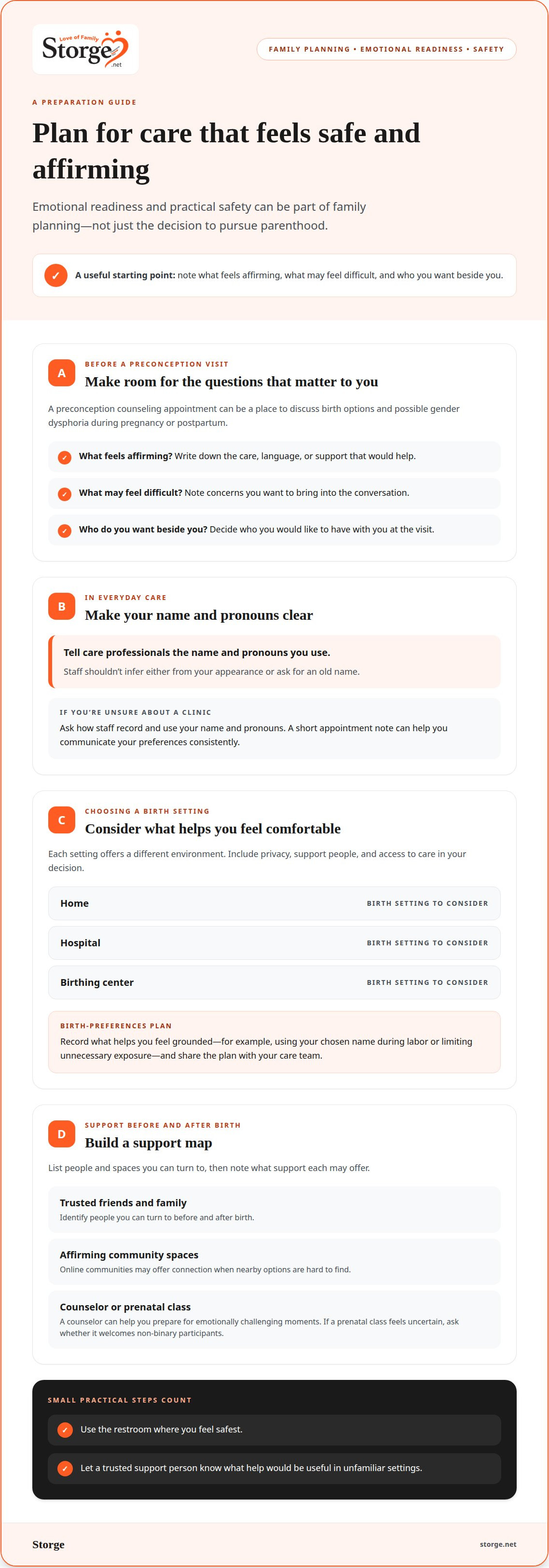
Readiness can involve practical and emotional questions, not just a decision to pursue parenthood. A preconception counseling appointment can make space to discuss birth options and possible gender dysphoria during pregnancy or postpartum. Before the visit, write down what feels affirming, what may feel difficult, and who you want beside you. This preparation gives the conversation a clear starting point.
Safety also means being treated with respect in everyday interactions. Tell care professionals the name and pronouns you use. They shouldn’t infer either from your appearance or ask for an old name. If you’re unsure how a clinic handles these details, ask how staff record and use your name and pronouns. A short appointment note can help you communicate your preferences consistently.
Consider the birth setting that best fits your comfort and care preferences. Home, a hospital, and a birthing center each offer a different environment, so include privacy, support people, and access to care in your decision. A birth-preferences plan can record what helps you feel grounded, such as using your chosen name during labor or limiting unnecessary exposure. Share it with your care team.
Use a support map to identify people you can turn to before and after birth. List trusted friends, family members, and affirming community spaces, then note what support each can offer. If prenatal classes feel uncertain, ask whether they welcome non-binary participants. Online communities may offer connection when nearby options are hard to find, while a counselor can help you prepare for emotionally challenging moments.
Small actions matter. Use the restroom where you feel safest, and let a trusted support person know what help would be useful in unfamiliar settings. You don’t need to understand every part of someone’s gender to show respect. Listening, using their requested name, and asking about pronouns when unsure are concrete ways to create a safer environment while navigating family planning.
LGBTQ+ birth professionals and social media resources
For pregnancy care, ask prospective professionals whether they’ve cared for LGBTQ+ families and use gender-inclusive language. An initial conversation can cover names and pronouns, preferred anatomical terms, and how staff handle forms or records. These practical details can help you assess whether a provider’s approach feels affirming before discussing intimate care.
One named example is Gayge Maggio, a nurse practitioner at Callen-Lorde Community Health Center in New York City, an LGBTQ+-focused federally qualified health center. For fertility clinics, seek a team that welcomes questions about gender-affirming care and family-building goals. A clinic referral can help connect you with fertility services; a pregnancy-care professional may support a different part of your journey.
Online and community resources can add peer connection alongside professional care. PFLAG has chapters in all 50 U.S. states, the District of Columbia, and Puerto Rico, and has supported LGBTQ+ people and families since 1972. Its community network can help relatives and loved ones learn how to offer support. Gender Spectrum lists a support group for people aged 50 and older in Southern Nevada.
For stories and shared experience, the It Gets Better Project began as a social media campaign in 2010 and has received more than 70,000 stories. Listening to people across the gender spectrum can offer perspective, while online spaces can help when local groups are difficult to find. Parent support groups for families of transgender or gender-diverse children may also be useful to relatives preparing for a new baby.
Use a short resource plan: save one professional contact, one peer group, and one trusted online space. Keep personal details private in public posts, and step away from conversations that feel unsafe or disrespectful. If you’re seeking a fertility clinic, explore fertility clinic referrals as a practical next step toward finding care aligned with your family-building plans.
Storge
Storge helps LGBTQ+ individuals and couples connect with family-building resources when they’re ready to explore practical next steps. If you’re weighing fertility pathways, donor options, or support with representation referrals, its offerings can help bring those pieces into focus.
Through Storge PLUS membership, fertility clinic referrals, donor egg and sperm searches, and attorney referrals, you can explore support relevant to your plans. These resources complement, rather than replace, medical care and legal advice from qualified professionals. Start with the question that feels most immediate, whether it’s finding a fertility clinic or considering donor options, and build from there at your own pace.
If you’d like support exploring family-building resources that fit your goals, contact Storge.
Choose the next step that feels right
Resources for non-binary family planning are most useful when they reflect your priorities, not someone else’s timeline. Choose one question to address first, such as identifying the support you want or deciding what to discuss at an appointment. Writing it down can make the next conversation more focused.
You can also involve a trusted person if that feels supportive. Share what practical help looks like for you, and revisit your plans as your needs change. As you explore resources for non-binary family planning, remember there’s no single path or pace for every family.
When you’re ready to explore support for your family-building plans, contact Storge for support. Take your next step in a way that honors your hopes and wellbeing.
Frequently Asked Questions
What family-planning options are available to non-binary people in the United States?
Options can include carrying a pregnancy, using donor eggs or sperm, IVF, IUI, or working with a gestational carrier. Adoption may also be a path to parenthood. The right route depends on your reproductive goals, available gametes, health considerations, and whether you want to carry a pregnancy. A useful first step is to write down which parts of family building matter most to you.
How can non-binary people find LGBTQ+-affirming fertility and family-building resources near them?
Look for fertility clinics and reproductive health providers who describe their care as LGBTQ+-inclusive, then ask about their experience supporting non-binary patients. PFLAG and Gender Spectrum can offer community and peer-support connections, while Callen-Lorde provides LGBTQ+-focused health care. Search for local parent groups and virtual communities, too. Comparing these different kinds of support can help you build a practical network, not just find a clinic.
What steps should non-binary people consider when planning pregnancy or preserving fertility before gender-affirming treatment?
Before treatment, make an appointment to discuss how hormonal or surgical options may affect fertility and the ability to carry a pregnancy. Bring a brief outline of your family-building goals, current medications, and questions about preservation options. If pregnancy is a possibility, include plans for timing and pregnancy care. Keep the conversation open as your goals evolve, and record agreed next steps for future appointments.
What fertility effects and pregnancy-related risks can gender-affirming hormones or surgeries have?
Hormonal and surgical transition options can affect fertility and the ability to carry a pregnancy, so discuss their possible effects before making treatment decisions. For pregnancy planning, ask how hormone therapy may relate to fertility and fetal development. If you’re considering hormones after birth, include recovery and feeding plans when discussing timing. These conversations can help you understand how treatment choices intersect with your reproductive goals.


