

Repeated questions about having children don’t require a fresh explanation each time. When you’re navigating an unsupportive family during your fertility journey, calmly repeat a short boundary, change the subject, or end the conversation. You decide what to share and when.
It can still hurt when people you love respond with pressure, judgment, or advice you didn’t ask for. This guide offers practical ways to handle repeated questions, protect your privacy, and ask for the kind of support that would actually help. You’ll also find gentle ways to explain infertility to family, prepare for gatherings, and respond to comments that minimize what you’re experiencing.
Key Takeaways
- Prepare a brief response to repeated questions so you can protect your privacy without explaining more than you want to.
- Choose boundaries that fit each relationship, and decide in advance how you’ll handle conversations or gatherings that feel overwhelming.
- Respond to unsolicited advice or hurtful comments with calm, clear language that reflects what you need.
- Explain infertility in a way that feels right for you, while helping family understand how to offer support without trying to solve the problem.
1. Offering emotional support without trying to solve the problem
Infertility affects 1 in 6 people, but each loved one’s experience is personal. Support can begin with one question: “Would you like me to listen, help with a task, or offer a distraction?” Follow their answer. If an appointment feels difficult, offer to bring dinner or sit with them afterward. Avoid unsolicited advice and don’t try to solve medical decisions. Comfort may simply mean hearing their emotions without correcting them or demanding optimism.
Holidays and special occasions can bring grief, especially around pregnancy announcements, baby showers, or gatherings focused on children. A thoughtful text or card might say, “I’m thinking of you. No need to reply.” Offer an invitation without pressure, then let your loved one decide whether to attend or leave early. Share family news with care, and give them space to respond in their own way.
A partner can support someone facing family conflict by listening first, then asking what would help. Agree on who receives updates, who answers family questions, and what to say if relatives press for details. At a gathering, redirect the conversation or leave together if needed. Support groups and digital communities can connect people experiencing infertility with peers who understand treatment discussions and difficult emotions. Let your loved one choose a group and participate at their own pace.
Therapy can help couples understand family dynamics, process stress, and prepare for difficult conversations. A reproductive mental health therapist may be familiar with fertility-related concerns. In the U.S., insurance coverage for infertility counseling or mental health care depends on the plan, service, and provider billing. Review your benefits for behavioral health and infertility-related care, and ask how a specific appointment is categorized. Counseling can offer emotional support without requiring you to share details with relatives or change a treatment decision.
Friends and family can check in or send a card during holidays and special occasions. People who know about fertility struggles may offer emotional or practical help, including financial assistance if they are able, and redirect sensitive conversations. Respect a loved one’s decision to stop fertility treatments. Listening means not trying to change their mind.
If relatives cannot or will not offer support, building a healthy network may help reduce stress. Support can come from groups, online communities, or friends with similar experiences, even if they live farther away.
2. Protecting emotional well-being through boundaries
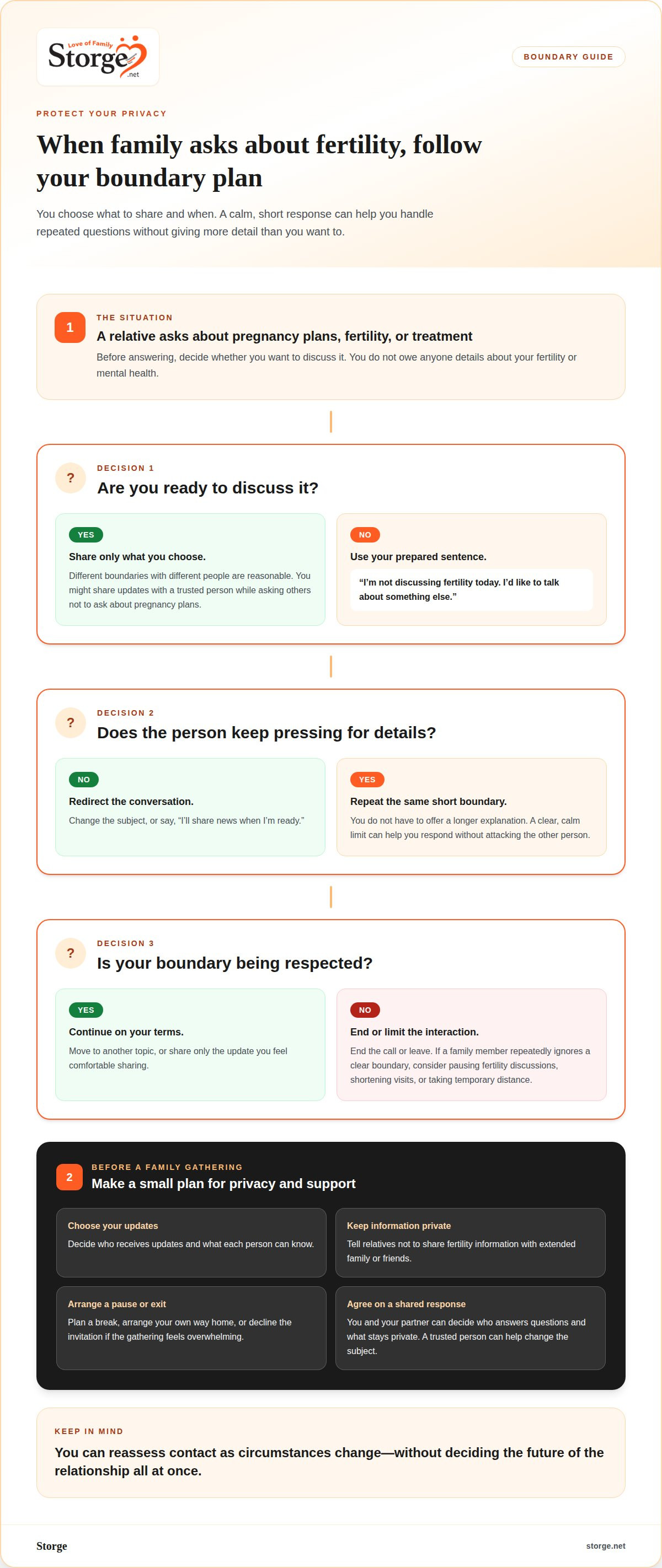
Family pressure can make an already difficult fertility process feel more exposed. Navigating unsupportive family during your fertility journey may leave you unsure how much to share. Decide which friends and family members receive updates, and what each person can know. You might tell a trusted sibling about appointments while asking other family members not to ask about pregnancy plans. Different boundaries with different people are reasonable. Infertility doesn’t obligate you to share every detail.
Prepare a short sentence before conversations become tense: “I’m not discussing fertility today. I’d like to talk about something else.” If someone asks again, repeat the same words rather than offering a longer explanation. You can say, “I’ll share news when I’m ready,” then change the subject or end the conversation. A clear, calm limit helps you respond without attacking the other person.
To cope with family pressure while trying to conceive, name what you’re feeling and choose one next step. Write down what you need before calling a relative, or ask a supportive friend to be available afterward. If a family gathering feels overwhelming, plan a break, arrange your own way home, or decline the invitation. Navigating unsupportive family during your fertility journey doesn’t mean you have to manage every difficult interaction at once.
Privacy is part of setting boundaries. Tell relatives directly not to share fertility information with others, including extended family or friends. You can stop sending updates after appointments or ask your partner to handle questions. Agree together on what stays private and how you’ll respond when someone presses for details.
Consider limiting contact when a family member repeatedly ignores a clear boundary, shares private information, or leaves you distressed after conversations. You might pause fertility discussions, shorten visits, or take temporary distance. If insensitive comments continue, repeat your limit and follow through by ending the call or leaving. You can reassess contact as circumstances change, without deciding the future of the relationship all at once.
3. Avoiding minimizing, judgmental, or unsolicited comments
Family gatherings can bring sensitive questions about pregnancy, children, or treatment. Prepare a response before you arrive, so pressure doesn’t leave you searching for words. For “When are you having kids?” try, “We’ll share news if we’re ready.” You don’t owe anyone details about your fertility or mental health.
If someone offers unsolicited advice, pause and take a breath before answering. You might say, “I appreciate that you care, but we’re following the guidance that feels right for us.” This acknowledges their concern without agreeing to suggestions or opening a debate. If they recommend that you “just relax” or try a specific treatment, remember that every couple’s circumstances differ. Even kindly intended advice can feel minimizing.
Comments such as “At least you can travel” or “Just adopt” can dismiss grief and add pressure. Keep your reply direct: “That doesn’t comfort me. I need you to listen, not suggest another path.” Adoption is a personal decision, not a remedy relatives should push. You can also redirect: “I’d rather talk about something else. How has your week been?”
At a dinner or holiday event, ask a trusted person to help change the subject if questions continue. A partner or supportive relative might say, “Let’s give them space. Who wants dessert?” If a comment catches you off guard, you can respond later by text: “I know you may have meant well, but that conversation was painful. Please let me bring up fertility if I want to discuss it.”
These scripts aren’t a test you have to pass. Choose words that sound like you and are simple enough to remember. If a relative keeps debating your response, repeat it once, then step away or end the conversation. Protecting your emotional space doesn’t require convincing everyone that your feelings are valid.
Social settings can be difficult for people experiencing infertility, so family members should avoid blame, taking sides, unsolicited advice, and rigid expectations. Preparing a reply can ease anxiety about answering in the moment. A breath creates space to choose a response. You can acknowledge concern without following suggestions, and share news when you’re ready.
4. Educating family members about infertility
Some relatives misunderstand infertility because they see the hope of a future pregnancy, not the uncertainty or grief involved. If you choose to explain, start with one clear point: infertility is a medical condition, not a personal failure. You’re not at fault, and phrases like “just relax” can minimize your feelings rather than offer comfort.
Keep the conversation focused on what you want family and friends to understand. For example: “This is a medical issue we’re working through. We’ll share updates when we’re ready, and we need you to listen without suggesting treatments.” You can discuss how infertility affects your emotions without sharing diagnoses, appointments, or decisions. You can also pause if the conversation becomes too difficult.
Parents who bring up grandchildren may not realize the pressure their comments create. A private conversation can help: “I know you’re excited to be a grandparent, but questions about children are painful right now. Please let me raise the subject when I’m ready.” Explaining how a comment affects you can guide your parents toward a more supportive response while preserving the relationship.
Offer specific ways loved ones can help, rather than asking them to understand everything at once. They might avoid asking for treatment updates, keep your information private, or check in after a difficult appointment. Explain that thoughtful pregnancy announcements and letting you decide whether to attend related events can make family relationships feel safer. You can also remind them that happiness for another person and sadness about your own situation can coexist.
Education has limits. You can share what feels useful, but you’re not responsible for changing every family member’s beliefs or answering repeated questions. If medical questions arise, keep the conversation grounded in your own experience rather than offering guidance for other couples. For support with care-related next steps, explore fertility clinic referrals.
Storge: Fertility Clinic Referrals
Storge offers fertility clinic referrals for LGBTQ+ individuals and couples seeking fertility resources. If family conversations have left you feeling alone with practical decisions, a clinic referral can help you explore care options. You can consider this support when you’re ready to focus on your fertility journey, whether or not relatives understand your choices.
Storge also offers Storge PLUS Membership, Attorney Representation Referrals, and Donor Egg / Sperm Search. These resources can support different parts of family-building, while your emotional boundaries remain yours to set. You don’t need your family’s approval to explore what feels right for you.
If you’d like to discuss fertility resources, contact Storge.
Choose support that honors your next step
Navigating unsupportive family during your fertility journey can remind you that your path belongs to you, even when relatives don’t understand it. You can make room for respectful relationships while deciding what support you need next. You don’t have to settle every family disagreement before exploring your options.
As your plans take shape, practical guidance can help you move forward at a pace that feels right. Storge offers fertility clinic referrals, Storge PLUS membership, and referrals to reproductive law attorneys to support different parts of the fertility journey. These resources can complement the boundaries and trusted connections you’ve chosen for yourself.
When you’re ready to explore support for your next step, contact Storge for support. You deserve to approach the future with care, agency, and people who respect your choices.
Frequently Asked Questions
What If Someone Keeps Asking?
If a relative keeps asking, give the same brief answer rather than being drawn into defending it. At a family meal, you could say, “I’m not sharing updates today,” then turn to another person or activity. If the questions continue, end the exchange. You can ask a trusted family member beforehand to step in or help redirect the conversation.
Why Boundaries, and Do I Need Them?
Boundaries help you decide what access others have to personal information and conversations. You don’t need a formal rule for every relative, and setting a limit doesn’t mean ending a relationship. For example, you might welcome a sibling’s check-in while asking a parent not to discuss fertility at family dinners. Choose boundaries that address the specific interactions affecting you.


