

Building a family through a gestational carrier involves decisions about genetics, pregnancy, and legal parentage. Finding a gestational carrier as a same-sex couple typically means coordinating IVF, donor selection when needed, and a carrier who has no genetic connection to the baby. Male couples pursuing this path generally need both an egg donor and a gestational carrier.
It’s understandable if the process feels personal and complicated. For some female couples, reciprocal IVF offers another path: one partner provides the eggs, and the other carries the pregnancy. The right approach depends on your family’s goals and available options. State law can also affect the legal steps involved.
This guide explains how gestational carrier arrangements work, how donor and carrier search support can help, and which state-law questions to consider. It also explores how intended parents and a carrier can build a relationship through open communication, shared expectations, and thoughtful legal planning.
Key Takeaways
- Map out the IVF and donor decisions together so each partner understands the available genetic connections and next steps.
- State laws differ, so legal planning can shape how parentage is established and which documents are needed.
- Carrier screening can include physical, psychological, physician, and uterine evaluations to assess readiness for pregnancy.
- Discuss expectations and communication early, and explore donor and carrier selection support to help make the process more manageable.
What is the Process to Partner with a Gestational Carrier?
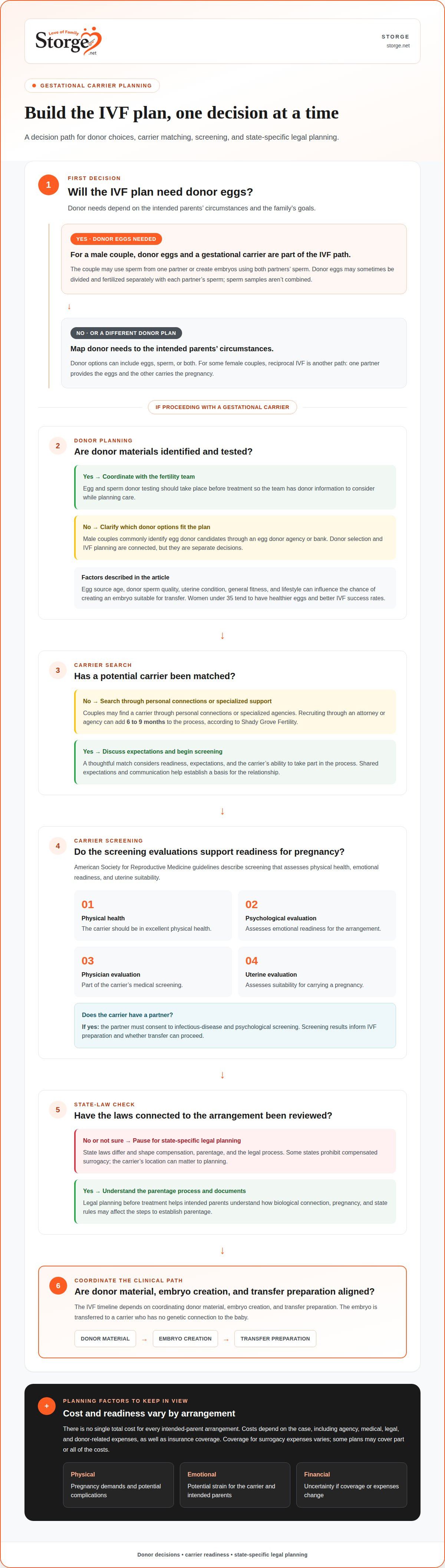
In the United States, couples can find a gestational carrier through personal connections or specialized agencies. Finding a gestational carrier as a same-sex couple often involves choosing an IVF path, identifying any needed donors, and beginning carrier screening. The embryo is transferred to a carrier who has no genetic connection to the baby. Each decision shapes a different part of the path to parenthood.
For a male couple, IVF involves an egg donor and a gestational carrier. The couple may use sperm from one partner or create embryos using both partners’ sperm. Sperm samples aren’t combined, but donor eggs may sometimes be divided and fertilized separately with each partner’s sperm. This can create embryos with a genetic connection to either partner. The couple and fertility team determine how the available eggs and sperm fit the reproductive plan.
Donor options can include eggs, sperm, or both, depending on the intended parents’ circumstances. For example, a male couple using one partner’s sperm needs donor eggs; they may also choose to create embryos using both partners’ sperm. Egg and sperm donor testing should take place before treatment. This gives the fertility team donor information to consider when planning care. Selecting donors and planning IVF are related steps, but each addresses a separate decision.
Finding and matching with a carrier takes time. Recruiting a gestational carrier through an attorney or agency can add 6 to 9 months to the process, according to Shady Grove Fertility. Once a potential match is identified, the intended parents and carrier discuss expectations and proceed with screening and fertility planning. The IVF timeline then depends on coordinating donor material, embryo creation, and transfer preparation. These steps connect carrier selection with the clinical process, rather than treating the match as the entire journey.
Are surrogacy and gestational carriers legal in every state for gay couples?
In the United States, state law shapes gestational carrier arrangements, and some states prohibit compensated surrogacy. State laws shape gestational carrier arrangements, including compensation and the legal process. Review the law in the state connected to the arrangement before moving forward, since the carrier’s location can matter to planning.
Carrier screening helps assess whether pregnancy is medically and emotionally appropriate. Under American Society for Reproductive Medicine guidelines, a carrier should be in excellent physical health and undergo psychological, physician, and uterine evaluations. These steps examine overall health, emotional readiness, and the uterus’s suitability for carrying a pregnancy. If the carrier has a partner, that partner must consent to infectious-disease and psychological screening. The results inform IVF preparation and whether the transfer can proceed.
There isn’t one total cost for every intended-parent arrangement. The amount depends on the case and on agency, medical, and legal expenses, as well as donor-related needs and insurance coverage. Coverage for surrogacy expenses varies, and some plans may cover part or all of the costs. These factors can shape the financial commitment, so include them in planning discussions before the journey begins.
Consider physical demands and potential pregnancy complications, emotional strain for the carrier and intended parents, and financial uncertainty if coverage or expenses change. Screening can assess suitability, while clear expectations and communication support the relationship throughout the process. A gestational carrier arrangement also raises legal questions about parentage, which vary by state. Legal planning before treatment helps intended parents understand how biological connection, pregnancy, and state rules may affect their family’s next steps.
Donor and surrogate selection support
For male same-sex couples, donor-egg selection is one part of planning IVF with a gestational carrier. Egg donor candidates are commonly identified through an egg donor agency or bank. Women under 35 tend to have healthier eggs and better IVF success rates. Donor sperm quality also matters, alongside the egg source’s age, uterine condition, general fitness, and lifestyle. These factors can influence the chance of creating an embryo suitable for transfer.
Donor selection can reflect each couple’s priorities, including whether they hope to create embryos using one partner’s sperm or both partners’ sperm. Donor eggs may sometimes be divided and fertilized separately, creating a potential genetic connection to either partner. Egg and sperm donor testing should happen before the procedure. This gives the fertility team relevant donor information while treatment and embryo creation are being planned.
Choosing a surrogate is a separate, personal decision. The American Society for Reproductive Medicine’s 2022 Committee Opinion outlines guidelines for selecting gestational carriers. A thoughtful match considers the carrier’s readiness, expectations, and ability to take part in the process. A carrier’s partner, if applicable, also has a role in screening and preparation. These considerations help intended parents and the carrier begin with a shared understanding of the arrangement.
Search support can help bring donor and carrier decisions into one reproductive plan. For example, a couple can clarify which partner may provide sperm, what donor options fit that plan, and what qualities matter in a carrier relationship. A prospective carrier may value kindness, commitment, and readiness to love a child. Support from loved ones can also make the experience easier. Discussing these points early gives everyone a clearer basis for moving forward.
Gestational carrier arrangements for LGBTQ+ families
For LGBTQ+ families, a gestational carrier arrangement brings medical, relational, and parentage decisions together. The carrier carries the pregnancy, while the embryo is created using donor eggs and sperm from one or both intended parents. The carrier has no genetic connection to the baby. This distinction can help families describe each person’s role and plan how they’ll share the story with their child.
The relationship needs attention beyond clinic appointments. Intended parents and carriers should discuss expectations openly and check in throughout the process. They can talk about communication preferences, shared milestones, and how they’ll handle important updates during treatment and pregnancy. Honest conversations give both sides a clearer understanding of the arrangement and its shared goal. A written agreement, finalized with legal assistance before the process begins, can address expectations and legal responsibilities.
Parentage planning is especially important for LGBTQ+ families because legal steps depend on state law and genetic contribution. In some states, intended parents can arrange a pre-birth order so both names appear on the birth certificate. Depending on the state and whether either intended parent contributed genetic material, one or both parents may need to complete an adoption. Legal documents should be prepared before birth because many states consider the person who gives birth the legal mother by default.
Medical coordination connects those plans to the pregnancy. A fertility clinic transfers an embryo into the carrier’s uterus, and the carrier’s preparation for a frozen embryo transfer is individualized to her response to the protocol. Typically, a single embryo is transferred to reduce risks associated with multiple pregnancy. For female couples considering reciprocal IVF, one partner provides eggs and the other carries the pregnancy; a gestational carrier arrangement is a different path. The key takeaway: align the family’s expectations, clinic plan, and state-specific parentage steps before treatment advances. Explore gestational carrier search support as you consider a match that fits your family’s needs.
Storge: Surrogacy / Gestational Carrier Search
Storge’s Surrogacy / Gestational Carrier Search can support intended parents as they explore potential carrier matches. It’s a useful next step when you’re ready to connect donor decisions, clinic planning, and the relationship you hope to build with a gestational carrier. Storge also offers Donor Egg / Sperm Search and Fertility Clinic Referrals to help you consider related parts of your family-building plan. For legal planning, Attorney Representation Referrals can connect you with legal representation, while Storge PLUS Membership offers access to fertility resources. Storge provides referrals and search support, not medical procedures, in-house legal services, or a full-service surrogacy agency. To explore a carrier search, contact Storge and start a conversation about your family’s needs.
Take the Next Step at Your Own Pace
Choosing a path to parenthood is also a chance to define the support and connection you want for your family. Before moving forward, consider what matters most to both partners: how you hope to participate, what kind of relationship you want with a carrier, and which questions still need discussion. These priorities can help keep decisions grounded in the family you’re building, rather than pressure to follow someone else’s timeline.
Finding a gestational carrier as a same-sex couple can bring personal hopes and practical choices together. You can take the process one decision at a time, making space for both partners’ perspectives as plans develop. Storge can be a starting point for exploring the support that fits your next step. Contact Storge to discuss your options, and move forward with care, clarity, and confidence in the family you’re creating.
Frequently Asked Questions
Are there recommended surrogacy agencies or attorneys?
Storge offers Surrogacy / Gestational Carrier Search and Attorney Representation Referrals, helping you explore carrier-search support and connect with legal representation. Storge isn’t a full-service surrogacy agency and doesn’t provide in-house legal services. As you consider support, separate the roles: carrier search helps with the matching process, while an attorney can address the legal agreement and parentage questions relevant to your family’s arrangement.
How do I get started if I’m ready to begin building my family?
Start by identifying the decisions that shape your plan: whose sperm may be used, whether you need donor eggs or sperm, and what kind of carrier relationship you hope to build. Storge offers Donor Egg / Sperm Search, Fertility Clinic Referrals, and Surrogacy / Gestational Carrier Search. These resources can help you explore donor, clinic, and carrier options as connected parts of your family-building plan.
Is a gestational carrier screened for health issues?
Yes. Screening assesses physical health and emotional readiness, and includes physician and uterine evaluations. The carrier’s partner, if applicable, must consent to infectious-disease and psychological screening. These evaluations inform whether pregnancy and IVF preparation are appropriate for the candidate. Screening is part of planning, not a guarantee of a particular medical outcome, so intended parents should understand how evaluation results fit into their treatment plan.
What are the steps for matching with a gestational carrier through an agency or independently?
Carrier matches can come through a specialized agency or personal connections. Intended parents and the candidate discuss expectations and communication, then the candidate completes evaluations and screening. Before the process begins, finalize the surrogacy agreement with legal assistance. A match involves more than shared interest: both sides need a clear understanding of the arrangement, the intended parents’ goals, and how they’ll stay in contact.
What legal protections and parentage orders do same-sex intended parents need?
Legal planning usually involves a written gestational surrogacy agreement and steps to establish each intended parent’s legal relationship to the child. In some states, a pre-birth order can allow both parents’ names on the birth certificate. Depending on state law and genetic contribution, one or both parents may need an adoption. Attorney Representation Referrals can help you connect with legal representation for questions specific to your arrangement.
How do surrogacy laws vary by state for same-sex couples?
State law governs surrogacy arrangements, including whether compensated surrogacy is permitted and how parentage is established. Some states prohibit compensated surrogacy, while no U.S. state restricts same-sex male couples from using a gestational carrier. The legal route can still differ based on the state and the intended parents’ genetic connection to the child. These state-specific differences matter when planning an agreement and parentage steps.


