

A health plan may cover a gestational carrier’s pregnancy and delivery, but some policies exclude pregnancies resulting from surrogacy. Navigating insurance for a gestational carrier means looking beyond the word “maternity” to the plan’s specific exclusions and how state insurance mandates apply. Self-funded employer plans generally aren’t subject to state insurance mandates, which can change what protections are available.
It’s understandable to expect maternity coverage to work the same way for every pregnancy. In practice, coverage depends on the plan, and pregnancy benefits don’t necessarily include IVF treatment or related services.
This guide explains what health insurance may cover, how primary and secondary plans coordinate, and why the distinction between state-regulated and self-funded plans matters. You’ll also learn how to identify possible coverage gaps and which questions can help clarify your family’s next steps.
Key Takeaways
- Read the gestational carrier’s maternity policy for surrogacy exclusions, covered pregnancy care, and potential reimbursement provisions.
- Separate pregnancy and delivery coverage from IVF-related benefits, which may depend on infertility or assisted reproductive technology coverage.
- Understand how primary and secondary plans process claims, since the order can affect which costs each policy may pay.
- Consider whether state insurance mandates apply: self-funded employer plans generally aren’t subject to them, and state rules can differ.
What happens when insurance complications arise?
Insurance complications often begin with an exclusion, a claim decision, or a policy renewal. Reviewing the policy terms helps clarify which pregnancy-related expenses may be covered.
Maternity Coverage and Policy Exclusions
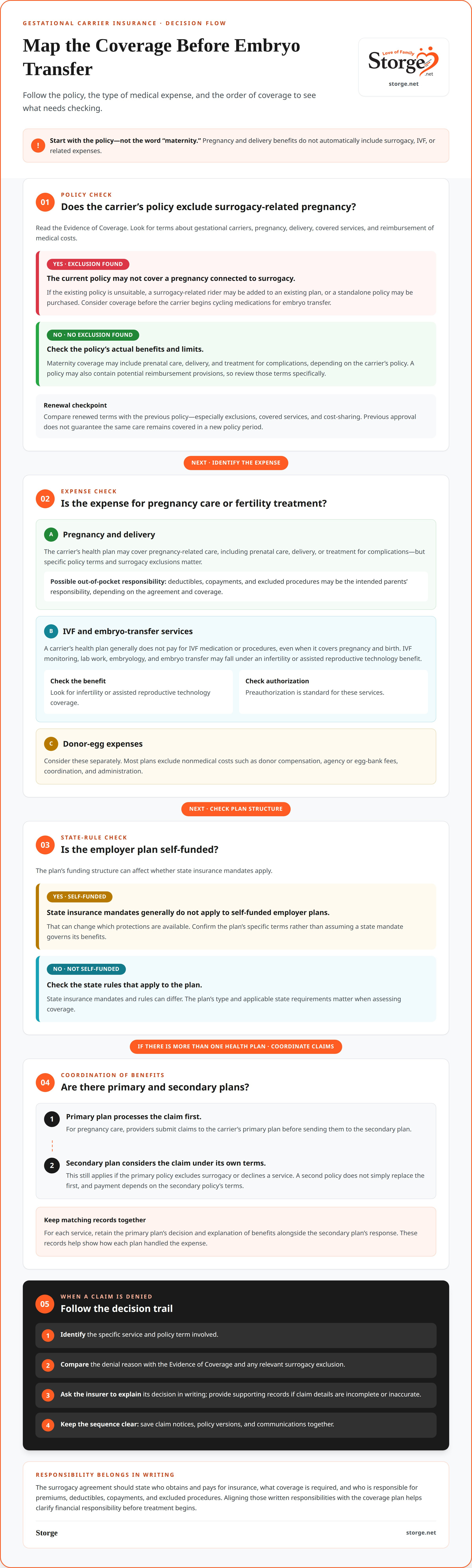
Maternity coverage refers to benefits for pregnancy care, while exclusions describe circumstances the policy won’t cover. Some plans cover routine maternity care but exclude pregnancies connected to surrogacy, making the Evidence of Coverage document essential. Look for language about gestational carriers, pregnancy, delivery, and reimbursement of medical costs. Coverage can also change when a policy renews. Compare the renewed terms with the previous version, focusing on exclusions, covered services, and cost-sharing. A previous approval doesn’t mean the same care will remain covered in a new policy period.
Pregnancy-Related Medical Expenses
Depending on the carrier’s policy, pregnancy-related expenses may include prenatal care, delivery, and treatment for complications. Intended parents may be responsible for deductibles, copayments, and excluded procedures. A gestational carrier’s health plan generally doesn’t pay for IVF medication or procedures, even if it covers pregnancy and birth. IVF monitoring, lab work, embryology, and embryo transfer may fall under an infertility or assisted reproductive technology benefit. Preauthorization is standard for these services. Donor egg expenses should also be considered separately: most plans exclude nonmedical costs such as donor compensation, agency or egg bank fees, coordination, and administration.
Resolving Coverage Complications
To resolve a coverage issue, identify the specific service and policy term involved. For a denied pregnancy claim, compare the denial reason with the Evidence of Coverage and any relevant surrogacy exclusion. Ask the insurer to explain its decision in writing, then provide supporting records if the claim details are incomplete or inaccurate. Keep claim notices, policy versions, and communications together to make the sequence clear. The surrogacy agreement should also state who obtains and pays for insurance and what coverage is required. This helps intended parents and the gestational carrier understand responsibility for uncovered care, premiums, and out-of-pocket expenses before a complication creates more uncertainty.
Does Health Insurance Cover Surrogacy?
Health insurance may cover a gestational carrier’s pregnancy and delivery, but it doesn’t automatically cover every surrogacy-related expense. No Affordable Care Act plan is specifically designed for gestational carrier coverage. A carrier’s existing policy may cover maternity care while excluding pregnancies resulting from surrogacy. For intended parents navigating insurance for a gestational carrier, the key distinction is between general maternity benefits and the plan’s specific treatment of surrogacy. Coverage depends on the policy’s terms.
Start by reviewing the carrier’s existing health insurance and how it treats pregnancy, delivery, and surrogacy. The Evidence of Coverage document outlines relevant benefits and exclusions. Also consider whether the plan may seek reimbursement for costs connected to a surrogacy pregnancy. If the existing policy is unsuitable, a surrogacy-related rider may be added to an existing plan, or a standalone policy may be purchased. Consider coverage before the carrier begins cycling medications for embryo transfer.
Separate pregnancy coverage from medical, life, and disability insurance. The carrier’s health plan may cover pregnancy care, but it doesn’t cover IVF medication or procedures. IVF services, including monitoring and embryo transfer, may be covered through an infertility or assisted reproductive technology benefit. Short-term disability coverage addresses lost wages during medically necessary bed rest, while life insurance may provide financial protection for the carrier’s family. These policies serve different purposes, so one doesn’t replace another. Standard disability policies typically have a 30-day waiting period, which can affect income protection.
The agreement should state who obtains and pays for insurance and what coverage is required. It can also clarify responsibility for premiums, deductibles, copayments, and excluded procedures. A practical way to navigate insurance for a gestational carrier is to align those written responsibilities with the coverage plan. Intended parents should account for out-of-pocket expenses as well as possible medical complications. Clear terms help everyone understand financial responsibility before treatment begins.
Coordination of benefits
Coordination of benefits is the process insurers use to determine how multiple health plans share responsibility for claims. If a gestational carrier has primary and secondary insurance, the primary plan processes each claim first. The secondary plan then considers the claim under its own terms. This order matters during a surrogacy journey because a second policy doesn’t simply replace the first.
For pregnancy care, providers submit claims to the carrier’s primary insurance plan before sending them to the secondary plan. This order still applies when the primary policy excludes surrogacy or declines a service. The primary insurer’s decision and explanation of benefits show how it processed the claim. The secondary insurer uses that information to assess its share. Any payment depends on the secondary policy’s terms, not just the primary plan’s decision.
Clear claim records help intended parents understand which plan handled each medical expense. Keep the primary plan’s decision, explanation of benefits, and secondary plan’s response together for the same service. For example, if prenatal care appears on both plans, compare the service and claim details in each document. If a problem arises, these records can help distinguish a primary-plan exclusion from a secondary-plan processing issue. They can also help identify any remaining deductible, copayment, or unpaid amount.
The surrogacy agreement can clarify who is responsible for premiums, out-of-pocket expenses, and coordinating payment obligations. This matters when both policies address the same pregnancy but apply different exclusions or cost-sharing terms. Keep the carrier’s pregnancy claims separate from the intended parents’ coverage for the baby after birth. The newborn’s hospital or NICU care is a distinct coverage need, so the parents should arrange coverage for the child rather than treating the carrier’s policy as newborn coverage. Clear records and contract terms help everyone follow the same claims process.
State insurance mandates and self-funded employer plans
State insurance mandates can shape the benefits required for some health insurance plans, but not every plan follows state rules. Self-funded employer plans generally aren’t subject to state insurance mandates. This distinction matters during a surrogacy journey: a state requirement affecting a state-regulated plan may not apply to a self-funded plan. The plan’s funding type and the state regulating the policy are therefore important context for understanding coverage.
California illustrates how a mandate can affect particular benefits. California SB 729 requires state-regulated large employer plans to cover infertility diagnosis and treatment, including IVF, for contracts issued or renewed on or after January 1, 2026. The rule concerns infertility care and IVF. It doesn’t automatically establish that a plan covers a gestational carrier’s maternity care or removes surrogacy exclusions. Those benefits depend on the policy’s terms and the plan type.
Enrollment rules can also vary by state. In Vermont, pregnancy is considered a qualifying event for an insurance enrollment period once a gestational carrier is confirmed pregnant. This state-specific rule can affect when enrollment is available. It isn’t a nationwide rule; enrollment opportunities and plan terms depend on the state. Timing matters because a new policy’s effective period and premium affect how expenses are handled.
For intended parents, the practical takeaway is to identify whether the carrier’s plan is state-regulated or self-funded before relying on a mandate. Then distinguish benefits for infertility treatment from maternity coverage, and consider how exclusions apply to a surrogacy pregnancy. A mandate can set a benefit requirement within its scope, but it doesn’t make every plan identical. Keep the policy type, state, renewal date, enrollment timing, and relevant maternity exclusions in view when planning coverage. Continue your gestational-carrier planning with these distinctions in mind.
Storge: Surrogacy / Gestational Carrier Search
After reviewing insurance coverage, intended parents can continue their family-building journey with Storge’s Surrogacy / Gestational Carrier Search. Storge connects LGBTQ+ individuals and couples with gestational carrier resources through a trusted community. Finding a carrier is separate from understanding policy terms, exclusions, and financial responsibilities, but both are important parts of thoughtful planning.
Storge also offers fertility clinic and attorney referrals as you consider your next steps. These resources can connect you with professionals involved in the medical and legal aspects of the process, while keeping insurance questions distinct from those services.
If you’re ready to explore a gestational carrier search, contact Storge.
Move Forward With a Clearer Plan
Insurance decisions are one part of building a family, and they don’t need to define the whole journey. As you navigate insurance for a gestational carrier, consider how coverage questions fit alongside the people and resources you’ll need for the next stage. A shared understanding of responsibilities can focus conversations with your support team and help you approach decisions with greater clarity.
Storge offers Storge PLUS membership, attorney referrals, and fertility clinic referrals to support intended parents. Each can help with a different part of the process, from finding community to connecting with legal and fertility professionals. These referrals don’t replace advice about a specific insurance policy, but they can help you find resources relevant to your path.
When you’re ready to discuss your options, contact Storge about your options. Take the next step at a pace that feels right for you.
Frequently Asked Questions
What are the Options for Coverage?
Coverage options include the gestational carrier’s existing health plan, a surrogacy-related rider, or a standalone policy. The existing plan may cover pregnancy care, while a rider or separate policy may address gaps in maternity benefits. These options don’t necessarily cover fertility treatment, disability, life insurance, or the baby’s care. Treat each as a separate coverage need, and match each policy to the person and expenses it’s intended to cover.
How Does Surrogacy Insurance Work in Practice?
The carrier’s health plan processes pregnancy care claims according to its benefits and exclusions. For example, a prenatal visit may be covered while a surrogacy exclusion affects another claim. IVF treatment is a separate coverage question and may depend on an infertility or assisted reproductive technology benefit. Intended parents should also plan for the baby’s coverage after birth, including possible hospital or NICU care.
What are the essential insurance questions surrogates should ask before starting their journey?
Before treatment begins, clarify whether the plan excludes surrogacy, what pregnancy and delivery care it covers, and whether it can seek reimbursement for related expenses. Ask how deductibles and copayments apply, whether another plan is involved, and how to submit claims. For IVF services, ask whether an infertility or assisted reproductive technology benefit applies and what requires preauthorization. These answers help distinguish pregnancy coverage from fertility benefits.
What is a surrogacy exclusion and why does it matter?
A surrogacy exclusion is policy language that excludes coverage for a pregnancy connected to acting as a gestational carrier. This matters because a plan may cover maternity care generally but exclude care for a surrogacy pregnancy. That distinction can affect claims for prenatal care, delivery, or complications. The Evidence of Coverage document is useful because it sets out the plan’s benefits and exclusions in its own terms.
What makes an insurance policy “surrogacy friendly”?
A surrogacy-friendly policy covers maternity expenses while a person acts as a gestational carrier and doesn’t exclude the pregnancy because it results from surrogacy. The written terms matter more than a general maternity label. Review how the plan treats pregnancy, delivery, and complications, along with reimbursement provisions and cost-sharing. A policy may still exclude fertility treatment or other expenses from its maternity coverage.
What insurance coverage does a gestational carrier need in the United States?
The central coverage to assess is health insurance for pregnancy and delivery that doesn’t exclude surrogacy. Disability or life insurance may address separate financial risks, but each serves a different purpose from medical coverage. Intended parents also need a plan for the baby’s coverage after birth, including hospital or NICU care. The carrier’s health plan shouldn’t be treated as the newborn’s insurance.


