

Planning crowdfunding for LGBTQ fertility treatment starts with a goal based on documented expected costs, not a one-size-fits-all figure. Build it from the medical, insemination, donor, or IVF expenses you expect, then account for what you can contribute and what remains unfunded. Clear documentation helps supporters understand the need behind your goal.
Turning a deeply personal family-building plan into a public fundraising request can be difficult. You deserve a practical way to explain the costs while sharing only the details you’re comfortable making public.
This guide explains how crowdfunding for LGBTQ fertility treatment can reflect medical documentation, a realistic fundraising goal, and the costs of insemination or private IVF. It also explores how different routes to parenthood can shape your funding plan, helping you consider next steps with greater clarity.
Key Takeaways
- Build a clear account of expected medical and family-building expenses so supporters can understand the need behind your campaign.
- Set a fundraising target around the remaining funding gap, and treat campaign examples as context rather than a prediction of what you’ll raise.
- Separate insemination-related expenses from other costs to see how your chosen path shapes the amount you may need to fund yourself.
- Private IVF budgeting should account for related expenses as well as the treatment cycle, so the target reflects more than a clinic quote alone.
Financial need and medical documentation requirements
A credible campaign links every requested dollar to a specific step toward parenthood. These examples show why LGBTQ couples may face substantial expenses before treatment begins.
Prepare a simple funding record: list expected tests, treatment, donor-related expenses, and other eligible costs, then distinguish estimates from amounts already paid. With permission, medical documentation might include a clinician’s treatment plan or test estimate, with sensitive details removed. A clear breakdown helps supporters understand the funding gap without revealing more of your medical history than you choose.
LGBTQ+-inclusive family-building assistance may complement crowdfunding. Men Having Babies financial assistance is one avenue to consider for surrogacy-related funding; organize your expense records before reviewing its application requirements. Financing fertility treatment may also involve savings, insurance benefits, or borrowing, each with different repayment or eligibility terms.
Are crowdfunding donations for fertility treatment taxable in the United States? Tax treatment depends on campaign details and applicable rules, so keep donation and expense records together for tax planning. Do state laws or insurance mandates affect costs? As of November 6, 2023, at least 20 states besides New York, plus Washington, D.C., had laws requiring infertility coverage; at least 15 cited state laws required IVF coverage.
Which treatments can crowdfunding cover? A campaign can explain planned tests, insemination, IVF, donor services, or related expenses, with a clear budget for each. What about fees and payout timelines? They depend on the platform’s fee schedule, payment processing, and account requirements. Protect your privacy by limiting personal details and removing identifiers from medical documents. Risks include a campaign falling short, delayed access to funds, or misleading appeals, so share only accurate, supportable costs.
Crowdfunding goals and results for LGBTQ family-building
A campaign goal should reflect the funding gap for your chosen route to parenthood, not promise a particular result. The example shows how a public target may cover only part of a larger journey.
Other campaigns show how outcomes vary. These are individual experiences, not forecasts for other couples facing infertility or planning surrogacy, egg donation, or another path to parenthood. Make the purpose of your crowdfunding for LGBTQ fertility treatment clear.
What crowdfunding platforms are best for LGBTQ fertility treatment? These campaign examples do not establish one platform as best. Choose a platform whose rules accommodate fertility-related fundraising and whose tools let you explain your goal and how donations will be used.
To set a useful target, calculate the expected expenses for your specific family-building plan, then subtract savings and other funding already available. Separate the amount needed now from future costs, such as later treatment stages, so supporters can see what the campaign will fund. If your plan involves surrogacy, specify which part the goal covers rather than presenting it as the entire cost.
Make your campaign page specific without presenting a successful outcome as certain. Identify the intended treatment route, explain the funding need clearly, and share relevant updates if your goal or plan changes. Transparency helps supporters understand how contributions fit into the journey, whether the campaign funds one step toward pregnancy or a broader plan for having children.
Out-of-pocket insemination costs
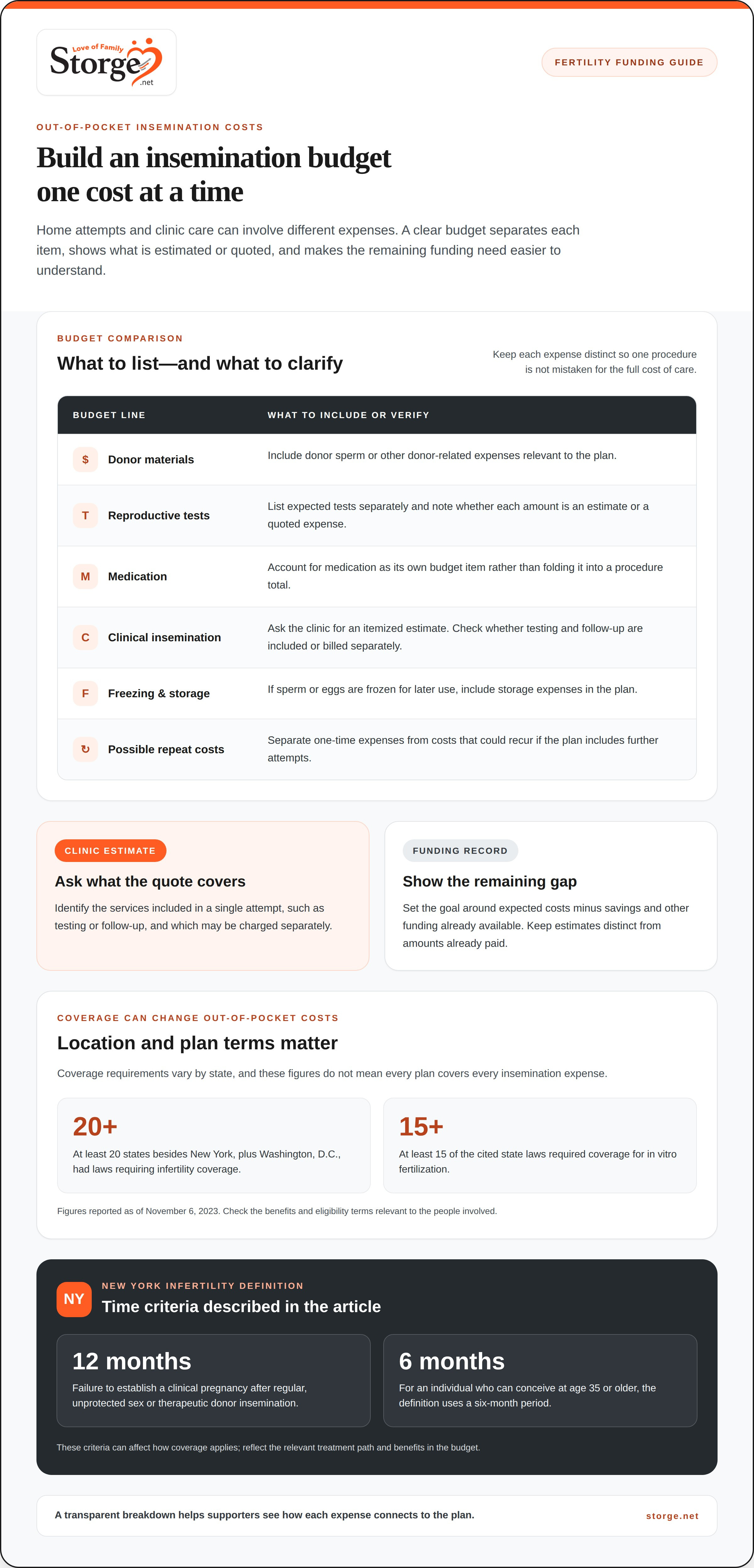
For U.S. families, insemination expenses depend on whether the plan involves home attempts or clinic care. A budget may include donor sperm, reproductive testing, medication, clinical insemination, and follow-up. If sperm or eggs are frozen for later use, include storage expenses too. List each item separately so the campaign shows which costs relate to insemination and which belong to another stage of family-building.
Ask for an itemized clinic estimate that separates a single attempt from the broader plan. Identify which services are included, such as testing or follow-up, and which may be billed separately. Distinguish one-time expenses from costs that could recur if the plan includes further attempts. This helps you explain the actual funding need without treating one procedure as the full cost of reproductive care.
Insurance rules can affect the amount paid out of pocket. In New York, infertility includes failure to establish a clinical pregnancy after 12 months of regular, unprotected sex or therapeutic donor insemination. For an individual who can conceive at age 35 or older, the definition uses a six-month period. These criteria can affect how coverage applies, so the campaign budget should reflect the treatment path and benefits relevant to the people involved.
Coverage requirements also vary by state. As of November 6, 2023, at least 20 states besides New York, along with Washington, D.C., had laws requiring infertility coverage. At least 15 of the cited state laws required coverage for in vitro fertilization. These figures don’t mean every plan covers every insemination expense, but they show why location and plan terms matter to the funding picture.
For a practical campaign breakdown, group expenses by stage: donor materials, clinical insemination, tests, medication, and freezing or storage. Label each amount as an estimate or a quoted expense, and update the target if the care plan changes. This gives supporters a clearer view of how contributions relate to your family-building plan.
Crowdfunding to pay for private IVF
Private IVF budgets should separate the clinic’s quoted cycle from related expenses. These are England-specific figures, not U.S. price estimates.
That distinction matters when setting a donation goal. List the quoted treatment separately from associated costs, such as tests or other care included in your campaign plan. Then show which expenses the requested funding is intended to cover. This helps supporters understand why a clinic quote may not represent the full amount needed for an IVF journey.
The same England fundraiser said that, in the circumstances it described, a straight couple would have three free IVF rounds. That example illustrates how access and eligibility can shape out-of-pocket planning. It is not a general U.S. coverage rule or proof that every same-sex couple faces the same barriers.
For LGBTQ people, sexual orientation and gender identity may be relevant to how a family-building plan is structured, but they don’t determine one universal IVF budget. Explain the treatment plan in respectful, specific language without disclosing more personal information than you wish. If the plan includes donor eggs or sperm, list that separately from IVF treatment.
Before publishing, organize the campaign around the clinic’s estimate, the related expenses, and the funding already available. State whether the goal supports one cycle or a broader plan, and update supporters if the plan changes. For help connecting a family-building plan with fertility resources, explore fertility clinic referral options.
Storge: Fertility Clinic Referrals
Storge offers Fertility Clinic Referrals for LGBTQ individuals and couples seeking support as they plan treatment after reviewing costs and funding options. A referral can be a useful next step when you’re ready to explore clinic care that aligns with your family-building goals.
Storge’s Storge PLUS community connects members with egg donors, sperm donors, and gestational carriers. Storge also provides referrals to fertility clinics and specialized legal professionals. These resources can support different parts of the journey, but they don’t replace medical care or legal advice from qualified professionals.
If you’re looking for inclusive fertility and family-building resources, explore Storge PLUS and connect with the community.
Let your next step reflect your family-building plans
Crowdfunding for LGBTQ fertility treatment can make a personal funding need visible, but your campaign doesn’t have to define the whole journey. Treat it as one part of a plan that can change as treatment choices, priorities, and available support evolve. Keeping your next steps flexible leaves room to make decisions at a pace that feels right for you.
As you move forward, consider what support would be most useful now: understanding fertility care options, exploring family-building resources, or finding guidance for another part of the process. Revisit your priorities as your plans take shape, without needing to share every private detail publicly.
If you’d like to explore support for your next step, contact Storge to discuss your options. Your path to building a family is personal, and thoughtful decisions can help you move toward it with greater clarity.
Frequently Asked Questions
How much do LGBTQ fertility treatments cost in the United States?
Costs depend on the family-building route, treatment plan, and related care. Build an estimate around the specific procedures, donor needs, and services involved, rather than relying on one figure to represent every LGBTQ family’s path.
What should a fertility treatment crowdfunding campaign include?
Explain the treatment plan, the amount you’re seeking, and what donations will support. For example, distinguish funds for testing from funds for a later treatment stage. Include a brief plan for updating supporters as your family-building process changes. Share only personal or medical details you’re comfortable making public, and keep campaign statements consistent with how you intend to use the funds.
How can LGBTQ people find grants or financial assistance for fertility treatment?
Look for LGBTQ-inclusive family-building assistance relevant to your planned route, including Men Having Babies financial assistance for surrogacy-related planning. Review each program’s eligibility criteria and application requirements, then organize relevant records before applying. You can also assess insurance benefits and other funding sources as part of the same financial plan, keeping grant applications distinct from crowdfunding donations.
What are the risks of crowdfunding fertility treatment, including scams and denied care?
A campaign may fall short, access to funds may be delayed, and misleading appeals are a risk. Share only accurate, supportable costs.


