

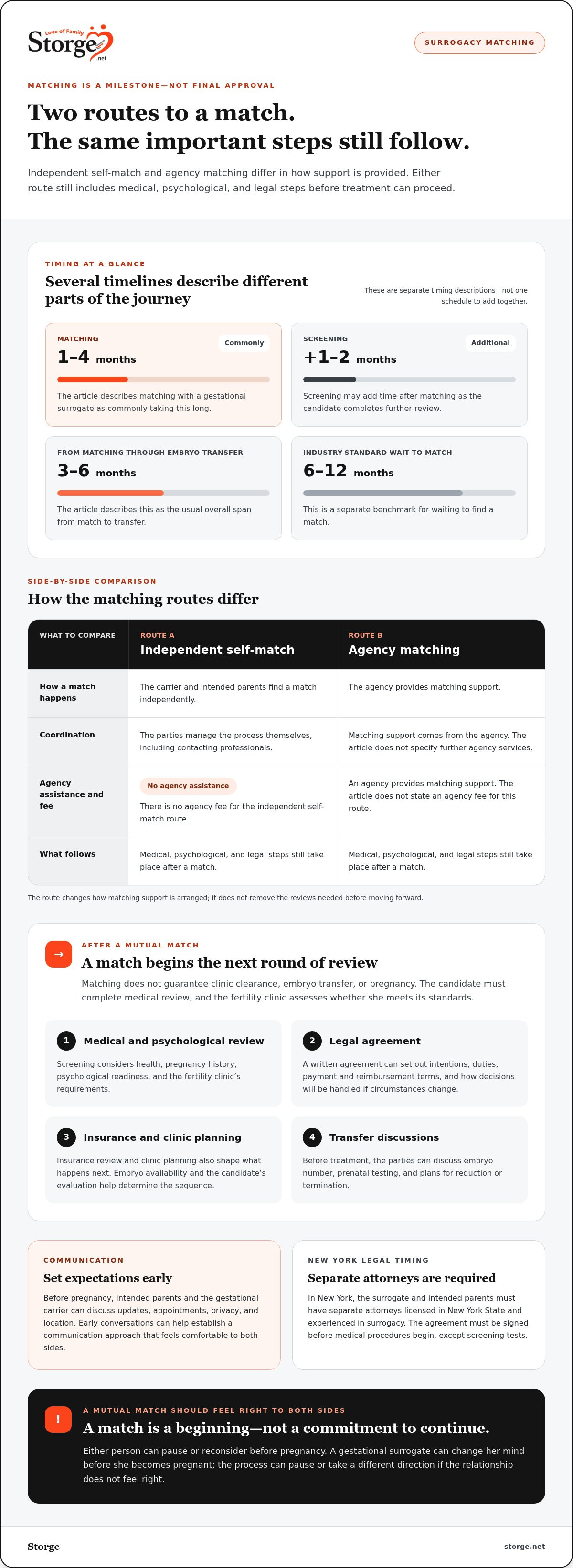
Matching with a gestational surrogate commonly takes 1-4 months, with screening adding another 1-2 months. From matching through embryo transfer, the process usually takes about 3-6 months, while the industry-standard wait to match with a surrogate is 6-12 months. A match is a beginning, not a commitment either person should feel pressured to keep: a surrogate can change her mind before she becomes pregnant.
It’s understandable to want a clear timeline when planning such a meaningful next step. Matching with a gestational surrogate and completing the steps before embryo transfer are separate stages. If the relationship doesn’t feel right, the process can pause or take a different direction.
This guide explains matching and screening, how intended parents and gestational carriers can discuss contact, and what may still need to happen before embryo transfer or pregnancy. It also covers what a change of heart can mean, so you can approach the process with realistic expectations and respect for everyone’s comfort.
Key Takeaways
- Discuss communication preferences early, and put important expectations and decision-making plans in a written agreement with independent legal counsel.
- Think of a mutual match as the start of further medical, psychological, legal, and insurance review, not final approval for transfer.
- Learn what screening considers, including pregnancy history, health, and readiness for the fertility clinic’s requirements.
- Make room for either person to pause or reconsider before pregnancy; a respectful match should feel right to both sides.
Do intended parents maintain contact with surrogates throughout pregnancy?
Yes. Intended parents and a gestational carrier can discuss contact preferences before pregnancy, including updates, appointments, privacy, and location. Agreeing on expectations early can help both sides establish a communication approach that feels comfortable.
Matching may happen independently or through an agency. With an independent self-match, the carrier and intended parents manage the process themselves, including contacting professionals; there is no agency assistance or agency fee. An agency can provide matching support. Either route still involves medical, psychological, and legal steps.
Separate legal counsel matters. In New York, state law requires the surrogate and intended parents to have separate attorneys licensed in New York State and experienced in surrogacy matters. A proposed candidate waiver should not replace independent legal advice. Each party’s attorney should review any waiver before it is signed.
A written agreement sets out intentions and duties, payment and reimbursement terms, and how decisions will be handled if circumstances change. The U.S. National Library of Medicine describes these functions as part of a surrogacy agreement. Discussing embryo number, prenatal testing, and plans for reduction or termination before transfer can clarify expectations. ASRM’s 2023 ethics guidance also calls for independent legal counsel and psychological support.
Legal clearance and contract timing can affect the path to transfer. In New York, the agreement must be signed before medical procedures begin, except screening tests. Contract preparation and review are therefore key steps after a match and before treatment. Insurance also needs careful review: self-match parties should examine the policy with their attorneys and/or agency, including coverage relevant to pregnancy.
There is no single U.S. total for gestational surrogacy. Costs may include agency support, surrogate compensation, medical care, legal work, insurance, and escrow. The arrangement and state affect the overall expenses.
Does matching guarantee embryo transfer or pregnancy?
No. Matching with a gestational surrogate is an important milestone, but it does not guarantee medical clearance, embryo transfer, or pregnancy. The candidate must complete the required medical review, and the fertility clinic must assess whether she meets its standards. Legal agreements, insurance review, and clinic planning also shape what happens next. Any of these steps can affect timing or whether the arrangement proceeds.
Embryos do not need to be ready before intended parents begin planning in every situation. The clinic’s requirements, embryo availability, and the candidate’s medical evaluation help determine the sequence. Once both sides agree to proceed, the clinic reviews the candidate’s eligibility. Clear communication among intended parents, the candidate, clinic, and agency can help coordinate the different parts of the process.
Study results offer context, not an individual forecast. A 2018 study of donor-egg embryos reported live birth rates of about 57% per transfer to a gestational carrier, compared with about 46% for similar embryos transferred to intended parents. That difference was 11 percentage points. The study figures don’t predict the outcome of a particular embryo transfer or pregnancy.
Transfer preparation also involves deciding how many embryos to transfer. ACOG strongly encourages single-embryo transfer in gestational surrogacy to reduce the risks of twin and triplet pregnancies. Intended parents and the gestational carrier can discuss embryo number and prenatal testing before treatment. The fertility clinic’s medical review informs the transfer plan.
Even after matching with a gestational surrogate, transfer and pregnancy depend on the remaining medical and practical steps. For intended parents organizing clinic options, fertility clinic referrals can connect this planning stage with clinic discussions and next steps.
Medical, psychological, and background review
Screening reviews a candidate’s health, psychological readiness, and background before the journey moves forward. Intended parents can consider these findings alongside their personal criteria when deciding whether a match feels right.
Surrogate Eligibility and Medical Screening
Screening combines reproductive health assessment, infectious-disease testing, and formal psychological evaluation; it helps establish whether a candidate can proceed through clinic review. ASRM recommends gestational carriers preferably be between 21 and 45 years old. Its 2022 guidance also advises no more than five previous deliveries and no more than three cesarean sections. New York medical screening guidelines recommend one healthy pregnancy and a full-term delivery without complications.
Carrier Risks and Matching Criteria
Matching criteria are the health history and shared expectations intended parents consider when evaluating a candidate. Discuss pregnancy history, communication preferences, location, timing, privacy, and values before deciding whether the relationship feels workable. These preferences do not replace fertility-clinic clearance, which follows mutual interest. Candidates are commonly expected to be financially independent and have support at home.
An agency or clinic may review medical records, psychological evaluation results, and background information as part of screening. Eligibility criteria commonly include limits on drug use and smoking, and may exclude candidates with felony convictions. These checks help clarify whether the candidate’s circumstances align with the intended parents’ expectations and the clinic’s requirements before the parties proceed to an agreement.
Risks deserve direct discussion, not assumptions. A 2024 systematic review of more than 28,000 gestational-carrier pregnancies found a slightly higher chance of high blood pressure during pregnancy than with natural conceptions. Risk factors for gestational diabetes or high blood pressure may also raise the carrier’s chance of complications. A 2021 study reported serious pregnancy complications in about 2 in 100 gestational carriers, compared with about 6 in 100 other IVF pregnancies. Intended parents should consider these health risks, possible screening delays, and whether their expectations support a respectful match.
A surrogate changing her mind after matching
A match must be mutual, not something either person accepts under pressure. If intended parents or a gestational surrogate reject a proposed match, they can decline to proceed and consider another potential relationship. A profile may look aligned on paper, but conversations about privacy, communication, or pregnancy expectations can reveal a mismatch. Being honest early can prevent both parties from beginning a surrogacy journey without shared comfort.
Changing one’s mind before pregnancy is different from making a decision after pregnancy. A gestational surrogate can change her mind at any time before she becomes pregnant. In New York, state law gives the surrogate the right to choose whether to continue or terminate a pregnancy. A contract can record intentions and plans, but the parties should discuss decision-making with their separate attorneys before transfer.
Intended parents may also decide that a proposed match is not right for them. For example, they may have different expectations about appointment updates or how often to communicate. Rather than treating rejection as a failure, they can identify their most important criteria, such as contact preferences, location, timing, or values, and use them to guide future conversations. A candidate has the same freedom to decline.
Pressure can make it harder to build a positive relationship. If either party feels uneasy, pause discussions and name the concern clearly. Independent legal counsel can explain how the agreement applies, while psychological support can help each person consider emotional readiness. Pausing before embryo transfer may affect timing, but proceeding without genuine agreement can create greater strain during pregnancy.
Keep the next step practical: share the decision respectfully, clarify whether either party wants further discussion, and revisit matching criteria before another introduction. If you’re ready to explore a new potential relationship, start a gestational carrier search with the priorities that matter to you.
Storge: Storge PLUS Membership
Storge PLUS Membership is a starting point for LGBTQ+ individuals and couples exploring fertility resources and a gestational carrier journey. Storge connects members with a Surrogacy / Gestational Carrier Search, as well as Fertility Clinic Referrals and Attorney Representation Referrals. Donor Egg / Sperm Search is also available for families considering donor gametes.
These resources can help you organize the steps that follow matching, from finding a carrier to exploring clinic and attorney referrals. The right starting point depends on what you are working through now, whether you are beginning a search or identifying support for your plans.
Contact Storge to explore which resource fits your next step.
Take your next step with clarity
Before beginning another matching conversation, write down what would help you feel informed and respected. You might note your preferred communication style, questions about the process, or topics you want to discuss before deciding. Bringing these priorities into the conversation can make it easier to see whether expectations align.
Matching with a gestational surrogate is both a personal and a practical decision. Take the time you need to understand what matters to you, and speak up when something feels uncertain. A thoughtful next step could be a conversation focused on your goals, rather than pressure to move quickly.
Storge can help you discuss matching and explore resources for your family-building journey. Contact Storge to discuss matching and consider what support would be useful for you now. Your path can move forward at a pace that respects your needs and the relationship you hope to build.
Frequently Asked Questions
How long does the matching process for a surrogate take?
The industry-standard wait to match is 6-12 months, though a guide’s phase estimates put matching itself at 1-4 months and screening at 1-2 months. From match through embryo transfer, the process usually takes about 3-6 months. These timeframes describe different stages, so clarify whether you mean waiting to find a match or completing steps after mutual interest.
What does pre-screened surrogate mean?
A pre-screened surrogate candidate has completed some initial evaluations before being introduced to intended parents. The term does not mean every review is complete or that a fertility clinic has granted final clearance. After both sides express interest, further assessment can include medical and infectious-disease screening, psychological evaluation, and clinic review. Ask which screening stages are complete so you understand what remains.
Is it better to use a surrogate who is a friend or relative?
A friend or relative may already share trust and familiarity with the intended parents, but that alone does not determine whether the match is suitable. Discuss privacy, updates, appointments, and how each person would handle disagreements. For example, a close relative may want frequent family updates while the intended parents prefer more privacy. Independent legal counsel can help each party understand the arrangement.
What happens after both sides agree to match?
Mutual agreement begins the next review stage; it does not mean treatment starts immediately. The intended parents’ fertility clinic assesses whether the candidate meets its medical standards, while medical and psychological evaluations, insurance review, and legal preparation continue. For example, the parties may discuss clinic expectations and communication preferences while attorneys prepare an agreement. Transfer planning follows the required reviews and decisions.
Where can I find out more about infertility and surrogacy?
Storge provides educational guides and expert advice on fertility treatments and related family-building topics. These resources can help LGBTQ+ individuals and couples learn key terms, prepare questions for a fertility-clinic discussion, and explore possible paths such as surrogacy or donor gametes. Storge PLUS also connects members with a community and fertility resources, supporting continued learning alongside practical planning.
Are there risks with being a surrogate?
Yes. Pregnancy can involve health risks, including high blood pressure or gestational diabetes, and can also bring emotional demands. A candidate’s health history and previous pregnancies are important parts of medical review. Before deciding, consider the physical commitment, support at home, appointment requirements, and how you feel about pregnancy-related decisions. A qualified medical and psychological evaluation helps assess readiness.


