

A first fertility consultation should make room for your identity and family-building goals, not just a treatment plan. LGBTQ patient care in fertility clinics starts with an individualized conversation about the paths that may fit you, including fertility preservation, IVF, or reciprocal IVF. For transgender and gender-diverse people considering fertility preservation, Section 16.2 of the World Professional Association for Transgender Health’s Standards of Care recommends referral to providers with fertility-preservation expertise.
It’s understandable to want clear answers before sharing personal details or making treatment decisions. If you’re exploring LGBTQ patient care in fertility clinics, start by discussing your goals with a board-certified reproductive endocrinology and infertility doctor. This article outlines what to cover at an initial consultation, how family-building options work, and how respectful, collaborative care can help you consider next steps at a manageable pace.
Key Takeaways
- Compare fertility preservation options in light of your family-building goals and the timing of any gender-affirming care.
- Understand how IVF and reciprocal IVF differ, including whose eggs may be used and who may carry a pregnancy.
- Prepare to discuss your language, goals, medical history, and questions so the consultation can be centered on your needs.
- Consider how clinic communication and coordination with fertility and legal resources can support a more collaborative path forward.
Fertility preservation for transgender and non-binary patients
Gender-affirming care and future family-building goals can shape fertility-preservation conversations. Timing depends on the treatments being considered, reproductive goals, and personal priorities.
Preservation During Gender Transition
Fertility preservation means considering ways to retain reproductive material before or during gender-affirming treatment. It can keep future family-building options in view without assuming which path someone will choose. Section 16.2 of the World Professional Association for Transgender Health recommends referring transgender and gender diverse people interested in fertility preservation to providers with fertility-preservation expertise. Ovarian and sperm production can return after hormone treatment, but that possibility alone cannot settle a person’s plans. A consultation can bring treatment timing and personal goals into the same conversation.
Treatment Costs and Insurance Coverage
Fertility treatment costs depend on the path you choose and the services involved, so one figure cannot represent every patient’s care. Evaluation, treatment, medications, and storage can each affect the total. Insurance coverage depends on the policy, covered services, and terms. LGBTQ identity alone doesn’t determine what a plan covers; the treatment under consideration and the policy’s benefits matter. Reviewing likely expenses by category can help you understand how each service relates to your plans, rather than relying on a generic estimate.
Finding an Inclusive Fertility Clinic
An inclusive fertility clinic combines relevant expertise with respectful communication throughout intake and care. If you’re transgender or non-binary and considering fertility preservation, ask about the clinic’s experience and how it coordinates discussions with gender-affirming treatment. Providers should respect your identity labels and clarify how you use gender-related terms when needed, according to Mary Ann Liebert, Inc. Notice whether forms allow you to provide your name and pronouns, and whether staff ask about your reproductive goals without making assumptions. These practical details can help you assess whether the clinic’s approach supports an individualized consultation.
IVF and reciprocal IVF
Thoughtful LGBTQ patient care in fertility clinics makes space for different family-building roles and goals. IVF is one option to explore with a fertility specialist.
IVF Treatment
In vitro fertilization (IVF) involves fertilizing eggs with sperm in a laboratory, then transferring an embryo into a uterus or a gestational carrier’s uterus. Plans may involve a patient’s own eggs or donor eggs, and a partner’s or donor’s sperm. The people involved can have different roles: one person provides eggs, another carries the pregnancy, and a donor may provide sperm. Mapping those roles helps clarify what the treatment plan involves.
Reciprocal IVF
Reciprocal IVF is a form of IVF in which one partner provides eggs and the other carries the resulting pregnancy. This gives each partner a distinct role in the process. For example, one partner contributes eggs while the other carries the pregnancy. Donor sperm may also be part of the plan. Discussing these roles together can help you decide whether this approach aligns with your goals.
Medical risks and success rates depend on the proposed treatment and individual clinical factors. When discussing LGBTQ patient care in fertility clinics, ask the specialist to explain the risks of each proposed step and how your medical information informs discussions about outcomes.
Donor sperm may come from a known donor or an anonymous donor, such as one from a sperm bank. Donor eggs or a gestational carrier may also be part of a family-building plan. These choices affect who participates in treatment and which decisions intended parents need to discuss before proceeding.
For support connecting family-building goals with fertility care, fertility clinic referrals may help you explore a next step.
Specialized fertility centers describe IVF as fertilizing eggs with sperm in a laboratory and transferring the resulting embryo into the uterus of the patient or a surrogate. Clarifying who may provide eggs, whose uterus may be used, and what role a surrogate might have can help you prepare questions for a fertility specialist and consider how the proposed plan fits your family-building goals.
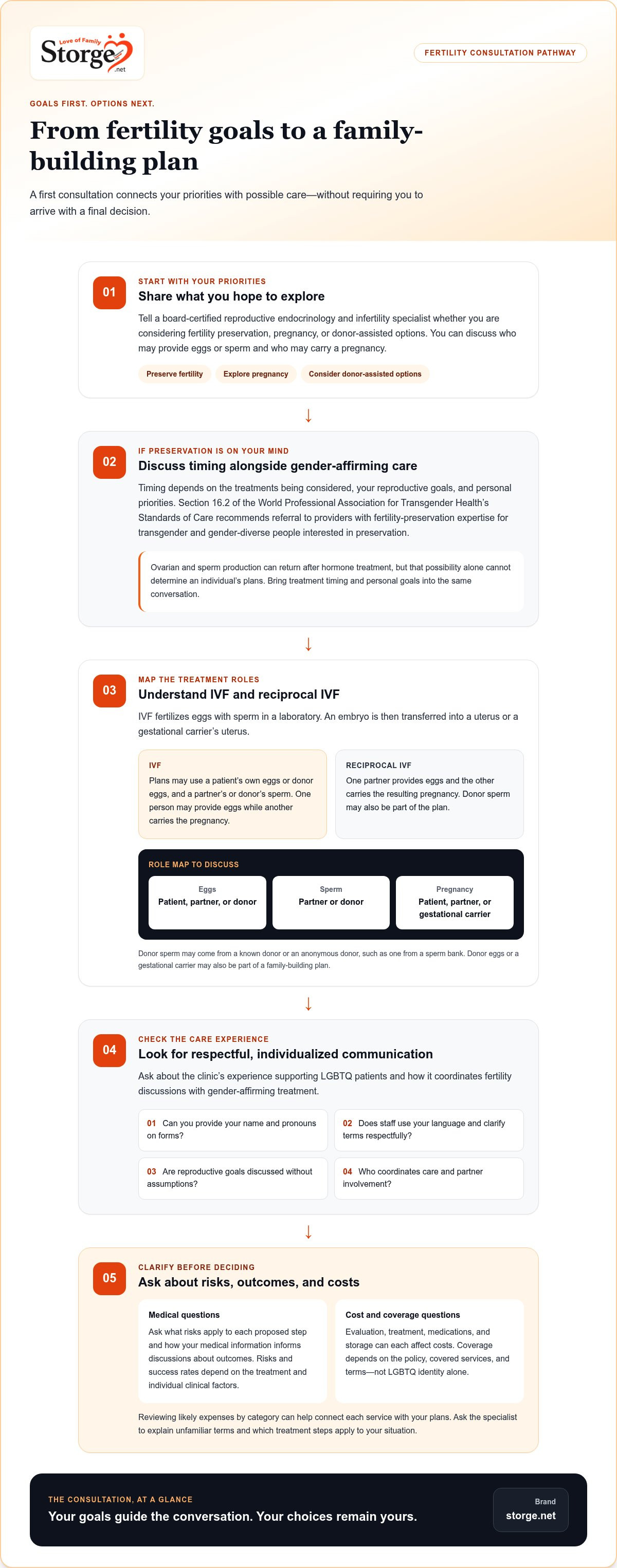
Initial consultation with a reproductive endocrinology and infertility specialist
If you’re considering fertility assistance, begin with a board-certified reproductive endocrinology and infertility doctor. The first meeting connects your goals with a discussion of possible care.
Bring the details that shape your plans: whether you hope to preserve fertility, pursue pregnancy, or explore donor-assisted options. You can describe who may provide eggs or sperm, or carry a pregnancy. This helps the specialist understand what you’re considering and which topics to address. You don’t need to arrive with a final decision.
Providers should respect your identity labels and clarify how you use gender-related terms when needed, according to Mary Ann Liebert, Inc. Share the name and pronouns you want staff to use, then notice whether they follow your language. Clear communication can help prevent assumptions about your body, partner, or family structure from shaping the discussion.
Before choosing a clinic, ask how its team supports LGBTQ patients, which treatment paths match your goals, and how it explains risks and outcomes. You can also ask who will coordinate your care and how the clinic handles names, pronouns, and partner involvement. The answers help you understand both the medical approach and what it may be like to work with the team.
Use the appointment to clarify unfamiliar terms. If a specialist discusses IVF, ask which steps apply to your situation and who would be involved. If donor sperm or eggs are part of your plan, ask how that affects treatment. Direct questions can turn a broad overview into information relevant to your family-building goals.
Bring a written list of questions and leave space to note answers or follow-up topics. If you attend with a partner, decide together which concerns matter most, such as treatment roles or how decisions will be discussed. A focused conversation gives you a clearer basis for assessing whether a clinic’s approach fits your needs.
Collaborative, individualized fertility care
Collaborative care connects medical decisions with each intended parent’s goals, roles, and practical needs. A shared plan can clarify who participates at each stage.
LGBTQ-Affirming Care
LGBTQ-affirming fertility care respects each patient’s identity and tailors discussions to their family-building plan. For example, a clinic can use your stated name and pronouns, include your partner in discussions when you invite them, and explain treatment options without assuming who will provide eggs or sperm or carry a pregnancy. These practices support clear communication and keep care focused on the people involved.
State laws can affect family-building arrangements, including donor conception, surrogacy, and parental rights. Challenges may arise when securing parental rights for all intended parents. Identify questions about consent, parentage, and documents early, and discuss them with a reproductive law attorney.
Consent, Partner Participation, and Family-Building Documents
Consent means ensuring each person understands and agrees to the care or role they’re taking on. A clinic can explain which decisions require each participant’s agreement and, with your permission, invite your partner into relevant conversations. For donor conception or a gestational carrier arrangement, clarify which forms record treatment choices and which questions concern legal parentage. This distinction helps intended parents understand the medical and legal parts of their plan.
To make care collaborative, ask the team to identify each decision-maker, explain treatment steps in accessible language, and record agreed communication preferences. For instance, partners can discuss who should receive appointment updates and how they want to participate in consultations. A written list of open questions can help keep the next conversation focused on your family’s plan, rather than assumptions.
For support connecting your family-building goals with fertility care, explore fertility clinic referrals.
Storge: Storge PLUS Membership
Storge PLUS Membership connects your family-building journey with relevant fertility resources. If you’re considering clinic options, donor conception, or legal referrals, Storge can help you explore next steps through Fertility Clinic Referrals, Donor Egg / Sperm Search, and Attorney Representation Referrals.
Turn to Storge when you want help organizing resources related to your goals, whether you’re weighing options or preparing for conversations about care. Storge’s referrals and search resources can connect you with relevant professionals; medical treatment and legal representation are provided by those professionals.
You’re welcome to contact Storge or visit storge.net to learn more.
Choose a next step that feels right for you
Your first consultation can begin a thoughtful plan without committing you to one treatment path. As you consider what matters most, look for support that turns questions into clear conversations and practical decisions. LGBTQ patient care in fertility clinics is strongest when your goals and identity remain central as your plans take shape.
Storge can help you connect your next steps with relevant resources through Storge PLUS Membership, Fertility Clinic Referrals, and Attorney Representation Referrals. These options may be useful as you explore clinic care and questions about family-building arrangements. You can decide what support fits your needs and when you’re ready to use it.
Contact Storge about fertility care to explore a next step that feels manageable. Your path can move forward at your own pace, with your goals guiding the way.
Frequently Asked Questions
What fertility treatment options are available for same-sex couples and transgender patients?
Options can include IUI, IVF, reciprocal IVF, donor sperm, donor eggs, and gestational carriers. A same-sex couple might consider reciprocal IVF, while a transgender patient may discuss fertility preservation alongside family-building plans. Suitable options depend on who may provide eggs or sperm, who may carry a pregnancy, and the family’s goals. A specialist can help map those roles into possible care pathways.
What are the steps and costs for reciprocal IVF, donor sperm, donor eggs, and gestational surrogacy?
Start by discussing your goals with a fertility specialist, then identify whose eggs or sperm may be used and who may carry the pregnancy. Donor sperm may come from a known or anonymous donor; donor eggs or a gestational carrier may also be part of a plan. Costs vary with treatment choices and services, so review each component and your insurance benefits rather than relying on one estimate.
How can transgender patients prepare for fertility treatment before hormone therapy or gender-affirming surgery?
Before treatment, write down your family-building goals and questions about preserving reproductive options. Tell the fertility specialist which gender-affirming treatments or surgeries you’re considering, and discuss how timing relates to your plans. You can also clarify which terms you use for your body and care. This gives the consultation a practical starting point without requiring you to decide on a future family-building path.


