

Could your family qualify for funding beyond the programs you’ve already heard about? LGBTQ fertility grants vary in award amount, eligibility, deadlines, and covered treatments, so the right fit depends on each program’s rules and your family-building plan.
It makes sense to want clear answers before investing time, money, and hope in an application. Grants can help make fertility care more accessible, but the details matter: a program may cover some treatments or expenses and exclude others. This guide explains what funding may be available, who may qualify, and which treatments grants may cover, with practical ways to narrow your options.
You’ll also find practical points to consider as you plan next steps, whether you’re exploring fertility treatment, donor conception, or a gestational carrier journey. Understanding the funding landscape can help you identify what to look for and which requirements to review in each grant program.
Key Takeaways
- Grant programs set their own application requirements and deadlines, so identifying the details that fit your family-building plan is an important first step.
- Eligibility may depend on factors such as diagnosis, income, and the treatment you’re pursuing; application fees and other costs can also affect your budget.
- Funding amounts and covered care vary. Learn how to distinguish support for treatments such as IUI or IVF from assistance for related family-building expenses.
- Once you understand your options, fertility clinic referrals and donor searches can help you map a practical next step for your path to parenthood.
What Are LGBTQ+ Fertility Grants?
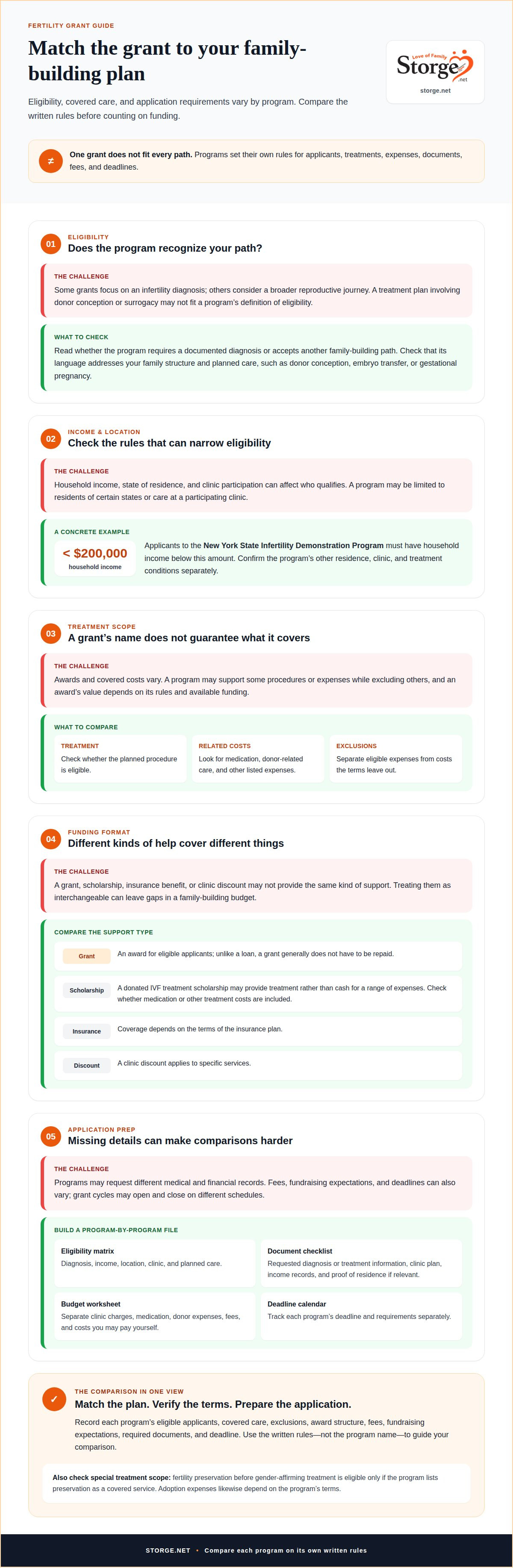
LGBTQ fertility grants are awards that help eligible applicants pay for fertility treatment or other family-building expenses. Unlike a loan, a grant generally doesn’t have to be repaid. Each program sets its own rules, so look for language that addresses your family structure and planned path, such as donor conception, embryo transfer, or gestational pregnancy.
National programs can offer a starting point. The Dr. Stephen Greenhouse Grant was established in 2018 through the Tinina Q. Cade Foundation. Its name alone doesn’t determine whether a particular applicant or treatment qualifies. Read each program’s eligibility criteria for accepted applicants, covered expenses, required documents, and application deadlines. Grant cycles can open and close on different schedules, so a deadline calendar helps track each program separately.
Application fees and fundraising requirements also vary by program. Some applications may charge a fee; others may ask applicants to fundraise or share information about their family-building journey. Before applying, record each program’s fees, fundraising expectations, required documents, and deadline in a grant comparison worksheet. A budget worksheet can help separate potential grant funds from expenses you may need to pay yourself. These tools make programs easier to compare without assuming their requirements are the same.
Grants generally don’t create the repayment obligation associated with loans. Insurance coverage depends on the plan’s terms, while clinic discounts apply to specific services. Other assistance programs may cover different costs, so compare what each option includes before building a funding plan.
To prepare a strong application, match your treatment plan to the grant’s stated criteria, gather the requested records, and answer each prompt clearly. Submit a complete application by the deadline, tailoring your responses to the program instead of reusing a generic statement. Eligibility and deadlines vary, so use the program’s written rules as your guide.
Infertility diagnoses and other eligibility criteria
A grant’s eligibility criteria determine who can apply, which treatments qualify, and how funds may be used. Some programs focus on an infertility diagnosis; others consider a broader reproductive journey, including donor conception or surrogacy. The written terms explain whether applicants must document a diagnosis or may qualify through another family-building path. This distinction matters for LGBTQ+ individuals and couples whose treatment plans may not fit traditional definitions of infertility.
Income and location can also affect eligibility. Applicants to the New York State Infertility Demonstration Program must have household income below $200,000. Geographic rules may limit a grant to residents of certain states, while clinic rules may tie funding to care at a participating clinic. Before preparing an application, note the program’s income criteria, residence requirements, clinic conditions, and eligible treatment costs. An eligibility matrix helps compare those details across programs.
Medical criteria may specify a diagnosis, recommended treatment, or stage of care. A clinic treatment plan can explain why a procedure is being considered and how it supports your family-building goals. For a surrogacy journey, check whether the program includes related reproductive care. Since award amounts and covered costs follow the program’s rules, distinguish eligible treatment expenses from excluded costs.
Applications may request medical and financial records, though required documents vary by program. A preparation packet might include diagnosis or treatment information, a clinic plan, household income records, and proof of residence if relevant. Use a checklist to track each application’s requirements and a budget worksheet to compare eligible expenses with the requested grant amount. Organize records by program to avoid confusing requirements.
Start with an eligibility matrix to identify programs that fit your diagnosis, income, location, clinic, and planned care. Then tailor your application to the stated criteria and submit every requested record by the deadline. This focused process helps keep each application complete and relevant.
Grant amounts and covered fertility treatments
Grant amounts vary by program, and an award’s value depends on its rules and available funding. Some awards may help pay treatment expenses; others support specific services or stages of family building. Review the covered-cost terms before including an award in your budget.
These are estimates of treatment costs, not grant amounts or promises of coverage.
Eligible expenses may include fertility treatment, medication, donor-related care, or other costs listed in a program’s terms. Coverage can differ even among programs that support similar treatment. A doctor’s plan can identify procedures and expenses relevant to your application. Use a treatment-cost worksheet to separate clinic charges, medication, and donor expenses, then compare programs’ eligible costs with a grant coverage tracker.
Donated IVF treatment scholarships differ from cash awards: they may provide treatment rather than funds for a range of expenses. Read the terms to see which services are included and whether medication or other treatment costs are covered. Adoption is another family-building path, and program terms determine which expenses are eligible.
For transgender people, eligibility for fertility preservation before gender-affirming treatment depends on whether the program lists preservation as an eligible service. Review its treatment scope and compare it with the planned care. To assess assistance options, record each program’s award structure, covered treatment, exclusions, and application requirements alongside your treatment estimate. This can reveal funding gaps before you commit money.
Fertility grants open to LGBTQ+ people and same-sex couples
Grant access depends on an organization’s eligibility rules and its definition of family building. A program may welcome LGBTQ+ parents but limit assistance to specific medical treatments. Another may support IVF or IUI but exclude adoption or gestational surrogacy. For same-sex couples and individual applicants, check whether the application explicitly includes their family structure and planned treatment.
A named program to review is the Dr. Stephen Greenhouse Grant, established in 2018 through the Tinina Q. Cade Foundation. Its existence does not, by itself, establish which applicants or treatments qualify. The grant’s own eligibility and covered-expense terms determine whether an LGBTQ+ applicant’s plan fits. The available facts here don’t establish a specific organization’s grant coverage for adoption, IVF, IUI, or surrogacy, so don’t assume one award covers all four paths.
Surrogacy grants merit particular attention. For a gestational surrogacy journey, distinguish the intended parent’s fertility treatment from carrier-related expenses when reviewing a program’s description. Look for explicit terms covering medical care, donor assistance, and gestational-carrier costs. A coverage matrix helps compare these categories with the program’s stated benefits. A document tracker can organize application requirements, and a deadline calendar can keep grant cycles visible.
State rules and policies affecting LGBTQ+ family building vary across the United States. Location is therefore important when assessing financial assistance: a foundation’s national reach doesn’t necessarily mean every applicant, clinic, or treatment qualifies. Identify the program’s geographic limits and compare them with your residence and planned care. Keep the written criteria with your treatment plan.
The Tinina Q. Cade Foundation is one starting point to investigate, but its grant terms determine whether it fits. Before relying on an award, compare its eligible applicants, treatment categories, location rules, and deadlines. This review can help LGBTQ+ individuals and couples distinguish relevant assistance from programs that don’t align with their path to parenthood.
The Tinina Q. Cade Foundation offers the Dr. Stephen Greenhouse Grant, a program worth reviewing. Its eligibility rules and covered expenses determine whether it supports an LGBTQ+ applicant’s family-building plan or treatment.
Storge: Fertility Clinic Referrals
Storge’s Fertility Clinic Referrals can help you explore care as you turn grant information into a treatment plan. If you’re weighing fertility options, clinic referrals can connect your family-building journey with fertility care.
If your plans involve donor conception, Storge’s Donor Egg / Sperm Search can support your search. Storge PLUS Membership and Attorney Representation Referrals provide additional resources as you coordinate fertility and legal needs. These offerings may be useful while organizing next steps alongside grant applications, treatment decisions, or family-building arrangements.
Turn to Storge when you’re ready to move from researching funding to exploring resources that fit your plans. Storge connects LGBTQ+ individuals and couples with fertility resources, including clinic referrals, donor searches, and a community of families.
Choose a Next Step That Feels Right
Your next step doesn’t have to settle every part of parenthood. Choose one decision that could bring clarity: the treatment route you want to explore, the questions you’d like answered, or the support you need around your family-building plan. A focused conversation can turn your research on LGBTQ fertility grants into a plan that reflects your priorities, rather than a checklist designed for someone else.
Take the time you need to identify what feels manageable and meaningful. Your family, your choices, and your pace deserve respect throughout this process. When you’re ready, contact Storge to discuss your options. Your family-building journey can move forward one thoughtful decision at a time.
Frequently Asked Questions
How do I get started if I’m ready to begin building my family?
Start by choosing a family-building path to explore, such as donor conception, IVF, or gestational surrogacy. Write down your priorities, including the treatment you’re considering and the support you need. Then identify a manageable first step, such as learning about clinic referrals or donor searches. A clear starting point can make your next conversation more focused.
What are my options for LGBTQ+ family building?
LGBTQ+ family-building options include fertility treatment, donor sperm or eggs, gestational surrogacy, and adoption. The right path depends on your family’s goals and the medical and practical steps involved. For example, a couple considering donor conception can explore treatment options alongside donor searches, while intended parents pursuing surrogacy need to plan for a gestational carrier. Each path involves its own decisions and resources.
Where and for who are Gay Surrogacy Grants available?
In the United States, grant availability depends on each program’s geographic rules and whether its criteria include intended parents pursuing gestational surrogacy. Gay and same-sex couples should look for explicit eligibility language covering their family structure and planned treatment. General support for fertility care doesn’t establish that a program funds surrogacy, so distinguish grants for medical treatment from those that specifically include carrier-related expenses.
What fertility grants are available to LGBTQ individuals and couples in the United States?
The Tinina Q. Cade Foundation’s Dr. Stephen Greenhouse Grant is one program to investigate. Its criteria determine which applicants and expenses qualify, so LGBTQ+ individuals and couples should compare its terms with their planned care. LGBTQ fertility grants aren’t interchangeable: a program supporting one treatment may not cover another path, such as donor conception or gestational surrogacy.
What are the eligibility requirements for LGBTQ fertility grants, including income, diagnosis, residency, and relationship status?
Requirements vary by program and may address household income, medical diagnosis, state residency, clinic choice, and relationship status. Some applicants may need to meet a diagnosis-based rule, while others may qualify under broader family-building criteria. For instance, a single applicant and a couple may face different application questions. Compare each program’s written rules with your circumstances before investing time in an application.
When are LGBTQ fertility grant application deadlines, and how often can applicants apply?
Deadlines and application cycles vary, and each program sets its own rules for repeat applications. Use a calendar to record opening dates, submission deadlines, and any stated reapplication conditions. Keep a separate record of the materials submitted to each program. This can help you plan around a missed cycle and prepare for a future opportunity without assuming every grant follows the same schedule.


