

Understanding how to afford IUI as a lesbian couple starts with the full cost picture. Donor sperm is a separate expense to account for alongside treatment.
It’s understandable to want a clearer estimate before making plans. The total depends on insurance coverage, medication, and the donor option you choose, so a quoted procedure fee alone may not reflect what you’ll need to budget.
This guide explains how insurance coverage may work, what medication and donor sperm can add, and how to plan for costs beyond one cycle. Donor selection and shipping can also affect your budget. Understanding these categories can help you plan with greater clarity.
Key Takeaways
- Look beyond the IUI procedure fee: insurance rules and infertility criteria can affect what your plan covers.
- Separate medication costs from the treatment quote, since oral and injectable options can change your budget differently.
- Plan for testing, donor sperm, and possible repeat cycles to build a more realistic family-building budget.
- Compare known-donor and sperm-bank pathways with attention to vial choices and shipping, which can shape the total cost.
What budget-friendly fertility treatment options can insurance help cover?
For female couples in the United States, fertility coverage depends on the policy, benefit design, and eligibility rules. Some plans require 6-12 months of trying to conceive or an infertility diagnosis.
Only a handful of states require private insurers to cover fertility-related healthcare. State requirements and policy terms determine whether coverage applies to same-sex couples.
Fertility Insurance Coverage
Fertility insurance coverage may pay for parts of treatment, such as IUI, testing, or medication. For female couples, the eligibility rules matter: a plan may cover treatment after an infertility diagnosis, while another may require a period of trying to conceive.
To qualify without an infertility requirement, a couple needs an insurance policy or employer fertility benefit that does not require that diagnosis or a waiting period. Some plans require one or both, so distinguish standard insurance coverage from a separate employer benefit. Coverage for in vitro fertilization also varies by insurer, policy, and state.
Age and medical circumstances can change which treatment is considered. For people over 40, clinics generally recommend going directly to IVF rather than beginning with IUI. A doctor may evaluate both partners to determine who is best suited to carry a pregnancy and receive treatment, making individual screening relevant to the plan.
Clinic Payment Plans
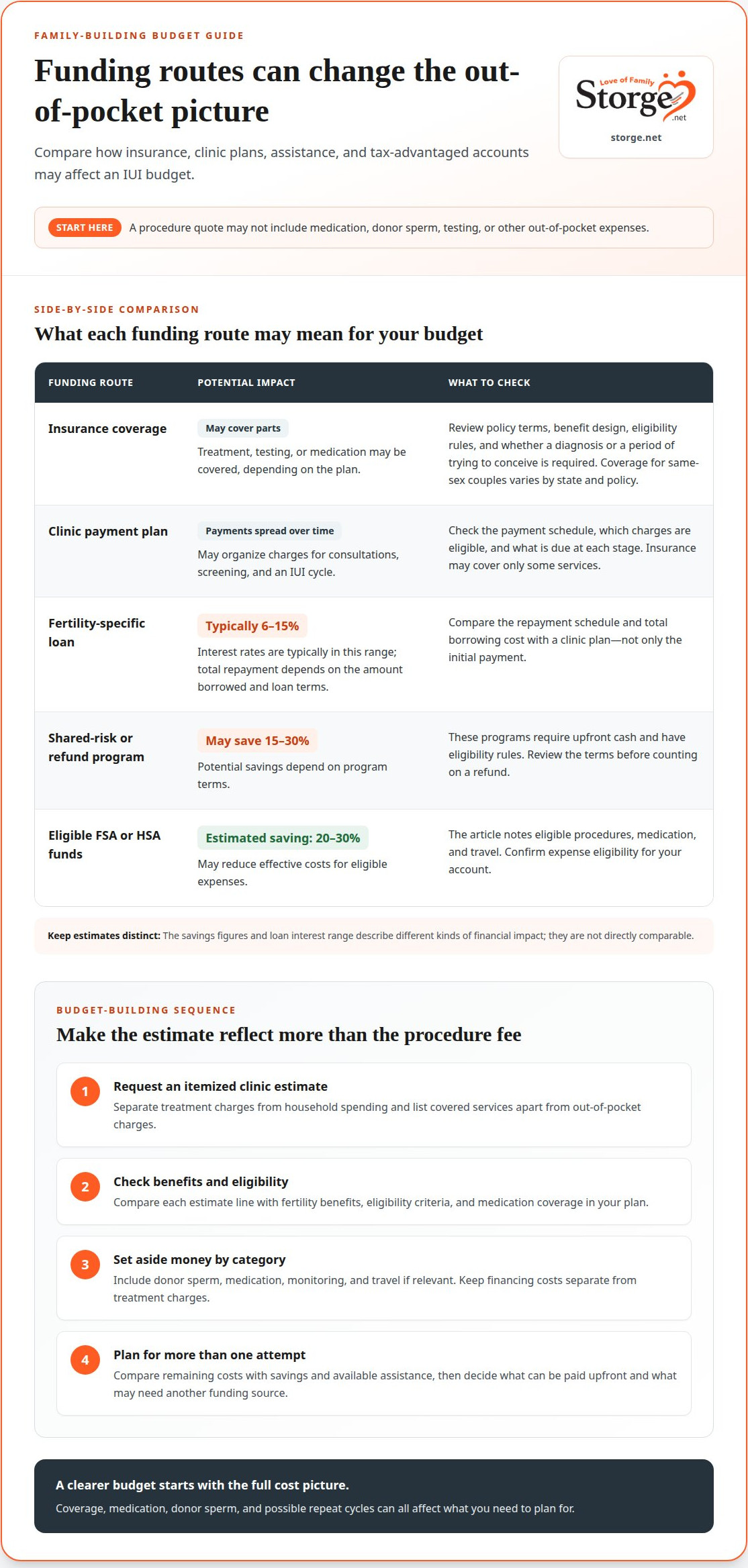
A clinic payment plan spreads treatment charges over time rather than requiring the full amount upfront. It can help organize costs for consultations, screening, and an IUI cycle, especially when insurance covers only some services. Review the payment schedule and eligible charges to understand what is due at each stage.
Fertility-specific loans are another financing route, with interest rates typically between 6-15%. Compare the repayment schedule and total borrowing cost with a clinic plan before choosing. A referral to a fertility clinic can also help connect couples with a provider for treatment planning and coverage discussions.
IUI medication costs
IUI costs go beyond the insemination procedure. IUI places washed, concentrated sperm into the uterus near ovulation. Unlike reciprocal IVF, it does not involve an embryo transfer.
Medication can significantly affect the total. It may encourage several follicles to develop, and ultrasound monitoring helps reduce the risk of multiple pregnancy. Since a clinic’s treatment quote may exclude medication, list those charges separately when estimating a cycle.
Donor sperm is another major expense for female couples. Donor-sperm IUI may also involve sperm processing, donor screening, and compensation. The donor you choose, the number of vials needed, and any storage or shipping arrangements all affect the total.
Clinic-based IUI can cost more than at-home insemination because it includes clinical services and uterine placement. First-attempt IUI success for lesbian couples is reported at 16-20%; at-home insemination may take up to a year on average to achieve pregnancy when there are no other issues. These are different approaches, so compare both the costs and the support involved.
Known donors involve legal considerations as well as screening and semen testing. A written donor agreement can help protect intended parents and the donor from future legal complications. The appropriate legal steps depend on the donor arrangement and parentage circumstances, so include them in your budget planning.
Financial planning for family building
A useful IUI budget separates expected treatment charges from household spending and possible financing. Planning how to afford IUI as a lesbian couple starts with agreeing on what you can pay upfront and what may require another funding source.
Grants and Financial Assistance
Grants and other financial assistance may reduce what a family pays directly for reproductive care. Eligibility and covered expenses vary, so include an award in your budget only after reviewing its terms.
Shared-risk or refund fertility programs may save 15-30%, but they require upfront cash and have eligibility rules. Compare those terms with your treatment plans before relying on a refund. Eligible FSA or HSA funds for procedures, medication, and travel can provide an estimated effective saving of 20-30%.
Clinic Financing and Loans
Clinic financing and fertility loans spread payments over time, which can make treatment costs easier to manage alongside regular expenses. Fertility-specific financing products typically have interest rates of 6-15%, so the total repayment depends on the balance borrowed and loan terms.
Compare the payment schedule and total borrowing cost, not just the initial payment. Keeping loan expenses separate from treatment charges makes it easier to see how financing affects your monthly budget.
Personal Financing Options
Personal financing can combine household savings with eligible FSA or HSA funds. These accounts may cover eligible procedures, medication, and travel, reducing the effective cost by an estimated 20-30%.
Set aside funds by category, including donor sperm, monitoring, and travel if relevant. A category-based budget gives both partners a clearer picture of family-building costs and helps you decide what to prioritize.
Budgeting and Insurance Checks
To understand how to afford IUI as a lesbian couple, start with an itemized clinic estimate. Separate covered services from out-of-pocket charges, then compare each item with your plan’s fertility benefits, eligibility criteria, and medication coverage.
Next, compare the remaining costs with your savings and available assistance. Decide what you can pay upfront and what you may finance. Consider the possibility of additional treatment cycles so your budget accounts for more than one attempt.
Sperm bank donor selection and shipping
Donor selection affects more than the cost of the first vial. Lesbian and bisexual couples generally choose between a personally known donor and a sperm bank donor. A bank may offer nonidentified or open ID options, which differ in the identity information available to the family and donor-conceived child. Decide what level of information fits your family before narrowing your search.
Vial type also matters for insemination. Compare the quoted vial type and the number required for treatment rather than assuming one vial will cover every cycle. A doctor can identify the type suited to the planned treatment.
Clarify shipping with the fertility clinic. Coordinate the destination and arrival timing with the treatment schedule, then include shipping and any storage arrangements in your budget. The vial price alone won’t show the full cost. Planning these details together helps keep donor sperm from becoming a last-minute expense.
Donor screening and compensation may also appear in donor-sperm IUI quotes. Ask for a breakdown of the vial, shipment, laboratory processing, and clinic services. If the estimate combines these items, request a separate view of each category to make budgeting easier. The process for a known donor differs from a bank purchase and can involve semen analysis and health screening.
Donor choice is personal, but the practical takeaway is straightforward: align identity preferences, vial type, clinic requirements, and delivery timing before setting a cycle budget. If you want support exploring sperm donor options, take that step as part of your planning.
Storge
Storge connects LGBTQ+ individuals and couples with fertility resources as they plan their family-building next steps. If you’re weighing donor options, looking for a fertility clinic, or considering legal support, Storge’s referrals and search resources can help you find relevant connections.
Donor selection and clinic planning often go hand in hand during an IUI journey. Storge offers fertility clinic referrals, donor egg and sperm search, attorney referrals, and Storge PLUS Membership. These resources can help you explore options and make informed decisions. Medical treatment and legal representation are provided by the professionals you connect with, not by Storge.
When you’re ready to discuss your family-building needs, contact Storge.
Choose the next step that feels right for your family
A family-building plan is about more than finances. It’s also an opportunity to talk with your partner about priorities, timing, and the support that would make the process feel more manageable. Start by agreeing on the questions you want answered before moving forward.
If you’re still working out how to afford IUI as a lesbian couple, Storge can help you explore relevant resources. Storge PLUS Membership, attorney referrals, and fertility clinic referrals offer ways to find community and professional connections as you consider what comes next.
You don’t need to make every decision at once. Start with the area where support would be most useful, then take the next step together.
Contact Storge to discuss your options and move forward at a pace that feels right for you.
Frequently Asked Questions
How much does it cost to have a baby for LGBTQ families?
There’s no single total because the path to parenthood and the services needed differ. Budget for testing, medication, and the possibility of more than one treatment cycle.
The Reality Check: How Many Cycles Will You Need?
There’s no fixed number of IUI attempts that applies to every couple. Reported success rates for lesbian couples are 16-20% on the first try and 31-35% by the fourth attempt. Fertility doctors may recommend other treatments, including IVF, after 3-4 unsuccessful IUI cycles without a healthy pregnancy and live birth. Discuss how treatment response and test results inform your next step.
What impacts the cost of treatment?
The treatment method, medication, testing, and donor arrangement all affect the total. A known donor may involve a semen analysis, while bank donor sperm has vial costs.
What is the average cost of IUI with donor sperm in the United States?
An average can obscure the difference between procedure charges and donor expenses. A donor-sperm quote may include monitoring, laboratory processing, screening, donor compensation, and insemination. Compare the services listed in the estimate to identify any separate charges.
How much does donor sperm cost, including shipping and storage?
Shipping charges depend on the order and delivery arrangements, so include shipping as a separate budget line rather than assuming it is part of the vial price. The clinic’s schedule and storage plan can also determine when the shipment needs to arrive.
Does health insurance cover IUI or donor sperm for lesbian couples?
Some plans may cover fertility treatment for female couples when there’s an infertility diagnosis, but most health insurance plans don’t cover fertility treatment expenses for LGBTQ individuals. Eligibility rules may require 6-12 months of trying to conceive or a diagnosis. Review whether your plan treats IUI, donor sperm, medication, and screening as separate benefits, since coverage for one may not mean coverage for all.


