

Genetic screening costs for egg donors are often included in a broader screening bill rather than listed as a standalone test price. A quoted range can help set expectations, but it does not mean every charge is for genetic testing.
It’s understandable to want a clear figure before making decisions about donor eggs. Genetic screening costs for egg donors depend on what the screening package includes and whether assessment covers both the donor and sperm source. Comparing results can help identify inherited conditions that may need attention, but available cost figures don’t separate a matching fee from other screening costs.
This article explains what donor genetic screening may include, how carrier testing and genetic matching work, and which related costs may be billed separately. Understanding genetic screening costs for egg donors also means seeing how screening fees fit into a broader donor egg cycle budget.
Key Takeaways
- Separate genetic testing from medical screening, retrieval, and medication when mapping the possible costs of a donor egg cycle.
- Carrier screening may cover conditions such as cystic fibrosis, spinal muscular atrophy, and Gaucher’s disease, but the test panel can vary.
- Genetic matching considers results from both the egg donor and sperm source; shared variants in the same recessive-condition gene can affect potential risk.
- Review what an agency or clinic fee includes so you can understand whether genetic screening is bundled or billed separately.
Donor screening, retrieval, and medication costs
Budget for more than a laboratory test: screening, medication, and retrieval can contribute to a fresh donor cycle’s total. According to the Centers for Disease Control and Prevention, birth defects affect 1 in every 33 babies born in the United States each year.
Medical Screening Tests
Medical screening reviews a donor’s health and family history before treatment to identify concerns relevant to the donor and a future pregnancy. A medical and family history questionnaire can guide follow-up. Testing may include a complete blood count, blood type and screen, and cervical cultures for gonorrhea and chlamydia. Infectious disease tests may cover HIV, hepatitis B and C, syphilis, and cytomegalovirus antibodies. Genetic screening may include carrier testing and a review of inherited conditions.
Screening by Donor Type
Known, anonymous, and frozen egg donors differ in how their histories and test records are available, not in the basic purpose of genetic screening. A known donor’s family history can inform the review directly; records for an anonymous donor may be limited, while frozen donor eggs may come with existing screening results. The sperm source matters for genetic matching because results from both genetic contributors help assess shared risks. Donor type alone doesn’t show whether further testing is needed.
Fees, Insurance, and Payment Responsibility
Insurance coverage depends on the policy and billing arrangement. Coverage for fertility treatment doesn’t automatically mean every genetic screen is covered. Responsibility for payment follows the agreement and billing structure, which may include screening in clinic or agency charges.
An abnormal or inconclusive result may lead to additional testing, a family-history review, or genetic counseling, with costs depending on the follow-up needed. A negative carrier-screening result reduces, but doesn’t eliminate, the possibility of carrying or passing on a tested condition. Results cover only the conditions included in the test, so screening cannot rule out every inherited condition or health concern.
Cystic fibrosis, spinal muscular atrophy, and Gaucher’s disease
Carrier screening looks for genetic variants linked to inherited conditions before donor eggs are used. Donor screening may assess conditions such as cystic fibrosis and spinal muscular atrophy. Gaucher’s disease is another condition to consider when reviewing a panel’s scope. The conditions listed in a panel determine what its results can address and which findings may inform reproductive planning.
For an autosomal recessive condition, risk depends on results from both genetic contributors. If the egg donor and sperm source carry variants associated with the same condition, each embryo has a 25% chance of being affected. The variants can differ, yet still occur in the same gene. If only one genetic contributor carries a recessive variant, a child may inherit carrier status without having that condition.
That distinction helps intended parents understand why testing both contributors matters before embryo transfer. For example, the donor’s cystic fibrosis result can be considered alongside the sperm source’s result. A shared finding may affect the genetic risk assessment and treatment decisions. A negative result lowers, but doesn’t eliminate, the possibility of carrying a screened condition, and it says nothing about conditions outside the test panel.
For budgeting, separate the cost of the carrier test from any additional assessment prompted by its results. The relevant panel details include whether cystic fibrosis, spinal muscular atrophy, and Gaucher’s disease are assessed. A broader screen evaluates more conditions, while follow-up depends on the specific finding and family history. An egg bank’s existing records may also shape what testing is needed for frozen eggs. To connect screening questions with reproductive care, explore fertility resources.
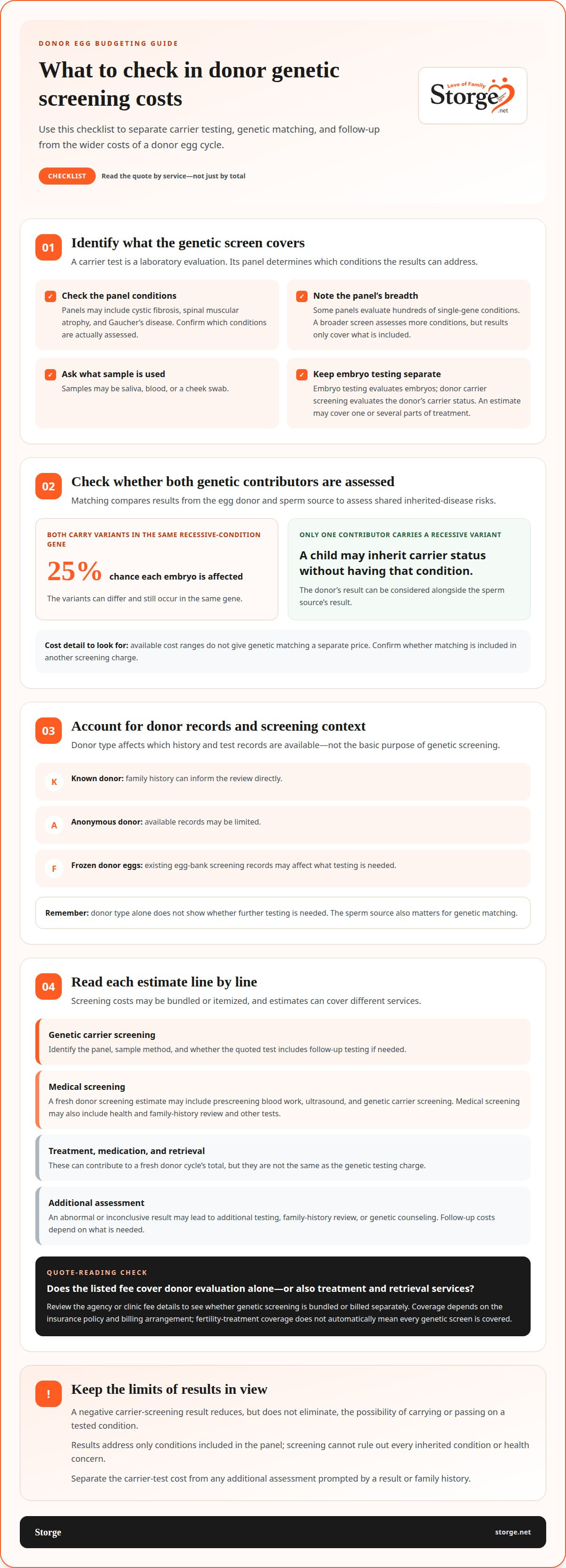
Egg donor screening costs
Budgeting means separating donor screening from the broader costs of donation and IVF. These figures cover different scopes: a cycle total may include costs beyond genetic testing, so the figures aren’t interchangeable. Understanding genetic screening costs for egg donors starts with identifying which estimate you’re reviewing.
These categories may overlap in a clinic or agency estimate. To understand a quote, identify the services covered by each line item.
Genetic carrier screening is a laboratory evaluation, and panels can assess hundreds of single-gene conditions. Samples may include saliva, blood, or a cheek swab. Costs can depend on the panel and whether a result calls for follow-up testing. Matching compares the donor’s results with the sperm source’s results to assess shared inherited-disease risks, but available cost ranges don’t give matching a separate price. These are key factors in genetic screening costs for egg donors.
Frozen donor eggs also create a different budget structure from a fresh cycle. Genetic evaluation remains relevant to the recipient’s situation, while existing donor records from an egg bank may affect what screening is needed.
Keep embryo testing separate from donor screening. Embryo testing evaluates embryos, not the donor’s carrier status. Distinguishing these purposes helps clarify whether an estimate covers donor testing, genetic matching, embryo testing, or several parts of treatment.
Are genetic screening costs included in the egg donation agency or IVF clinic fees?
Screening may appear within a broader clinic or agency estimate, or it may be itemized separately. A fresh donor screening estimate may cover prescreening blood work, ultrasound, and genetic carrier screening. Check whether a listed fee covers donor evaluation alone or also includes treatment and retrieval services.
Clinic billing may group medical testing, screening, medication, doctor visits, cycle monitoring, and egg retrieval in a fresh-cycle estimate. An agency estimate may list donor-related expenses, such as compensation, travel, and medical monitoring, separately. These are different parts of the process, so a single “screening” line may not represent every medical or genetic test involved.
To understand how the estimate is allocated, trace each charge through its line items:
- Identify whether the line item names genetic carrier screening, general medical testing, or both.
- Separate donor screening from medication, retrieval, and embryo-transfer expenses.
- Note whether a follow-up test or genetic consultation appears as a distinct charge.
Insurance coverage depends on the policy and the service being billed. Coverage for fertility treatment doesn’t automatically mean donor genetic testing is covered. Billing may distinguish donor screening from testing or treatment for the intended parent, so responsibility for each charge follows the billing arrangement and agreement.
For example, an estimate that groups screening and ultrasound may include the initial donor evaluation, while a separate laboratory line could reflect additional genetic testing. An abnormal or unclear result may lead to further evaluation and an additional charge. Clear categories help intended parents distinguish included services from next steps without confusing donor screening with embryo testing.
Prepare focused questions about bundled testing, separate laboratory charges, and follow-up evaluations with plan your clinic fee discussion.
Storge: Donor Egg / Sperm Search
Storge’s Donor Egg / Sperm Search helps LGBTQ+ individuals and couples explore donor options as they plan their family-building journey. As you learn how screening and genetic matching fit into the process, you can explore donor eggs or sperm alongside the questions that matter to your family.
It can be a helpful next step when you’re ready to explore donor options and want fertility resources that recognize your path. Storge’s Fertility Clinic Referrals can also connect your search with clinic resources. These resources can make planning clearer, while medical decisions and testing remain part of fertility care.
If you’d like support exploring donor options, contact Storge.
Take Your Next Step With Clarity
Understanding genetic screening costs for egg donors can help you begin the next conversation with a clearer sense of your priorities. Consider how donor choice, clinic care, and the support you want around your family-building plans fit together. You don’t need to settle every decision at once; a thoughtful next step can make the path ahead feel more manageable.
Storge supports broader planning through Donor Egg / Sperm Search, Storge PLUS Membership, Attorney Representation Referrals, and Fertility Clinic Referrals. These resources connect donor exploration with relevant clinic and legal guidance, while medical testing and treatment remain part of fertility care.
Contact Storge to discuss donor screening and the support that may fit your next step. Your family-building path is personal, and you can move forward at a pace that feels right.
Frequently Asked Questions
Does genetic matching affect cost?
Genetic matching can affect the testing plan if results from the egg donor and sperm source identify variants in the same recessive condition. Matching compares existing results rather than being a separate medical procedure. A finding relevant to family history may lead to additional review before embryo creation. Any added expense depends on whether follow-up testing or counseling is needed.
Genetic Testing for Egg Donors: What’s Required?
Egg donor screening generally includes a family-history review and laboratory-based carrier screening; it may also include a karyotype. Panels can assess inherited conditions such as Tay-Sachs disease, Canavan disease, sickle cell anemia, thalassemia, and cystic fibrosis. The conditions included depend on the panel. Results help specialists assess inherited risks before treatment, but screening cannot assess every possible condition.
Questions About Pricing?
For a useful estimate, separate donor screening from broader IVF-cycle charges, then identify which tests and follow-up are included. Clarify whether a quoted line covers carrier testing for the donor alone or comparison with the sperm source’s results. Also distinguish donor screening from embryo testing, which addresses different genetic questions. Clear categories make estimates easier to interpret.
How much does genetic screening for egg donors cost in the United States?
This is a screening estimate, not the cost of an entire donor egg cycle. The amount depends on which screening components are bundled and whether additional evaluation is needed.
What genetic tests are included in egg donor screening?
A genetic screening panel may include a karyotype and carrier testing for cystic fibrosis, Tay-Sachs disease, Canavan disease, sickle cell anemia, and alpha- or beta-thalassemia. Some panels assess hundreds of single-gene conditions, while others focus on a defined group. The report lists what was tested, clarifying what a negative result addresses.
How much do expanded carrier screening panels for egg donors cost?
Expanded carrier screening costs depend on the panel’s breadth, the laboratory, and whether initial results call for follow-up testing. Panels may assess hundreds of single-gene conditions, so the conditions included shape the evaluation. For budgeting, distinguish the expanded panel charge from additional testing prompted by family history or a finding shared with the sperm source.


