

The lower-cost option isn’t automatically the better fit. A cost comparison of frozen vs fresh donor eggs usually favors frozen eggs for upfront cost, while fresh donor egg cycles generally cost more. With a fresh cycle, the number of eggs retrieved is unknown until retrieval.
It’s understandable to weigh the financial commitment against the potential to create embryos from a donor cycle. Success rates also need context: outcomes can differ when measured per cycle versus per embryo transfer, and cohort size affects the number of eggs available. This guide compares typical cost structures, explains frozen cohort pricing, and considers what success-rate comparisons can and can’t tell you. You’ll have a clearer framework for weighing predictability, potential outcomes, and costs as you consider your options.
Key Takeaways
- Compare the full treatment costs, not just the egg price: clinic, medication, shipping, and storage can affect the total.
- Frozen cohorts offer a stated egg quantity at purchase, while the number retrieved in a fresh cycle is only known afterward.
- Look at how success is measured, such as per IVF cycle or per embryo transfer, before comparing outcomes.
- Weigh cost, cohort size, timing, and potential outcomes together to identify which option best fits your priorities.
Donor Eggs: Are Frozen or Fresh Better?
In the United States, frozen donor egg cycles generally cost less upfront, while fresh cycles can offer a larger, unknown-at-retrieval egg yield. The total also depends on clinic charges, medication, shipping, and whether donor-related fees are billed separately.
Costs and availability can differ by state and fertility clinic because donor pools, clinic pricing, and access to frozen cohorts vary. A clinic’s location can also affect whether shipping or travel is part of the treatment plan.
Fresh and Frozen Treatment Costs
These ranges describe different treatment structures, so compare what each estimate actually includes.
Additional Treatment and Storage Costs
Shipping frozen eggs may add to the bill, but recipients using frozen eggs don’t pay donor travel expenses. Include storage duration, medication, shipping, and any genetic testing in your total-cost comparison.
Cost and Availability by Location
Clinic and donor availability shape the practical costs of each option. Fresh cycles may include travel and donor-related expenses; frozen eggs can be shipped to the treating clinic. A clinic’s donor pool and cohort inventory affect which option is accessible. Compare estimates by separating clinic charges from donor or agency fees, then account for any travel or shipping expenses.
| Option | Typical cost | Cost structure | Egg quantity |
|---|---|---|---|
| Fresh donor eggs | Donor, retrieval, and treatment costs | Known after retrieval | |
| Frozen donor eggs | Cohort plus fertilization and treatment | Stated at purchase |
Agency fees and clinic costs are distinct budget lines: an agency may handle donor-related expenses, while the clinic bills for medical treatment. With an in-house donor, charges may be arranged differently. Compare itemized costs rather than assuming the total includes the same services.
Compare a complete estimate, the cohort size or expected retrieval yield, and the costs most likely to change your total.
Frozen donor egg cohort pricing
A frozen donor egg cohort is a defined group of eggs offered through an egg bank. Its price gives intended parents a stated cohort size before an IVF cycle begins, while the number of eggs from a fresh cycle is known only after retrieval. A cost comparison of frozen vs fresh donor eggs can clarify how a defined cohort price fits into the broader treatment budget.
The cohort price is only one part of a frozen egg cycle’s total cost. Fertilization, embryo culture, medication, and transfer may be separate clinic charges. To understand what a package covers, separate the egg purchase from the medical stages that follow. This avoids treating the cohort price as the full cost of IVF.
Screening information can explain what is known about a donor, but it is separate from the number of eggs in the cohort. Review the donor details alongside the stated batch size, and keep clinic charges separate from the egg purchase. An agency may assist with donor searches, while an egg bank offers frozen cohorts; their roles and charges can differ.
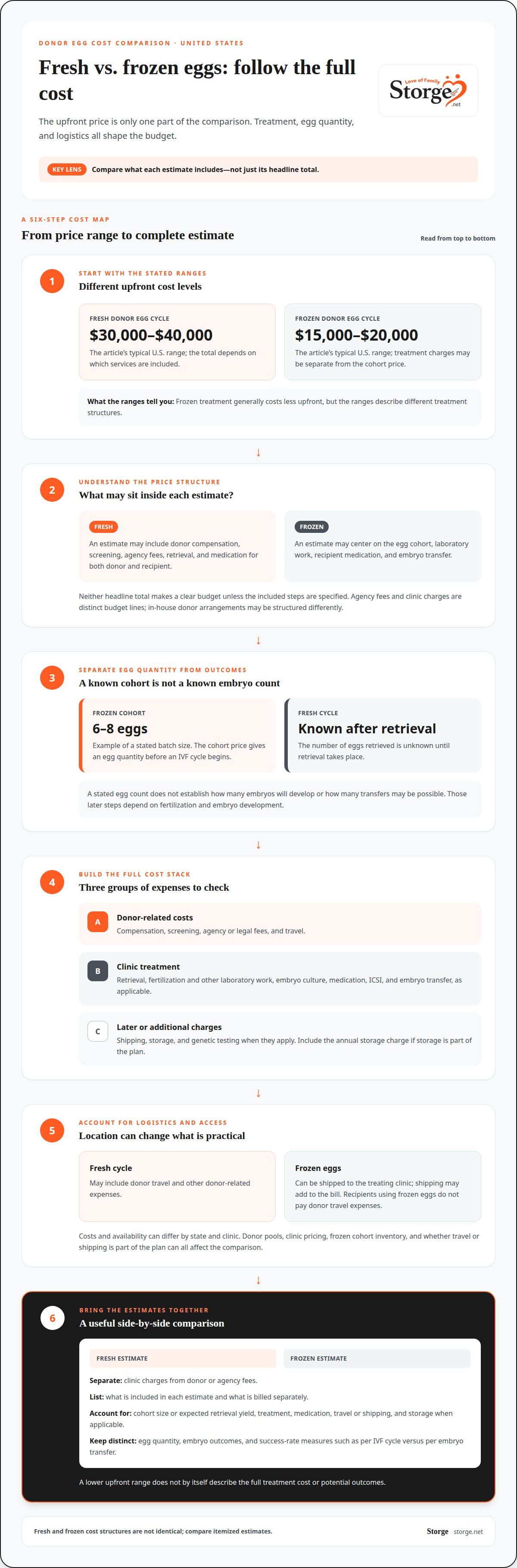
For example, a stated cohort of 6-8 eggs establishes the batch size, not how many embryos will develop or how many transfers may be possible. Those later steps depend on fertilization and embryo development. This distinction matters when intended parents compare a fixed egg quantity with a fresh cycle, where retrieval determines the final number of eggs.
A cost comparison of frozen vs fresh donor eggs is most useful when it separates the purchase from later treatment. Organize each estimate into these practical categories:
- Cohort: note the egg count and purchase price.
- Donor information: review the screening details provided with the donor profile.
- Clinic treatment: separate fertilization, embryo culture, medication, and transfer costs.
- Other charges: account for shipping or storage when they apply.
This breakdown shows what the cohort price covers and which parts of the IVF cycle are budgeted separately. It also keeps egg quantity distinct from embryo outcomes, making the comparison more useful for planning.
Cost differences between fresh and frozen donor eggs
The central difference is how costs are distributed across the fertility process. A fresh donor egg cycle in the United States typically ranges from $30,000 to $40,000, while a frozen donor egg cycle generally costs between $15,000 and $20,000. Frozen treatment usually has a more defined egg-purchase cost; fresh treatment includes arranging a donor cycle and retrieval. These ranges frame the comparison, but each total depends on the services included.
These separate expenses explain why a fresh cycle’s total can vary considerably.
Frozen treatment shifts the cost pattern. The egg cohort is purchased after retrieval has taken place, and the recipient doesn’t pay the donor’s travel expenses.
Intended parents can compare the options by separating donor-related expenses from clinic treatment. A fresh estimate may include donor compensation, screening, agency fees, retrieval, and medication for both donor and recipient. A frozen estimate may center on the egg cohort, laboratory work, recipient medication, and transfer. Neither headline total gives a clear budget unless its included steps are specified.
Travel can change the balance. Fresh cycles may involve donor travel costs, while frozen eggs can be shipped to the treating clinic. Include shipping in the frozen-cycle estimate. If storage is part of the plan, include its annual charge when comparing costs.
For a practical comparison, place each estimate into these categories:
- Donor costs: compensation, screening, agency or legal fees, and travel.
- Clinic costs: retrieval, laboratory work, medication, ICSI, and embryo transfer.
- Later costs: shipping and embryo storage, when applicable.
The lower frozen-cycle range can make it less expensive upfront, but total cost depends on the cohort and treatment required. Compare complete estimates by category rather than choosing based on the headline price alone.
Storge: Donor Egg / Sperm Search
Storge’s Donor Egg / Sperm Search helps LGBTQ+ individuals and couples explore donor options after weighing fresh and frozen egg costs. It connects you with donor resources through a trusted community, while Fertility Clinic Referrals can help you find a resource for the medical care involved. Attorney Representation Referrals can connect you with legal representation referrals as part of your family-building plans.
If you’re still deciding which donor option fits your priorities, Storge PLUS Membership offers a community resource to explore. Take the next step at your own pace, guided by your questions and preferences.
Contact Storge to discuss donor search and fertility resources for your family-building journey.
Choose the Next Step That Fits Your Family
A thoughtful cost comparison of frozen vs fresh donor eggs can clarify your priorities, but the next decision is personal: which path feels workable for your family, timeline, and preferred support? Consider what matters most before moving forward, whether that’s donor selection, clinic coordination, or understanding the support available along the way.
Storge offers Donor Egg / Sperm Search, Fertility Clinic Referrals, Attorney Representation Referrals, and Storge PLUS Membership to support different parts of the family-building process. The right resource depends on what you’re ready to explore next. Treatment outcomes vary, so let your questions and priorities guide your next step.
Contact Storge to discuss your options and take the next step at a pace that feels right for you.
Frequently Asked Questions
How much can a fresh donor egg cycle cost?
A fresh donor egg cycle in the United States can cost . The total depends on what the estimate includes, such as donor screening, compensation, retrieval, medication, and clinic treatment. For example, when comparing two estimates, separate donor-related charges from clinic charges to see whether either quote leaves a major treatment cost out of the budget.
Are donor eggs worth the cost?
Whether donor eggs feel worth the cost depends on your family-building priorities and the outcomes you value. An analysis of more than 11,000 donor egg cycles found live births in 50% of fresh-egg IVF cycles and 43% of frozen-egg cycles. Per individual embryo transfer, the rates were 56% and 47%, respectively. These figures offer context, not a prediction for an individual cycle.
What Changes Beyond Cost?
Timing, coordination, and egg availability also differ. Fresh treatment requires synchronizing the donor’s menstrual cycle with the recipient’s, a process that can take 4 to 8 weeks. Frozen eggs are already retrieved and can be used on the recipient’s schedule; treatment may take about 4-8 weeks to reach embryo transfer once coordinated. Consider which schedule better fits your circumstances.
What is the average cost of frozen donor eggs in the United States?
Frozen donor egg cycles commonly cost in the United States. That range describes overall treatment costs, not just the egg lot. Use it as a planning guide rather than assuming every package costs the same.
What is the average cost of fresh donor eggs in the United States?
Fresh donor egg cycles commonly cost in the United States. This is a cost range, not a single national average. The final estimate may include donor compensation and screening, retrieval, medication, clinic charges, and other cycle expenses. When comparing treatment plans, check whether each estimate covers the same stages before deciding which option costs less.
What costs are included in frozen donor egg bank packages?
Frozen egg bank pricing may cover the egg cohort, but it doesn’t necessarily include the full IVF treatment. Fertilization and embryo-culture laboratory work, medication, ICSI, embryo transfer, and shipping may be separate charges. List each package item alongside the clinic’s estimate, then identify which treatment steps are outside the cohort price. This helps clarify the total budget.


