

Your hospital team shouldn’t have to guess who you are, who’s supporting you, or how you want to feed your baby. A birth plan for LGBTQ families can put those preferences in writing, including pronouns and family roles to share on the room’s whiteboard. Keep it clear, brief, and flexible so it guides conversations without locking you into choices that may change.
Planning ahead can help you feel seen and supported during birth and your baby’s first days. Consider how your family-building choices connect with pregnancy planning, feeding preferences, and support for a non-gestational parent who wants to chestfeed. Egg and pregnancy roles may also shape your plans. Think through how to tell the hospital team your pronouns, identify your partner or support person, and explain each person’s family role. Starting these conversations before admission gives your care team a clearer picture of what matters to you.
Key Takeaways
- Write down feeding preferences, including what support a non-gestational parent may want, so the care team can understand your plan.
- Compare family-building paths with your health, timing, legal considerations, and support network in mind.
- Clarify who provides eggs and who carries the pregnancy, as these roles can shape fertility treatment and planning.
- Use the hospital whiteboard to share pronouns, preferred language, and who your partner or support person is.
Planning feeding support for non-gestational parents
A feeding plan can name human milk, formula, mixed feeding, or a nursing aid. If a non-gestational parent wants to chestfeed, seek a lactation consultant experienced in helping non-birthing parents induce lactation. Share your plan early, including who will feed the baby, what support they want, and which terms staff should use. For example, one parent may want help positioning the baby while their partner handles bottles.
Bring copies of any parentage order, adoption decree, or other court papers already issued. Keep them with your hospital paperwork so the non-birth parent can share relevant documents with staff. An attorney who specializes in LGBTQ+ family law can explain which documents may support parentage in your situation and how they relate to your rights.
Birth certificates and parentage laws vary by state: all 50 states have differing laws relevant to parentage orders. The rules that affect a birth certificate can depend on the family’s path to parenthood and existing legal documents. Discuss the implications with an attorney before birth, especially after insemination, adoption, or surrogacy.
Gather fertility, donor, and surrogacy records in one folder for childbirth or birth registration. Include available clinic records, donor information, and court or parentage documents related to your family-building path. Keeping these records together makes it easier to answer questions about conception and parentage.
Readiness also means discussing sleep, feeding shifts, recovery, and who can bring meals or offer childcare. Adoption and fertility treatment can be expensive, so include budgeting and practical support in those conversations. For personal perspectives, Raised by Unicorns collects essays by adult children of LGBTQ+ parents.
For pregnancy and newborn preparation, The Ultimate Pregnancy Guide for Lesbians covers topics from pre-conception through newborn care, including insemination, childbirth options, and legal rights. Read a chapter together, then discuss what support each parent needs and what may change after birth. Your feeding plan can adapt as your baby’s needs and your family’s preferences shift.
Planning for pregnancy and family building
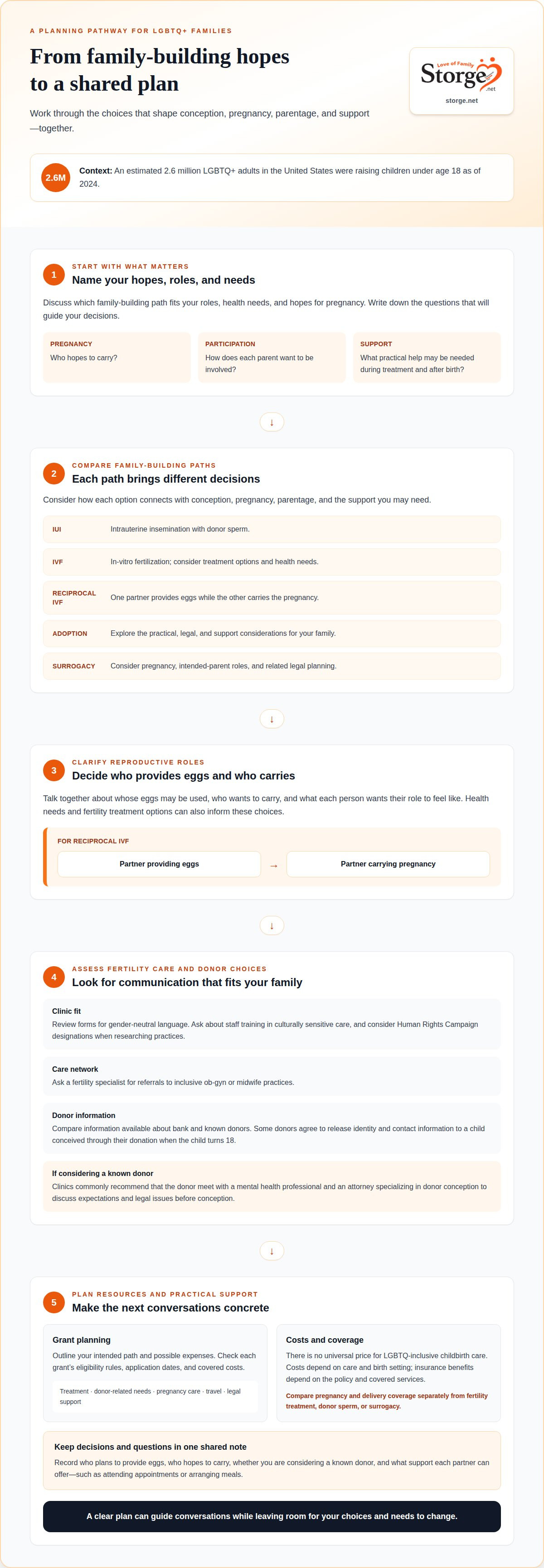
Start by discussing which family-building path fits your roles, health needs, and hopes for pregnancy. LGBTQ+ couples may consider insemination with donor sperm, IVF, reciprocal IVF, adoption, or surrogacy. Each path involves different decisions about conception, pregnancy, parentage, and support. Write down what matters most, such as who hopes to carry, how both parents want to participate, and what practical support you’ll need during treatment and after birth.
An estimated 2.6 million LGBTQ+ adults in the United States were raising children under age 18 as of 2024. If you’re considering a family addition, turn that possibility into a shared planning conversation: compare options, discuss timing, and identify trusted people who can support you. ACOG Committee Opinion Number 749, dated August 2018, addresses marriage and family-building equality for LGBTQIA+ and gender-nonconforming individuals. Pregnancy guides can also help you prepare questions for appointments.
For grants, outline your intended path and the expenses you may need help managing. Review each grant’s eligibility rules, application dates, and covered costs before gathering documents. A planning sheet can list treatment, donor-related needs, pregnancy care, travel, and legal support. Match applications to the specific requirements and expenses each grant describes, and keep supporting documents together.
LGBTQ-inclusive childbirth care has no universal price. Costs depend on the care and birth setting, while insurance benefits depend on the policy and covered services. Pregnancy and delivery coverage may be handled separately from fertility treatment, donor sperm, or surrogacy, so compare those benefit categories as you plan. Ask each partner to name one concern and one practical contribution, such as attending appointments or arranging meals. This makes preparation more concrete before your child joins the family.
Choosing who provides eggs and carries a pregnancy
Egg, sperm, and pregnancy roles can be shared in different ways. Some LGBTQ+ families use intrauterine insemination (IUI), in-vitro fertilization (IVF), or reciprocal IVF. With reciprocal IVF, one partner provides eggs while the other carries the pregnancy. Talk together about whose eggs may be used, who wants to carry, and what each person wants their role to feel like. Health needs and fertility treatment options can also inform these choices.
An inclusive fertility clinic makes room for each parent’s gender and family role. Review its forms for gender-neutral language, then ask about staff training in culturally sensitive care. Human Rights Campaign designations can be useful markers when researching practices. You can also ask a fertility specialist for referrals to inclusive ob-gyn or midwife practices. These steps can help you assess whether a clinic’s communication and care approach fit your family.
For donor sperm, compare the information available about each donor and consider whether you prefer a bank donor or known donor. Some donors agree to release their identity and contact information to a child conceived through their donation when the child turns 18. If you’re considering a known donor, clinics commonly recommend that the donor meet with a mental health professional and an attorney specializing in donor conception. Those conversations can address expectations and legal issues before conception.
Keep a shared note of decisions and questions for appointments. Record which partner plans to provide eggs, who hopes to carry, and whether you’re considering a known donor. If a gestational carrier is part of your plan, discuss how that role fits your family’s wishes and intended-parent roles. Fertility Clinic Referrals can connect families with fertility care, while Donor Egg / Sperm Search supports the search for a donor. These choices can shape what your care team needs to know as pregnancy and birth planning take shape.
Communicating pronouns and family roles on a hospital whiteboard
A room’s whiteboard can make family roles clear at a glance. Write each parent’s name and pronouns, then identify the partner or support person and preferred language. For example: “Alex, they/them, birthing parent” and “Sam, she/her, partner and support person.” A partner, doula, or trusted person can help share these preferences with staff during labor. A birth plan for LGBTQ families can also explain how you want staff to address each parent.
A birth plan for LGBTQ families should state your expectations and goals in clear, brief, flexible language. Include feeding preferences, immediate skin-to-skin contact, pain relief preferences, and who you want present. You can request internal examinations only when you ask for them, an explanation before each exam, or no students or residents during examinations. Discuss the plan with a perinatal professional and bring a copy on birth day.
Include privacy and respectful communication in your plan. Assumptions about gender, parentage, or who belongs in the room can lead to uncomfortable questions or personal details being discussed within earshot. Write down the names and pronouns staff should use, which reproductive or family details you’re comfortable sharing, and who can receive updates. A designated support person can calmly restate these preferences during staff handoffs.
Decide beforehand who can visit, when they can come, and who can stay during labor. List chosen family by name, and identify one person to update relatives or friends. If finding an inclusive hospital is part of becoming a parent, Storge’s Hospital Search can help you explore options. Your plan can also note that consent to procedures, including during a caesarean birth, is ongoing and can change with your preferences.
Storge: Storge PLUS Membership
Storge PLUS Membership is a next step for LGBTQ+ individuals and couples coordinating family-building decisions alongside birth planning. Turn to Storge when you’re ready to explore fertility resources, donor options, or support finding representation for family-building matters.
Storge offers Fertility Clinic Referrals, Donor Egg / Sperm Search, and Attorney Representation Referrals. These services can help connect your next steps: exploring fertility care, considering donor options, or seeking an attorney referral related to your family’s plans. Storge PLUS Membership offers another way to engage with the platform as you organize those decisions. Each family’s path is personal, so begin with the need that feels most immediate, whether that’s understanding fertility options or seeking legal support.
For a calm starting point, contact Storge or visit storge.net to explore the support available for your family-building journey.
Let your plan grow with your family
Your preferences can evolve as pregnancy, birth, and early parenting unfold. Treat your birth plan for LGBTQ families as a communication tool you can revisit, not a test you need to get exactly right. A brief conversation with your partner or support person can help you decide what matters most now and what you’d like to leave flexible.
Choose one manageable next step. You might set aside time to update your written preferences, discuss a question with your care team, or make space for a trusted person to support you. Small, thoughtful decisions can help shape a birth experience that reflects your family and the care you want to receive.
If you’d like support as you consider your family-building plans, contact Storge to discuss your plans. Your path is your own, and you can move forward at a pace that feels right for you.
Frequently Asked Questions
How can I plan ahead?
Turn your priorities into a short document and discuss it with your perinatal professional. Keep a digital copy for your support person and a printed copy with your hospital papers. Include a flexible backup preference for decisions that may change during labor, such as who should receive updates if your partner needs to focus on supporting you.
How can LGBTQ parents document their names, pronouns, and family roles for hospital staff?
Write each person’s name, pronouns, and role in a format staff can scan quickly. Label the birthing parent, co-parent, and chosen support person, then note who may receive updates. Put the same information on the hospital whiteboard and in your written plan. A trusted support person can gently correct mistakes and repeat your preferences during handoffs.
How can LGBTQ families find an affirming OB-GYN, midwife, doula, or birth center?
Look for practical signs of inclusion, not just welcoming language. Review clinic forms for gender-neutral wording and ask whether staff have competency training in culturally sensitive care. Human Rights Campaign designations can be one marker to consider when researching practices. Fertility specialists may also refer patients to inclusive ob-gyn or midwife practices, helping families continue care with fewer repeated explanations.
What questions should LGBTQ parents ask a hospital about inclusive maternity care?
Ask how staff record names and pronouns, identify a non-birthing parent, and protect private family information during care and shift changes. You can also ask whether the hospital serves LGBTQ+ patients and provides competency training in culturally sensitive care. Clarify how your listed support people and chosen family are handled, and how to raise concerns if staff use incorrect terms.
What options do LGBTQ parents have for feeding and sharing newborn care after birth?
Families can plan for human milk, formula, mixed feeding, or a nursing aid, then divide newborn care around those choices. For example, one parent might handle a feed while the other tracks supplies or settles the baby. A non-gestational parent who wants to chestfeed can seek a lactation consultant experienced in supporting non-birthing parents who induce lactation.


