

What if finding the right fertility professional is less about assembling a standard team and more about finding people who understand your path to parenthood? Connecting with LGBTQ fertility professionals can feel uncertain when you’re not sure which roles you need, whether a provider will respect your identity and goals, or how to keep medical, legal, and support conversations aligned.
Those concerns are understandable. Every family-building journey is different, and you shouldn’t have to settle for care that makes assumptions or leaves you to coordinate everything alone. This guide will help you identify which professionals may be relevant to your plans, ask practical questions about experience and affirming care, and recognize clear, respectful communication.
You’ll also learn how to organize referrals and information across your team, plus where to look for trusted starting points. Storge can help you explore fertility clinic and attorney representation referrals, donor and gestational carrier searches, and related resources. It’s a discovery platform, not a medical or legal provider, so you remain in control of choosing the professionals who fit your needs.
Key Takeaways
- Connecting with LGBTQ fertility professionals starts with your family-building goals, which can evolve over time.
- Look beyond inclusive language. Ask about relevant experience, respectful communication, transparent processes, and professional boundaries.
- Fertility clinics, attorneys, donor and gestational carrier searches, and peer support serve different needs. Identify which connections fit your path.
- Keep coordination manageable by recording your questions, provider responses, and follow-up tasks as you compare options.
- Storge can be a starting point for referrals and community resources, while medical and legal decisions remain with the professionals you choose.
Connecting with LGBTQ Fertility Professionals Starts with Your Family-Building Goals
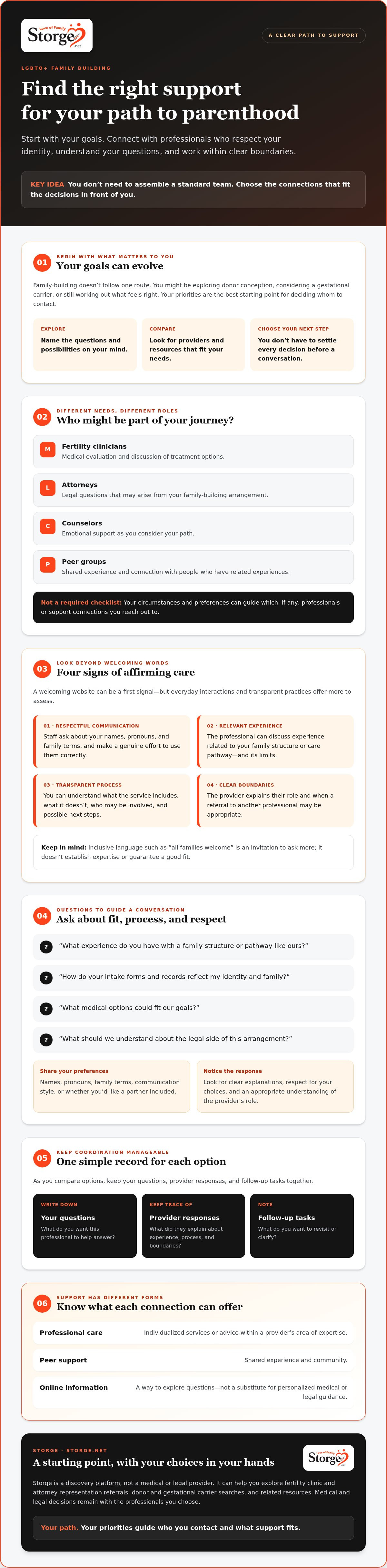
Family-building doesn’t follow one route, and the professionals who may be helpful can change as your plans take shape. You might be exploring donor conception, considering a gestational carrier, or still working out what feels right. An overview of same-sex parenting can help you see the range of paths, but your priorities are the best starting point for deciding whom to contact.
An LGBTQ-affirming fertility professional is a qualified provider whose practice respects your identity, family structure, and informed choices. Professional care means individualized services or advice within a provider’s area of expertise. Peer support offers shared experience and community, while online information can help you explore questions. Neither is a substitute for personalized medical or legal guidance.
Which professionals might be part of a fertility journey?
Different roles address different needs. Fertility clinicians can provide medical evaluation and discuss treatment options. An attorney may be relevant if your family-building arrangement raises legal questions. Counselors can offer emotional support, while peer groups can connect you with people who have related experiences. These are options, not a required checklist. Your circumstances and preferences can guide which, if any, you reach out to.
Start with the questions you want a professional to answer
Before searching, name what you want help with. You might be asking, “What medical options could fit our goals?” “What should we understand about the legal side of this arrangement?” or “Where can I find support from people who understand this experience?” Your first question can point you toward the right professional category.
It also helps to note your uncertainties, boundaries, and preferred communication style. For example, you may want a provider to use particular names or pronouns, explain options before recommending next steps, or include a partner in conversations. These preferences can help you assess whether an interaction feels respectful and clear.
Consider where you are right now: exploring possibilities, comparing options, or ready to request a consultation. You don’t need to settle every decision before speaking with someone, and there’s no single sequence that fits every family. Connecting with LGBTQ fertility professionals can begin with one focused question, then develop as your needs become clearer. The aim isn’t to assemble the largest team, but to find appropriate support for the decisions in front of you.
What to Look for in LGBTQ-Affirming Fertility Professionals
A welcoming website can be encouraging, but it’s only a first signal. As you compare providers, look for evidence in everyday interactions: how staff speak with you, explain their process, and respect your choices without making assumptions. Affirming care shows up in consistent interactions and transparent practices.
Use this checklist to guide conversations with a clinic, attorney, or other professional:
- Respectful communication: Staff ask what names, pronouns, and family terms you use, then make a genuine effort to use them correctly. If they make a mistake, notice whether they respond respectfully when corrected.
- Relevant experience: The professional can discuss experience with family structures or care pathways similar to yours, while being clear about the limits of that experience.
- Transparent processes: You can understand what the service includes, what it doesn’t, who may be involved, and what the next steps could be.
- Clear boundaries: The provider explains their role and when a referral to another professional may be appropriate, rather than presenting themselves as the answer to every question.
Inclusive language matters, but statements like “all families welcome” don’t establish expertise or guarantee a good fit. Treat them as an invitation to ask more. RESOLVE’s resource on LGBTQ+ family building options can offer broader context as you decide what to ask a provider.
Questions that reveal how a professional approaches LGBTQ+ care
Try asking: “What experience do you have with a family structure or pathway like ours?” “How do your intake forms and records reflect my identity and family?” and “Who coordinates care, and how should I raise a question or concern?” Listen for direct, specific answers. A provider doesn’t need to have encountered every situation, but should be willing to explain what they know and where their expertise ends.
Credentials, communication, and transparency to assess
Confirm relevant credentials through an appropriate official source, such as the applicable licensing authority or professional organization. Then ask for a plain-language explanation of services, limitations, referrals, and next steps. Are the answers understandable, or do you feel rushed or pressured? It’s reasonable to take time to compare. For another place to begin exploring connections, Storge’s fertility and legal referrals may help you identify options. You choose which professionals to contact.
How to Compare Fertility Clinics, Attorneys, and Support Resources
Connecting with LGBTQ fertility professionals may involve more than one kind of connection, but each serves a different purpose. A clinic referral can help you identify a provider to evaluate; it isn’t an endorsement or a promise of a particular experience or outcome. Donor and gestational carrier searches help you explore potential connections, while legal referrals and peer support address separate needs.
Use the same core questions with each option so you can compare what matters to you: Does the experience fit my circumstances? Is the process explained clearly? What does this service cover, and what falls outside its scope? The ASRM committee opinion offers clinical guidance on fertility care and family-building for LGBTQ+ individuals, but your personal medical questions belong with a qualified clinician.
Professional or resource | Purpose | Questions to ask | Limits
Fertility clinic | Medical evaluation and treatment planning. | How do you approach care for families with circumstances like ours? Who answers questions and coordinates care? | A referral helps you find a clinic to assess; it doesn’t guarantee fit, quality, or results. For more prompts, see this LGBTQ-friendly fertility clinic questions guide.
Attorney | Legal guidance about questions raised by your family-building arrangement. | What relevant experience do you have? What can you advise on, and what information should I prepare? | A referral isn’t legal advice or a substitute for speaking directly with an attorney. See the LGBTQ family law attorney guide for more search considerations.
Donor or carrier search | Exploring potential donor or gestational carrier connections. | What information is available, and what steps remain mine to take? | A search doesn’t guarantee a match or replace medical or legal guidance.
Peer support | Shared experience, connection, and community. | Does this group’s focus feel relevant and comfortable for me? | Peer perspectives can be valuable, but they aren’t individualized medical or legal advice.
Compare the process, not just the first impression
When speaking with more than one provider, ask the same questions about relevant experience, communication, scope, referral processes, and how to get clear information. Note whether answers are understandable and whether you feel able to ask follow-ups. Avoid relying on rankings or broad promises. Focus on what you can verify and what fits your needs.
Storge offers fertility clinic and attorney representation referrals, along with donor egg, sperm, and gestational carrier searches. These are distinct ways to explore connections, not medical care, legal advice, or a guarantee of a match. You decide which professionals or resources to pursue.
A Manageable Process for Contacting and Coordinating Professionals
Good coordination doesn’t mean building a large team or making every decision at once. It means knowing what you need from each conversation and keeping the next step clear. Connecting with LGBTQ fertility professionals can feel more manageable when you move at a pace that leaves room to ask questions, reflect, and change direction.
- Clarify your priorities. Write down what you’re exploring and what you hope a professional can help answer.
- Identify relevant roles. Decide whether your immediate question is medical, legal, donor-related, or about emotional and community support.
- Prepare questions. Choose a few essentials, such as what the professional handles, what falls outside their role, and how follow-up works.
- Contact providers. Share only the information you’re comfortable disclosing at this stage.
- Review next steps. After each conversation, note what you learned and whether you want to proceed, ask for clarification, or explore another option.
Prepare for an initial conversation
A brief introduction can make it easier to begin: describe your current goal, the question you most want answered, and any communication needs that would help you feel comfortable. Ask about the professional’s scope, any referral relationships, how your information is recorded, and how follow-up questions are handled. You don’t need to share your entire story in the first conversation. Decide what feels relevant and appropriate as trust develops.
Keep referrals and handoffs clear
If a professional recommends another provider, ask what information the referral includes, whether you can choose a different provider, and who will contact you next. Confirm who is responsible for each medical, legal, or administrative question so important details don’t get lost between providers. For donor-related exploration, the LGBTQ donor community guide offers another resource to consider.
A simple record can keep the process organized. For each contact, note the date, person or office, questions you asked, responses, and any follow-up task. Keep it concise and use a storage method that feels appropriate for the personal information involved. This makes it easier to compare conversations later without relying on memory alone.
You can pause before agreeing to a next step. If an answer is unclear, ask for an explanation; if communication doesn’t feel respectful, you can seek another perspective. Storge may be a starting point for exploring fertility clinic or attorney representation referrals and donor or gestational carrier searches. Explore Storge’s fertility and legal referrals as one option, while choosing for yourself which professionals to contact.
Find a Trusted Starting Point for Your LGBTQ Fertility Professional Search
A clear next step doesn’t require having your whole family-building plan figured out. Begin with the needs you’ve identified, consider whether a professional’s approach feels affirming, clarify what their service covers, and choose one manageable action. Connecting with LGBTQ fertility professionals is about finding relevant options and evaluating them for yourself, not following a prescribed path.
A referral or online resource can make the search easier to organize, but it can’t determine which provider is right for you. Your circumstances, questions, and comfort matter. Take time to compare options, and seek individual medical or legal advice from qualified professionals when making decisions in those areas.
How a referral and community platform can support discovery
Storge is an online platform that connects LGBTQ+ individuals and couples with fertility resources and community. Its offerings include fertility clinic and attorney representation referrals, donor egg and sperm searches, gestational carrier searches, and hospital searches. It isn’t a clinic, law firm, or full-service surrogacy agency, and it doesn’t provide medical procedures or in-house legal services.
These resources can help you explore possible connections, but they don’t promise a match, treatment outcome, legal result, or fit for every family. Members remain responsible for evaluating professionals, deciding whom to contact, and seeking personalized medical or legal advice. A platform can support discovery, but it doesn’t replace the professional relationship needed for individualized guidance.
Choose your next step at your own pace
Your next move might be small: write down questions for a clinic, contact an attorney about a legal concern, or explore community resources connected to your plans. If you’re considering membership, review the Storge PLUS membership guide for information about the platform. You can also wait until you feel ready. There’s no need to rush a decision simply because a resource is available.
When you’re ready to explore possible connections, explore Storge resources as one place to begin your search.
Take Your Next Family-Building Step with Confidence
Connecting with LGBTQ fertility professionals starts with your goals, not a prescribed team or one-size-fits-all path. Identify the questions you need answered, look for respectful communication and relevant experience, and make sure each professional explains their role and next steps clearly.
Keep the process manageable. Compare providers using the same core questions, track important conversations, and pause or seek another perspective if something doesn’t feel right. Medical and legal decisions call for guidance from qualified professionals. Referrals and community resources can help you explore connections, but they can’t promise a particular fit or outcome.
Storge offers referrals to fertility clinics and specialized legal representation. Storge PLUS provides access to a community of donors, gestational carriers, and verified resources; review current membership details to understand what access includes. Storge is a resource platform, not a clinic or law firm, and the professionals you choose remain your own decision.
When you’re ready to explore possible connections, explore Storge resources. You can take the next step at your own pace, with your goals and sense of belonging at the center.
Frequently Asked Questions
How do I find LGBTQ-affirming fertility professionals?
Start by identifying the kind of guidance you need, such as medical care, legal advice, or peer support. Connecting with LGBTQ fertility professionals can begin by checking credentials through appropriate official sources and asking about experience with LGBTQ+ families, communication practices, and services. A referral can help you discover options, but it doesn’t guarantee a provider is the right fit. Compare responses and choose professionals who explain their role clearly and treat your family respectfully.
What should I ask a fertility professional during an initial consultation?
Ask about experience with family structures or care pathways relevant to you, how the professional approaches inclusive communication, and which services fall within their scope. You can also ask what happens after the first meeting, how referrals and records are handled, and how to follow up with questions. Prepare only the personal information you feel ready to share. If an answer is unclear, ask the professional to explain it in a different way.
Can one fertility professional coordinate every part of LGBTQ+ family building?
Some clinics may coordinate parts of medical care, but medical, legal, and emotional support needs can involve different professionals. Ask each provider what they handle, what falls outside their role, and whether they can suggest referrals. Don’t assume a clinic, platform, or community group replaces individualized legal or medical advice. Your team can be shaped around your goals and circumstances, and you can add or change professional support as your questions evolve.
How can I tell whether a fertility clinic is genuinely LGBTQ-inclusive?
Look beyond general statements on a website. Notice whether staff use your name and pronouns respectfully, ask relevant questions without assumptions, explain options clearly, and welcome questions about their experience and processes. You might also ask how forms and communication accommodate different family structures. These observations can help you assess whether the clinic feels like a good fit, but they don’t replace confirming relevant credentials and discussing your needs directly.
Do LGBTQ+ families need an attorney when pursuing fertility care?
Whether you need legal guidance depends on your family-building arrangement and circumstances, so there isn’t one answer for everyone. A fertility professional or platform may provide a referral, but a referral isn’t legal advice. If you have questions about agreements, parentage, or rights, consult an attorney qualified to advise on your situation. Before proceeding, ask about the attorney’s relevant experience, scope of services, and how they’ll address your specific questions.
Are peer-support groups a substitute for fertility professionals?
No. Peer-support groups can offer connection, shared experiences, and a sense of community, but they don’t replace clinical evaluation or individualized legal advice. Fertility professionals address questions within their areas of expertise; peers offer a different kind of support. Both may be helpful. Before joining a group, check its purpose and boundaries so you know what kind of support it provides. Bring personal medical or legal questions to a qualified professional.
How can Storge help me connect with LGBTQ fertility professionals?
Storge is an online platform offering LGBTQ+ family-building resources, including fertility clinic and attorney representation referrals, as well as donor egg, sperm, gestational carrier, and hospital searches. It can be a starting point for discovering relevant connections, not a provider of medical procedures, in-house legal services, or full-service surrogacy. Review current Storge PLUS membership details, then evaluate any professional directly to decide whether their experience and services fit your needs.


