
What if the support you need on a surrogacy journey isn’t another expert, but people who understand the questions you’re carrying? Finding affirming, relevant support can be difficult, especially when medical, legal, and relationship decisions start to feel isolating. A Community platform for LGBTQ surrogacy journey support can bring people and practical resources together, while leaving professional decisions to qualified providers.
If you’re exploring surrogacy, it’s natural to want both trusted guidance and a place to feel understood. Storge PLUS connects members with a community of egg donors, sperm donors, and gestational carriers, alongside referrals to fertility clinics, attorneys, and hospitals. Use these connections to explore possibilities and prepare for conversations with the professionals responsible for your care and legal matters.
In this article, you’ll learn how community can help at different stages, what to consider when seeking connections, and where professional advice remains essential. The goal is to help you feel less alone and approach each next step with more clarity, one decision at a time.
Key Takeaways
- A Community platform for LGBTQ surrogacy journey support can connect you with people and resources relevant to your questions.
- Explore support at your own pace. Surrogacy stages can overlap, and you may return to earlier questions as your plans develop.
- Understand the different roles of a community platform, agency, clinic, and attorney so you know where to turn for connection and professional care.
- Build community thoughtfully by identifying what you need, communicating respectfully, and honoring privacy and consent.
- Storge PLUS connects members with a community of donors and gestational carriers, plus referrals to attorneys, clinics, and hospitals.
What a Community Platform Adds to an LGBTQ+ Surrogacy Journey
A surrogacy journey involves more than appointments and paperwork. You may also have questions about relationships, identity, donor connections, and what comes next. A Community platform for LGBTQ surrogacy journey support gives you a place to find relevant connections, resources, and shared understanding while you consider those questions.
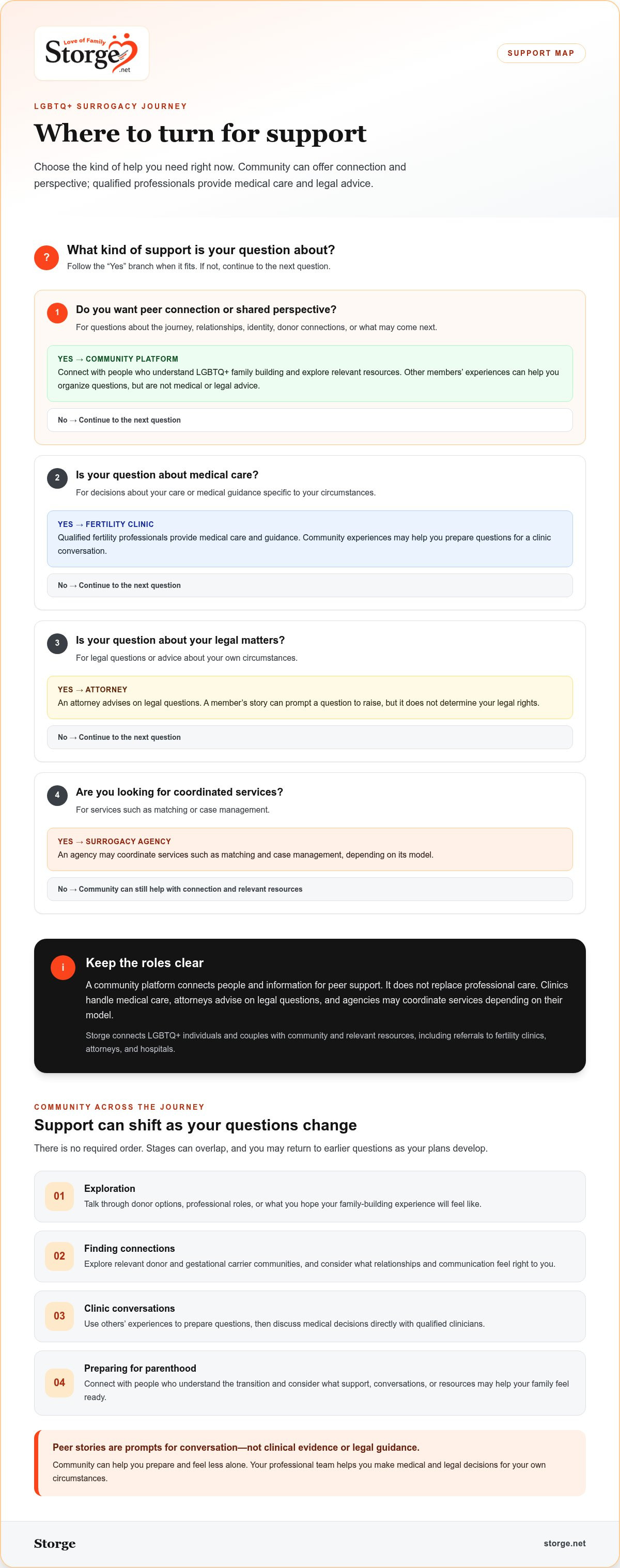
A community platform connects people and information for peer support. Medical care, legal advice, and coordinated surrogacy services each have their own professional roles. A fertility clinic provides medical care and guidance, while an attorney advises on legal questions. A surrogacy agency may coordinate services such as matching and case management, depending on its model. Storge connects LGBTQ+ individuals and couples with community and relevant resources, including referrals to fertility clinics, attorneys, and hospitals.
There isn’t one LGBTQ+ path to parenthood. Some intended parents pursue gestational surrogacy with an egg donor, while others have different family structures, donor arrangements, or plans. For a broader overview of considerations for gay men exploring this route, read the gay surrogacy guide. For broader context on how LGBTQ+ people build families, see Same-sex parenting and surrogacy.
How community support fits alongside professional care
Peer connection can offer emotional reassurance and practical perspective. For example, another intended parent’s experience may help you organize questions before a clinic conversation. Their experience can help you prepare, but it isn’t medical or legal advice. Discuss clinic decisions with qualified fertility professionals and legal questions with an attorney. Referrals can connect members with relevant professionals, who provide advice and services within their areas of expertise.
Why affirming connection can matter during surrogacy
It can be a relief to speak with people familiar with LGBTQ+ family building, especially when a decision feels difficult to explain elsewhere. Shared experiences may help you feel seen and less alone, even when another person’s circumstances or choices differ from yours. Community offers understanding, not a guarantee that everyone’s process or outcome will be the same.
That distinction matters. A community can help you find people who understand the emotional texture of the journey and resources that make the next question easier to approach. It can’t decide which medical path is right for you or determine your legal rights. Connection alongside qualified professional care lets you seek support without treating every question as one you must answer alone.
How Community Connections Can Support Each Stage of Surrogacy
Your support needs may change as you move from considering surrogacy to preparing for a child’s arrival. A Community platform for LGBTQ surrogacy journey can help you gather perspectives, find relevant connections, and turn uncertainties into questions for your professional team. There’s no required order. You may revisit an earlier decision as your plans become clearer.
- Exploration: Talk through what you’re curious about, such as donor options, the roles different professionals play, or what you hope your family-building experience will feel like.
- Finding connections: Explore relevant donor and gestational carrier communities. Consider what kinds of relationships and communication feel right to you.
- Clinic conversations: Use others’ experiences to prepare questions about your own care, then discuss medical decisions directly with qualified clinicians.
- Preparing for parenthood: Connect with people who understand the transition and consider what support, conversations, or resources may help your family feel ready.
Community can help you prepare for each stage. Your professional team helps you make medical and legal decisions for your own circumstances. A member’s story may suggest a useful question, but it isn’t clinical evidence or legal guidance.
From early questions to informed conversations
At the beginning, you might be asking where to start, whether surrogacy aligns with your hopes, or what a clinic or attorney can help clarify. There isn’t one route that’s right for every family. Community can help you name your concerns and organize questions. For example, make a note of what you want to discuss at an initial clinic conversation and which legal topics you want to raise with an attorney. Treat shared experiences as prompts, not as a substitute for advice tailored to your circumstances.
Connection with donors and gestational carriers
Access to a relevant community can help intended parents explore connections with donors and gestational carriers while learning about different perspectives on family building. Each person and relationship is different, so access to a community doesn’t guarantee a match, a particular timeline, or a specific outcome. For more context on donor relationships and LGBTQ+ family building, read the LGBTQ donor community guide.
Making space for the transition to parenthood
As plans develop, community conversations may help you think about the support you’d like around your growing family. For information focused on supporting LGBTQ+ children and families, the Family Acceptance Project for LGBTQ+ youth and families offers research, education, and resources. Each family’s needs and experiences are unique, so focus on the resources that feel relevant to your circumstances.
If you’re looking for connections and fertility resources as you explore these stages, learn about Storge’s community platform.
Community Platform or Surrogacy Agency: Understand the Difference
Community platforms and surrogacy agencies can both be part of a family-building journey, but they serve different purposes. A platform connects people with community and relevant resources. An agency may coordinate surrogacy services, depending on its model. Knowing the difference helps you decide what kind of support you’re looking for and what role each resource can play.
| Area | Community platform | Surrogacy agency |
|---|---|---|
| Purpose | Connects members with relevant people, shared experiences, and resources. | May coordinate surrogacy-related services and support, depending on its model. |
| Types of support | Community connection, resource access, and referrals to professionals. | May include coordination or case management for intended parents and gestational carriers. |
| Professional responsibilities | Connects members with community and resources, including professional referrals. | Its responsibilities vary; clinical decisions and legal advice remain with qualified professionals. |
What a community platform can, and cannot, do
Storge PLUS provides membership access to a community of donors and gestational carriers, along with resources and referrals. This can help members explore connections and locate relevant professional support. A community connection doesn’t guarantee a match or replace screening, clinical care, or legal representation.
Think of a Community platform for LGBTQ surrogacy journey as a connection point. Community members may share perspectives and help you prepare questions, while clinicians and attorneys address decisions within their professional roles.
When referrals to professionals become important
Questions about fertility treatment, medical options, or care belong with qualified fertility professionals and clinics. Questions about agreements, parentage, or other legal aspects of surrogacy call for qualified legal representation. Referrals can connect you with relevant professionals, who provide their own advice and services.
For more context on finding legal resources for LGBTQ+ families, explore this LGBTQ family law attorney guide. Knowing where a platform’s role ends and a professional’s begins can make it easier to seek each kind of support with clear expectations.
How to Participate in an LGBTQ+ Surrogacy Community with Care
A thoughtful approach can help a community feel more useful and respectful, whether you’re looking for reassurance, exploring connections, or gathering questions for your professional team. You don’t need to share everything to take part. Start with what would help you now, and let your needs change as your plans develop.
Set expectations before seeking connections
Before joining a conversation, consider what you’re hoping to find. Are you looking for peer understanding, information about donor connections, a chance to learn about gestational carriers, or referrals to professionals? Naming your purpose can help you focus on relevant discussions without feeling pressured to follow someone else’s path.
Family structures, timelines, and personal boundaries vary. Share only what feels comfortable, and avoid assuming that another member’s choices or experience should guide yours. When a conversation involves sensitive details, ask before requesting personal information and get consent before sharing someone else’s story. Online conversations can travel beyond their original context, so think carefully before posting identifying or private information.
Use shared experience without treating it as professional advice
Personal stories can help you identify questions you hadn’t thought to ask. They can’t establish what will happen in your circumstances. Medical experiences are individual, and legal processes, including questions about parentage, can vary across states. A member’s account is one person’s experience, not a clinical recommendation or legal conclusion.
Turn what you learn into a short list for the appropriate professional. For example, if a member describes a clinic conversation that raises questions for you, write down what you want to ask your fertility professional. If a story brings up a concern about agreements or parentage, take that question to a qualified attorney. Community discussion can help you prepare, while individualized guidance comes from the professionals responsible for providing it.
A Community platform for LGBTQ surrogacy journey support works best when connection and professional care have distinct roles. You can listen, learn, and decide what resonates without treating any one story as a template. You can also step back from a conversation or keep details private whenever that feels right.
If you’re ready to explore community connections and family-building resources, explore Storge’s community platform.
How Storge Supports Your LGBTQ+ Surrogacy Journey
As you consider what support would be useful, Storge brings community connections and family-building resources together in one online platform. Storge PLUS provides membership access to Storge’s community and resources, giving LGBTQ+ individuals and couples a place to explore possible connections and consider their next steps.
What members can explore through Storge
Members can explore a community that includes egg donors, sperm donors, and gestational carriers, along with resources relevant to LGBTQ+ family building. Access to a community can help you learn about possible connections, but it doesn’t promise a match, a particular relationship, or a specific outcome. Each person’s needs and decisions are their own.
Storge also connects members with professional referrals, including referrals to attorneys, fertility clinics, and hospitals. These resources can help you identify potential next steps, while the professionals you work with provide their own services and guidance. Attorney representation referrals, fertility clinic referrals, and hospital searches give members ways to explore resources relevant to their plans.
Each kind of support has a distinct purpose. Community can provide connection and shared understanding; referrals can help you locate professional resources; and qualified professionals address medical and legal questions within their areas of expertise. Verified resources are also part of the Storge platform.
A supportive next step at your own pace
You don’t need to have every decision settled before exploring community. You might be looking for donor or carrier connections, relevant resources, or referrals as questions emerge. Your needs can change as your plans take shape, and you can explore at a pace that feels right for you.
If connection and relevant resources would be helpful as you consider what comes next, Explore Storge PLUS and find community for your journey.
Find Support for Your Next Step
A supportive Community platform for LGBTQ surrogacy journey can offer connection and useful resources as your questions evolve. Community helps you feel understood and learn from others, while qualified clinicians and attorneys remain the right people for medical and legal guidance. You can take part at your own pace and decide which connections feel relevant to your family.
Storge PLUS gives members access to a community of egg donors, sperm donors, and gestational carriers, along with verified resources. Storge also connects members with attorney representation and fertility clinic referrals, as well as hospital searches. The platform brings community and connections together with referrals to relevant professionals.
If you’re ready to explore a community alongside your professional support, Explore Storge PLUS and find community for your journey. Begin with the questions and connections that matter to you now, knowing your path can unfold one thoughtful step at a time.
Frequently Asked Questions
What is a community platform for an LGBTQ+ surrogacy journey?
A community platform connects people with relevant resources and others who understand LGBTQ+ family building. It can offer space to explore questions, learn from individual experiences, and discover potential connections with donors or gestational carriers. A Community platform for LGBTQ surrogacy journey support complements professional care. It doesn’t provide medical treatment or replace legal representation. Use community insights to shape questions for qualified professionals, not as individualized medical or legal advice.
Can a community platform help me find a gestational carrier?
A community platform can help you explore connections with gestational carriers, but it can’t promise a match, timeline, relationship, or outcome. Storge PLUS provides access to a community that includes carriers, and Storge offers a gestational carrier search. Take time to consider what you hope for in a connection, and discuss screening, medical considerations, and legal arrangements with the appropriate professionals.
How is a surrogacy community different from a surrogacy agency?
A surrogacy community focuses on connection, shared understanding, and access to resources. A surrogacy agency may coordinate services such as matching or case management, depending on its model. Storge connects members with community and professional referrals. Medical care and legal representation are provided by qualified professionals. These models serve different needs and aren’t interchangeable.
Is community support a substitute for medical or legal advice?
No. Community members can share personal experiences and help you think of questions, but their stories aren’t clinical evidence or legal guidance for your circumstances. Bring medical questions, such as those about treatment or care, to a qualified fertility professional. Discuss agreements, parentage, and other legal concerns with an attorney. Community can support you emotionally and help you prepare for those conversations, but it doesn’t replace professional advice.
Who can join a community for LGBTQ+ surrogacy support?
These communities are intended for people seeking connection and resources related to LGBTQ+ family building. That may include individuals and couples exploring surrogacy, as well as people interested in donor or gestational carrier connections. Each person’s family structure, plans, and comfort with sharing are different. You can participate in ways that suit your needs, and you don’t have to disclose personal details to benefit from learning and connecting.
What resources can LGBTQ+ intended parents find through Storge?
Through Storge PLUS, members can access a community of egg donors, sperm donors, and gestational carriers, along with verified resources. Storge also offers donor egg and sperm search, gestational carrier search, attorney representation referrals, fertility clinic referrals, and hospital search. These connections can help you explore possible next steps. Referrals connect members with professionals who provide their own services and guidance.
How can I protect my privacy when participating in an online fertility community?
Share only what feels comfortable, and think carefully before posting names, contact details, medical records, or other identifying information. Ask before requesting sensitive details from others, and get consent before sharing someone else’s story. Remember that online conversations may be copied or seen outside their original context. You can participate without disclosing every detail, and bring private medical or legal questions directly to the relevant professional.


