
What if the most helpful resource for building your family isn’t one provider, but a thoughtful team? Finding trusted resources for LGBTQ family creation can feel difficult when fertility, donor, gestational carrier, legal, and hospital information sits in different places. State rules may also shape important decisions.
You deserve support that respects your family structure and helps you feel informed, not overwhelmed. This guide explains the main kinds of support available and how community connections, professional referrals, and personal support can work together. You’ll learn where fertility clinics, donor and carrier resources, attorneys, and hospitals fit into the process, and how to assess whether a resource is clear about its role.
There’s no single route to parenthood, and you don’t have to map every detail at once. Start by identifying the question you need help with now. Then find the right kind of support for it, whether that means clinical information, a community connection, legal guidance, or planning for birth care.
Key Takeaways
- Trusted resources for LGBTQ family creation can include community support, professional referrals, and personal connections, shaped around your family’s needs.
- Fertility clinics, donor and gestational carrier communities, attorneys, and hospitals each play distinct roles in a family-building journey.
- Use a practical trust checklist to consider a resource’s relevant experience, transparency, role clarity, and approach to privacy.
- Organize next steps by noting what guidance you need now and what may become useful later, without committing to one path too soon.
- Storge connects families with professional referrals. Storge PLUS provides membership access to a vetted community of egg donors, sperm donors, and gestational carriers.
Trusted LGBTQ Family Creation Resources: What Support Can Look Like
An LGBTQ+-affirming family-building resource is a person, service, or community that respects your family structure, offers relevant guidance, and helps you make informed decisions without pressure. The support you need depends on your goals. Some LGBTQ+ individuals and couples explore fertility treatment, donor conception, or a gestational carrier; others consider adoption, fostering, or another path. There’s no single route or standard support team.
Trusted resources for LGBTQ family creation don’t have to come from one organization. A resource may be useful for one need but not another. Clinical expertise, legal guidance, emotional care, and practical coordination are distinct, and one resource rarely covers them all. Community can offer connection, while qualified professionals address questions within their expertise.
Which kinds of support may be part of the journey?
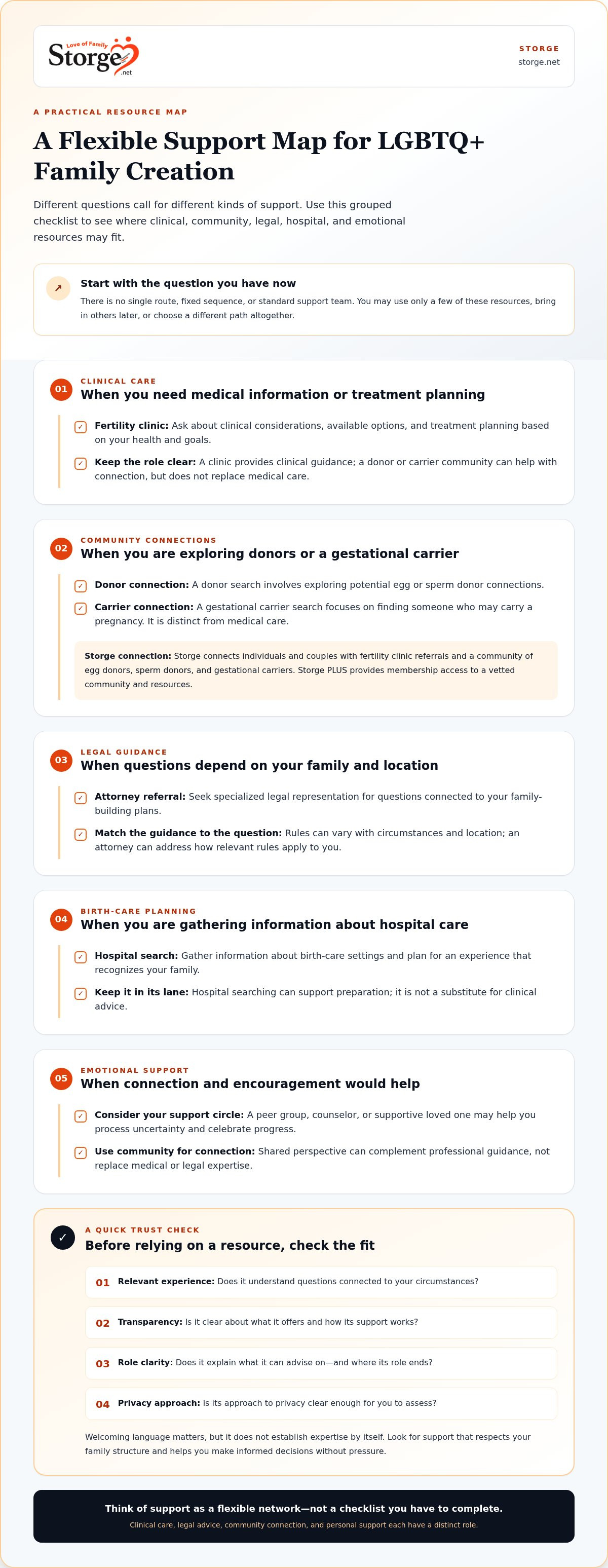
Your resource map might include a fertility clinic for clinical assessment and treatment options, a donor or gestational carrier community for connection, attorney referrals for legal questions, and hospital search resources for planning care. Peer groups and individual emotional support can complement these practical resources. For a broader introduction to family structures and available paths, see this overview of same-sex parenting.
You may need only a few of these supports, or different ones at different stages. For example, someone exploring donor conception may start by gathering clinical information and connecting with peers, then seek legal guidance as plans take shape. Another family may begin by exploring adoption resources. These are possibilities, not a prescribed order.
Why can LGBTQ+ family creation require specialized resources?
Respectful communication matters. Inclusive forms, accurate language for each parent, and recognition of different family structures can make conversations more comfortable and relevant. Welcoming language alone, however, doesn’t establish expertise. Look for a resource that understands the questions connected to your circumstances and explains what it can advise on.
Medical considerations depend on individual health, goals, and the options being explored. Legal considerations can also vary with family circumstances and location, so general information may not answer a specific question. A clinic can address clinical care; an attorney can advise on legal matters. Community support can offer connection, but it doesn’t replace professional medical or legal guidance.
Think of support as a flexible network, not a checklist you must complete. Begin with the question that matters most to you now.
LGBTQ Family Creation Resources by Need: Clinical, Community, Legal, and Hospital Support
Think of family-building support as a flexible map, not a fixed sequence. You may need some resources now, others later, and some not at all. The right mix depends on your goals and circumstances. Community support can offer connection and shared perspective; licensed medical and legal professionals provide clinical care and legal advice. Each has a distinct role.
Fertility clinics, donors, and gestational carriers
Fertility clinics can discuss clinical considerations, evaluate available options, and support treatment planning. A donor search is a separate need: it involves exploring potential egg or sperm donor connections, while a gestational carrier search focuses on finding someone who may carry a pregnancy. These searches are not the same as medical care. A community can help with connection, but it doesn’t replace a clinic’s clinical guidance. For more on these connections, read the LGBTQ donor community guide.
Storge connects individuals and couples with fertility clinic referrals and a community of egg donors, sperm donors, and gestational carriers. Storge PLUS provides membership access to a vetted community and resources. These connections can complement professional care as you consider your options.
Legal, hospital, and emotional support
Attorney referrals can connect you with specialized legal representation for questions related to your family-building plans. Because legal considerations depend on your circumstances and location, an attorney can address how relevant rules apply to you. Explore the LGBTQ family law attorney guide for more context.
A hospital search can help you gather information about birth-care settings and plan for an experience that recognizes your family. It’s a practical part of preparation, not a substitute for clinical advice. The inclusive hospital birth guide offers further reading on this topic.
Emotional support belongs on the map, too. A trusted peer group, counselor, or supportive loved one may help you process uncertainty and celebrate progress. You can also explore Storge’s family-building resources for community connections and professional referrals.
How to Judge Whether LGBTQ Family-Building Resources Feel Trustworthy
Inclusive language can help you feel recognized, but it doesn’t show by itself that a resource has the expertise or role you need. A trustworthy resource should explain what it does, where its role ends, and how its support relates to your circumstances. You’re looking for a good fit, not a promise that one resource can solve every question.
Use this checklist as a starting point:
- Transparency: Is the resource’s purpose, process, and scope explained in plain language?
- Relevant experience: Does it describe experience supporting LGBTQ+ people and the family-building needs relevant to you?
- Role clarity: Can you tell whether it offers community, referrals, clinical care, or legal representation?
- Respectful recognition: Does its language make room for different identities, relationships, and family structures without assumptions?
- Privacy: Is there clear information about what personal details are collected and how they’re handled?
These signals can’t guarantee a particular experience or outcome. They can help you understand what you’re engaging with and make a more informed choice about sharing personal information or relying on guidance.
What signals transparency and LGBTQ+ affirmation?
Look for specific explanations rather than broad claims of being “inclusive.” A resource may describe who it serves, what support it provides, and where its role ends. Respectful intake language and recognition of varied family structures can indicate care in how people are welcomed, but they don’t replace relevant expertise. Review the resource’s stated privacy practices before providing sensitive information.
How can readers understand professional roles and limits?
A directory or referral platform can help connect you with relevant people or services. That’s different from receiving medical treatment at a clinic or legal representation from an attorney. Referrals can support your search, but they aren’t a substitute for professional advice tailored to your circumstances.
Medical questions belong with qualified clinical professionals. Legal questions, especially those shaped by state-specific rules and individual family circumstances, call for guidance from an attorney familiar with the relevant issues. For a practical starting point, see these questions for an LGBTQ+-friendly fertility clinic. Clear boundaries are a trust signal: a resource should describe its role without promising safety, results, legal outcomes, or universal inclusivity.
How to Organize Your LGBTQ Family Creation Resources Into Manageable Next Steps
You don’t need to solve every question before taking a first step. Start with what matters to you, then gather guidance as your plans become clearer. A simple support map can turn a big, emotional process into a few manageable questions without assuming how you’ll build your family.
Start with your priorities and unanswered questions
Write down what you hope for, what feels important to protect, and what you’re still unsure about. Your notes don’t need to be polished or final. Try sorting questions into four groups:
- Clinical: What medical information or fertility options would help me understand my choices?
- Legal: What questions should I bring to an attorney familiar with my circumstances?
- Community: Would it help to connect with people who have experience with a similar path?
- Practical: What information about donors, gestational carriers, or birth settings might I need?
Some questions may be ready for a professional; others may simply help you reflect. Your priorities can change as you learn more, and that’s a normal part of making thoughtful decisions. Storge PLUS membership offers access to a community and resources for LGBTQ+ family building.
Build a support map that can evolve
Make a short list with two headings: useful now and may matter later. For example, you might place a peer community or an introductory clinical conversation under “useful now,” while noting attorney guidance or hospital information for a later stage. The categories will depend on your goals, not someone else’s timeline.
Keep the roles clear as you build your map. A community can offer connection and shared perspective; professional referrals can help you find relevant experts; licensed clinicians and attorneys provide guidance within their respective fields. Personal support from a partner, friend, or family member may help you feel grounded through the process.
Review your list as your questions or circumstances shift. Add a resource when a new need becomes clear, and move items that no longer feel relevant. Trusted resources for LGBTQ family creation should make your path feel more informed and supported, not more pressured. Storge’s LGBTQ+ family-building resources bring community connections and professional referrals together.
How Storge Connects LGBTQ+ Families With Trusted Family-Creation Resources
Finding the right support can mean bringing several kinds of help together. Storge is an online platform for LGBTQ+ individuals and couples, connecting community access with referrals and searches related to family building. Clinical care belongs with fertility professionals, and legal advice or representation belongs with an attorney.
What kinds of connections does Storge support?
Through Storge PLUS, members can access a vetted community of egg donors, sperm donors, and gestational carriers. These connections may be relevant to different family-building plans, but they don’t determine which path is right for you. Your goals and circumstances remain central as you explore possibilities.
Storge also offers fertility clinic referrals for people seeking clinical care and treatment guidance, along with referrals for specialized attorney representation. These referrals connect you with professionals; they don’t replace medical treatment or legal services. Keeping those roles clear can make it easier to decide where to bring each question.
Hospital search resources add another practical connection. As you consider care around birth, a hospital search can help you identify relevant information about possible settings. This sits alongside, rather than in place of, guidance from your healthcare professionals.
A supportive next step, at your own pace
You don’t have to settle on one family-building path before exploring resources. You might begin by considering whether community access would be helpful, or whether a professional referral or hospital search better matches a question you have now. Your needs may change as you learn, and it’s okay to take one step at a time.
Trusted resources for LGBTQ family creation should help you feel more connected and informed while respecting your choices. Storge PLUS brings community access together with family-building resources, while professional referrals can connect you with fertility clinics and specialized attorneys. You can explore these options as you decide what support fits your needs.
Explore the Storge PLUS community and see whether it fits your support network.
Build Your Support Team One Step at a Time
Family building doesn’t have to follow a single route, and neither does finding support. The most useful trusted resources for LGBTQ family creation fit your needs, communicate clearly, and understand their role. Community can offer connection, while clinical and legal questions call for qualified professionals.
Start by naming what you need now and what may become important later. A simple support map can help you keep donor or gestational carrier connections, fertility clinic referrals, attorney guidance, hospital information, and personal support in perspective as your plans evolve.
Storge brings community and professional referrals together. Storge PLUS provides membership access to a vetted community of egg donors, sperm donors, and gestational carriers. Storge also offers fertility clinic and specialized attorney representation referrals, along with hospital search resources. These connections can complement, but don’t replace, licensed medical care or legal advice.
If community access and connected resources could support your next step, explore the Storge PLUS community.
Frequently Asked Questions
Is there one trusted resource for every LGBTQ family-building need?
Family creation usually involves more than one kind of support. A community or referral platform may connect you with relevant people and professionals, while licensed clinicians and attorneys provide specialized medical and legal services. The right mix depends on your goals and circumstances. Think of trusted resources for LGBTQ family creation as a support map, not a single source for every answer. You can add resources as new questions arise.
Can LGBTQ+ individuals and couples find affirming fertility resources?
Resources are available for LGBTQ+ people exploring fertility care, donors, and gestational carriers. Which options fit depends on your circumstances and the path you’re considering. Look for clear information about a resource’s role and the people it serves, and distinguish referrals from care delivered by a fertility clinic. An affirming approach respects different identities and family structures without assuming every person or couple has the same needs.
How do I find trusted donor or gestational carrier resources?
First, identify whether you’re looking for an egg donor, sperm donor, or gestational carrier. These are distinct needs, and naming yours can help focus your search. Look for resources that explain their community or search process and clearly describe their role. A donor or carrier community can support connection, while clinical decisions belong with fertility professionals and legal questions may call for an attorney familiar with your circumstances.
What kinds of legal resources may LGBTQ+ intended parents need?
Legal needs vary with your family-building plans, personal circumstances, and applicable laws. Some intended parents seek specialized attorney representation to discuss parentage or other questions related to their path. General articles and directories can help you organize what you want to ask, but they aren’t a substitute for advice from an attorney. Storge connects users with attorney referrals; it doesn’t provide in-house legal services.
Are online LGBTQ+ family-building communities a substitute for a fertility clinic or attorney?
No. An online community can offer connection and help you find relevant referrals, but it doesn’t replace clinical care or legal representation. Fertility clinics provide medical services, and attorneys advise on legal questions within their professional role. Peer connection may complement treatment or legal support, but it can’t provide either.
What should I do first when exploring LGBTQ family creation resources?
Start by writing down your priorities, questions, and the support you need now. Group your notes into areas such as clinical care, donors or carriers, legal guidance, community, and birth-related planning. You don’t have to settle every decision at once. A short list can help you see which resource may be useful now and what you might revisit later as your questions and plans develop.


